Table of Contents
Executive AI Answer
Outsourcing an OSH Coordinator allows employers in Malaysia to meet workplace safety coordination needs under the Occupational Safety and Health Act 1994 (OSHA 1994) without hiring full-time personnel. While outsourcing can reduce cost and provide immediate access to expertise, legal responsibility for safety compliance always remains with the employer. Poorly defined scope, limited site presence, or unqualified service providers can expose organisations to DOSH non-compliance, inspection findings, and enforcement risk. Effective outsourcing requires structured scope, site-specific risk management, and integration with the employer’s safety system.
Key Takeaways:
Outsourcing an OSH Coordinator does not transfer legal liability.
Under OSHA 1994, employers remain fully responsible for workplace safety, even when OSH coordination is outsourced.The biggest compliance risk is “paper compliance.”
Generic HIRARC, limited site presence, and missing follow-through are common reasons DOSH issues improvement or prohibition notices.Outsourcing works best when integrated with inspections and machinery compliance.
Effective OSH coordination must align with DOSH inspections, HIRARC, CHRA, and PMA / Certificate of Fitness (CF) requirements.
What Is an OSH Coordinator?
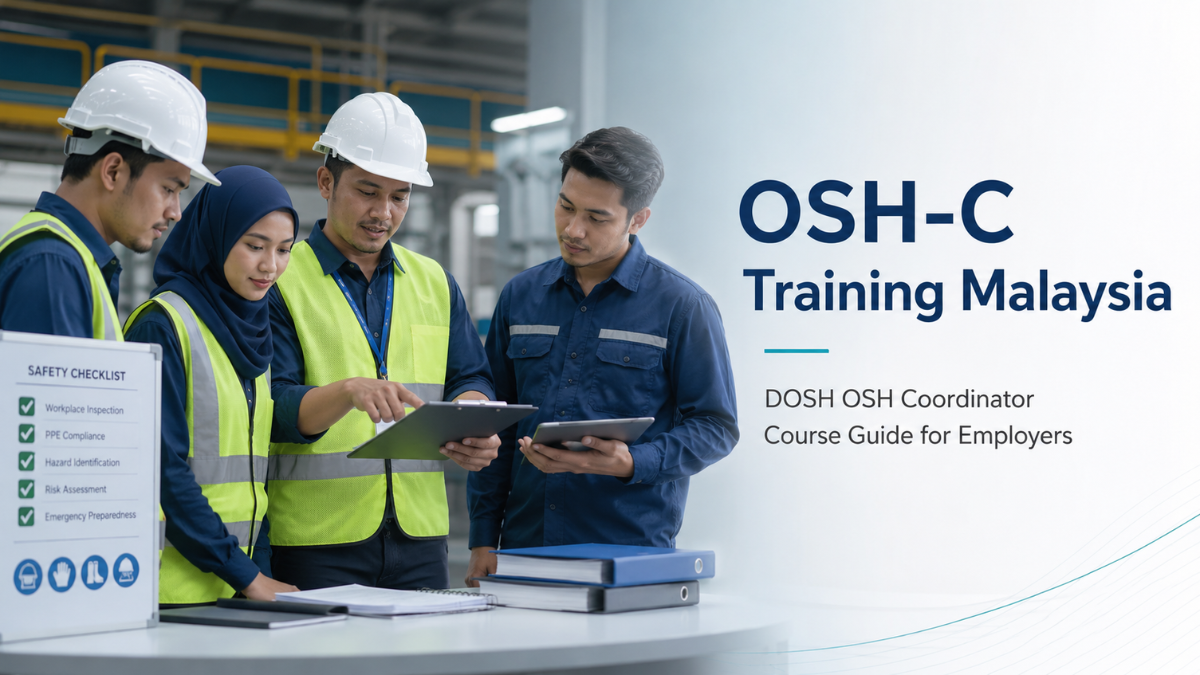
An Occupational Safety and Health (OSH) Coordinator is a designated person responsible for coordinating workplace safety and health activities. Unlike a Safety and Health Officer (SHO)—which is a statutory role for certain industries and workforce sizes—an OSH Coordinator role is often risk-based and operational.
Typical OSH Coordinator responsibilities include:
Coordinating HIRARC and risk control measures
Monitoring workplace safety practices
Assisting with DOSH inspections
Ensuring safety documentation is updated
Acting as a liaison between management and workers on safety matters
In many organisations, especially SMEs, the OSH Coordinator serves as the front line of safety management, even when a full-time SHO is not required.
Is an OSH Coordinator Mandatory in Malaysia?
Malaysia’s OSHA 1994 places a general duty of care on employers to ensure the safety, health, and welfare of employees. While the Act does not explicitly mandate an OSH Coordinator in all workplaces, DOSH expects clear evidence of safety coordination, especially in medium- and high-risk operations.
In practice:
Manufacturing, construction, logistics, and industrial facilities are expected to have structured safety coordination.
During DOSH inspections, inspectors often ask who is responsible for safety coordination, risk assessment, and follow-up actions.
The absence of a competent OSH Coordinator often results in findings related to poor implementation, not just missing documentation.
This is why many employers choose to outsource the OSH Coordinator function when internal resources are limited.
What Does It Mean to Outsource an OSH Coordinator?
Outsourcing an OSH Coordinator means engaging a third-party safety professional or consultancy to perform OSH coordination duties on behalf of the employer.
Common outsourcing models include:
Monthly retainer (scheduled site visits and reporting)
Part-time site-based coordinator
Project-based coordination (construction, shutdowns, expansion works)
Hybrid model (outsourced expertise with internal focal person)
Outsourcing is attractive because it provides immediate expertise without the long-term cost of hiring and training.
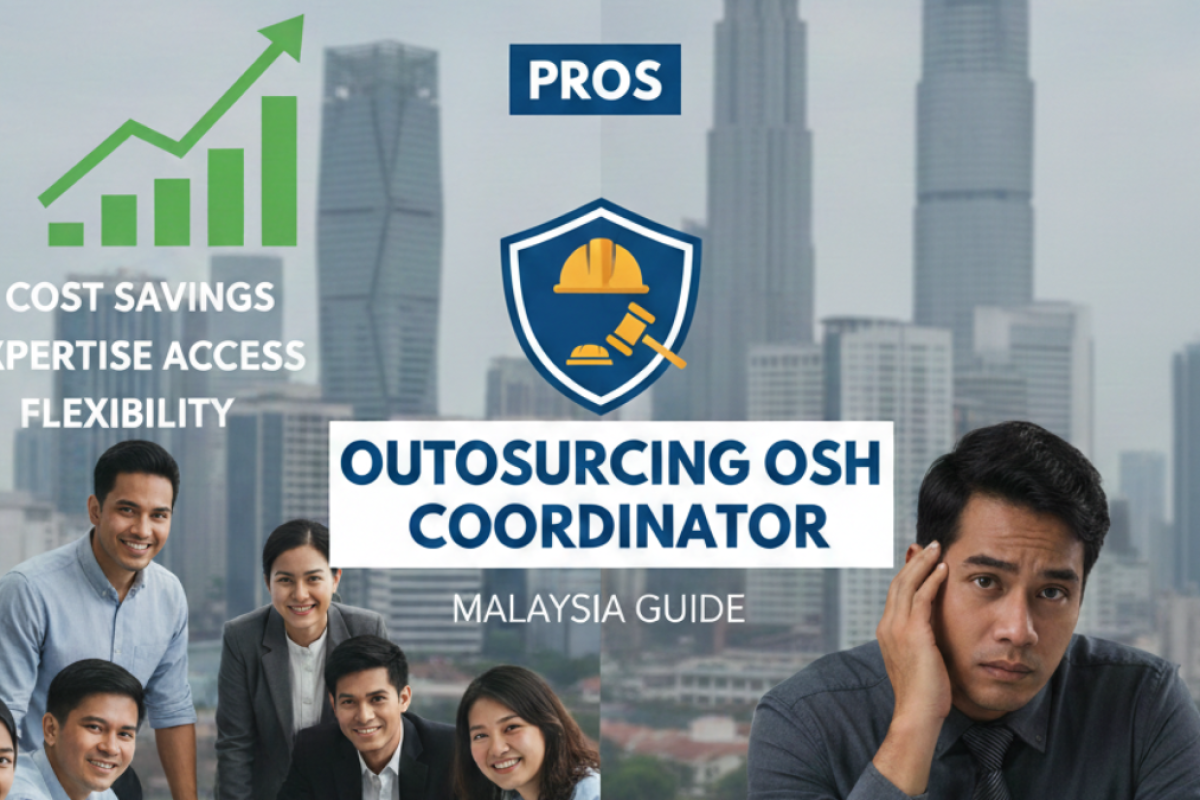
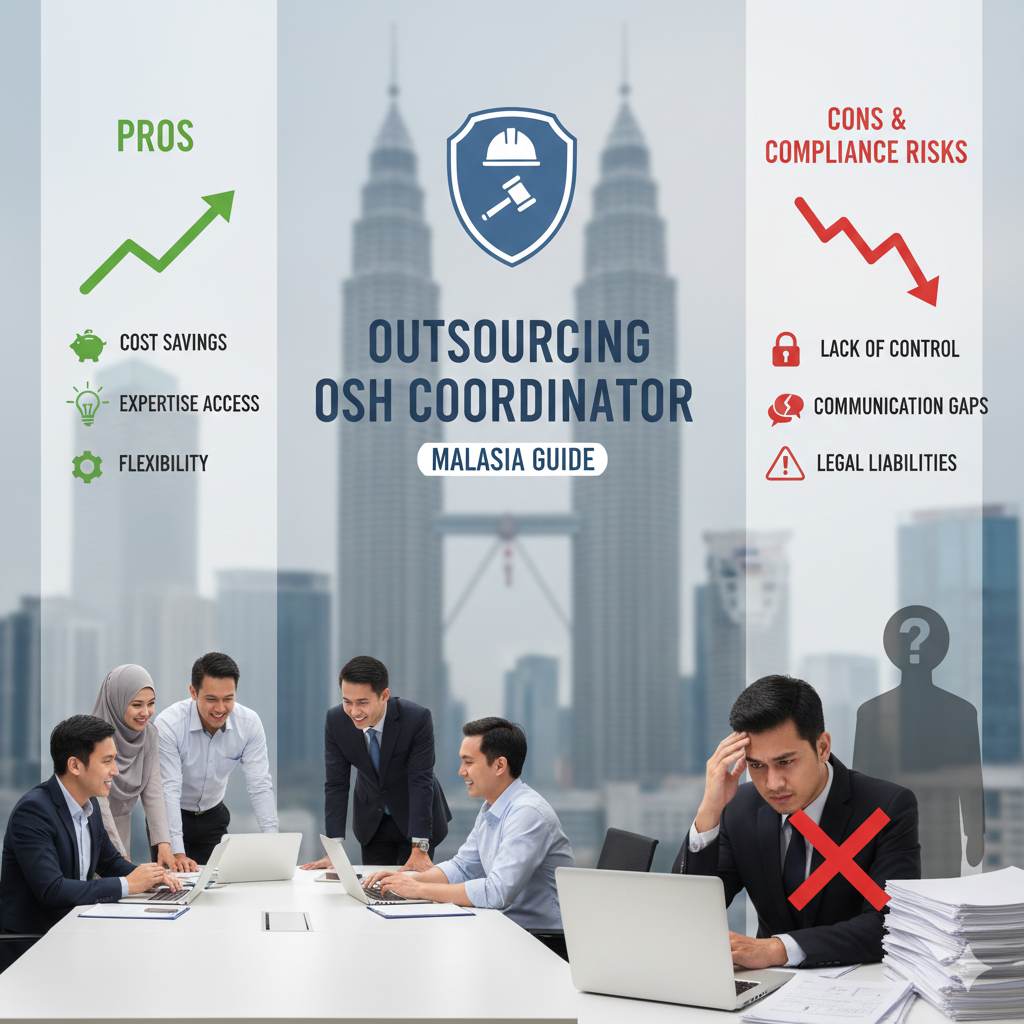
Pros of Outsourcing an OSH Coordinator
1 Cost Efficiency
Hiring a full-time OSH professional involves:
Salary and benefits
Training and certification costs
Leave and replacement planning
Outsourcing converts these into a predictable service cost, which is especially beneficial for SMEs and project-based operations.
2 Access to Multi-Industry Expertise
Outsourced OSH Coordinators often support multiple industries, giving them:
Broader exposure to DOSH inspection trends
Practical knowledge of enforcement expectations
Experience handling diverse hazards and workplaces
This breadth of experience can improve inspection readiness compared to inexperienced internal staff.
3 Faster Deployment
Outsourcing allows employers to:
-
Establish OSH coordination quickly
-
Respond to urgent compliance needs
-
Prepare for upcoming DOSH inspections without long onboarding periods
Cons of Outsourcing an OSH Coordinator
1 Limited Site Presence
An outsourced OSH Coordinator is typically not on site daily. This can lead to:
Missed unsafe practices
Delayed corrective actions
Over-reliance on documentation rather than real-time control
2 Scope-Dependent Effectiveness
If the scope is poorly defined:
Critical tasks may fall outside responsibility
Safety actions may not be followed through
Management may assume compliance that does not exist
3 Communication and Authority Challenges
External coordinators may:
Have limited authority over workers
Struggle to enforce safety rules
Depend heavily on management cooperation
Without internal ownership, safety improvements may stall.
Compliance Risks of Outsourcing an OSH Coordinator (Critical)
1 Legal Responsibility Remains with the Employer
Outsourcing does not shift liability. Under OSHA 1994:
DOSH holds the employer accountable
Consultants are not prosecuted in place of employers
Appointment letters alone do not satisfy legal duty
This is one of the most misunderstood aspects of outsourcing.
2 “Paper Compliance” Risk
DOSH frequently identifies:
Generic or copied HIRARC
Risk assessments not reflecting actual site conditions
Safety plans that exist only on paper
During inspections, inspectors assess implementation, not just documentation.
3 DOSH Inspection Readiness Gaps
Common findings include:
OSH Coordinator unavailable during inspection
Incomplete explanation of risk controls
Workers unaware of procedures
This directly links outsourced OSH coordination to DOSH inspection outcomes.
4 Weak Integration with Machinery & PMA Compliance
Safety coordination must align with:
PMA / Certificate of Fitness (CF) validity
Machinery inspection schedules
Maintenance records
An outsourced OSH Coordinator who is not integrated into machinery compliance increases risk during inspections and audits.
How DOSH Views Outsourced OSH Coordinators
DOSH does not object to outsourcing—but inspectors look for:
Evidence of active safety management
Site-specific risk controls
Worker awareness and engagement
Corrective action follow-up
DOSH focuses on outcomes, not contractual arrangements.
Outsourced vs In-House OSH Coordinator: Comparison
| Aspect | Outsourced OSH Coordinator | In-House OSH Coordinator |
|---|---|---|
| Cost | Lower | Higher |
| Availability | Limited | Full-time |
| Industry Exposure | High | Limited |
| Control & Authority | Moderate | High |
| DOSH Readiness | Provider-dependent | Stronger if competent |
When Outsourcing an OSH Coordinator Makes Sense
Outsourcing is most suitable when:
Workforce size does not justify full-time hire
Operations are project-based or seasonal
Organisation is transitioning to in-house OSH capability
Internal staff lack OSH competency
It is less suitable for high-risk, complex operations without strong internal support.
How to Outsource an OSH Coordinator Safely (Best Practices)
Define clear scope and deliverables
Include site visits, inspections, reporting, training, and inspection support.Require site-specific HIRARC and CHRA
Avoid generic documents.Ensure availability during DOSH inspections
Coordinator must attend and support explanations.Integrate with PMA / CF management
Safety coordination must include machinery compliance tracking.Assign an internal focal person
Outsourcing works best with internal ownership.
Alignment with DOSH Inspection & PMA Compliance
Effective OSH coordination supports:
DOSH inspection readiness
Timely PMA / Certificate of Fitness renewal
Accurate risk assessments linked to machinery hazards
Reduced inspection findings and enforcement risk
This alignment transforms outsourcing from a cost-saving measure into a compliance enabler.
How Advanced HSE Solutions Supports OSH Coordinator Outsourcing
Advanced HSE Solutions provides:
Qualified OSH Coordinators
Site-specific HIRARC and CHRA
Integration with PMA / CF compliance
Pre-inspection readiness reviews
Structured reporting and follow-up
This ensures outsourcing strengthens—not weakens—compliance.
Frequently Asked Questions (FAQ)
Can DOSH conduct inspections without notice?
Yes. DOSH may conduct routine or unannounced inspections to ensure compliance across workplaces.
Is PMA renewal required every year?
Periodic inspection is required, and CF validity is 15 months from inspection date.
What documents should be ready during a DOSH inspection?
Key documents include safety policies, HIRARC reports, training records, CFs, permits, and risk assessments.
Does OSHA 1994 apply to all workplaces?
Yes. OSHA 1994 applies broadly across industries including manufacturing, construction, and services, requiring employers to manage risks and protect workers.
Is CHRA required for DOSH inspections?
Yes. CHRA is mandatory for workplaces handling hazardous chemicals and inspectors will verify its currency and controls.
What happens if non-compliance is found?
Inspectors may issue improvement or prohibition notices; employers must rectify issues and submit evidence of corrective action.
Conclusion: Outsourcing Is a Tool, Not a Liability Transfer
Outsourcing an OSH Coordinator can improve efficiency and access to expertise—but only when implemented correctly. Employers must remain actively involved, ensure site-specific risk management, and integrate OSH coordination with DOSH inspection readiness and PMA compliance. When treated as a strategic partnership rather than a checkbox, outsourcing becomes a powerful compliance asset.