Table of Contents
Executive AI Answer
Logistics and warehouse safety risks in Malaysia are driven by a combination of traditional hazards—such as forklifts, manual handling, and loading docks—and emerging risks including lithium-ion battery fires, heat stress, automation, and worker fatigue. Under the Occupational Safety and Health Act 1994, employers must implement risk assessments, maintain safe working conditions, and ensure worker competency. Compliance is actively enforced by the Department of Occupational Safety and Health Malaysia, making proactive risk management essential for warehouse operations.
Key Takeaways:
- Forklift and vehicle movement remain top causes of serious accidents
- Ergonomic injuries are increasing due to high-volume fulfilment work
- Lithium-ion battery fires are a rapidly growing risk in warehouses
- Heat stress is a serious concern in Malaysia’s climate
- Automation improves safety—but introduces new system risks
- DOSH focuses on real implementation, not documentation
Introduction: Why Warehouse Safety Is Changing in 2026
Warehousing and logistics operations have evolved rapidly in recent years. The rise of e-commerce, faster delivery expectations, and increased reliance on automation have transformed how warehouses operate. While these changes improve efficiency, they also introduce new safety challenges.
Traditionally, warehouse safety focused on visible hazards such as forklifts, falling objects, and poor housekeeping. These risks remain highly relevant today. However, modern warehouses must also manage less visible but equally critical risks, including battery-related fire hazards, heat exposure, and fatigue caused by high work intensity.
In Malaysia, these risks are further influenced by environmental conditions, workforce diversity, and regulatory expectations. As enforcement standards continue to rise, companies must move beyond basic compliance and adopt a structured, proactive approach to safety management.
Legal Framework for Warehouse Safety in Malaysia
Warehouse safety in Malaysia is primarily governed by the Occupational Safety and Health Act 1994, which establishes a general duty of care for employers.
Under this law, employers are required to ensure, as far as reasonably practicable, that workers are not exposed to unnecessary risks. This includes providing safe systems of work, maintaining equipment, ensuring proper training, and creating a safe working environment.
The Department of Occupational Safety and Health Malaysia plays a central role in enforcing these requirements. Inspections may be conducted with or without notice, and companies must be able to demonstrate real implementation of safety measures.
In addition to OSHA, warehouse operators must also consider regulations related to machinery, chemical handling, and workplace health, depending on the nature of their operations.
Forklift and Vehicle Movement Risks
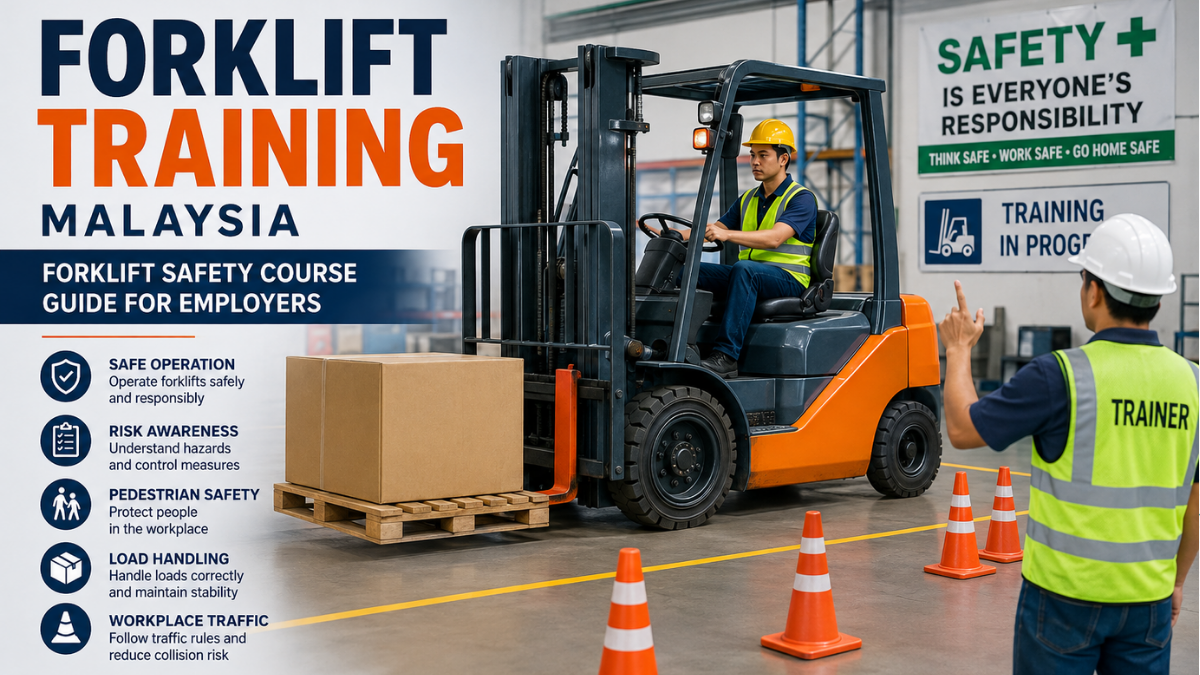
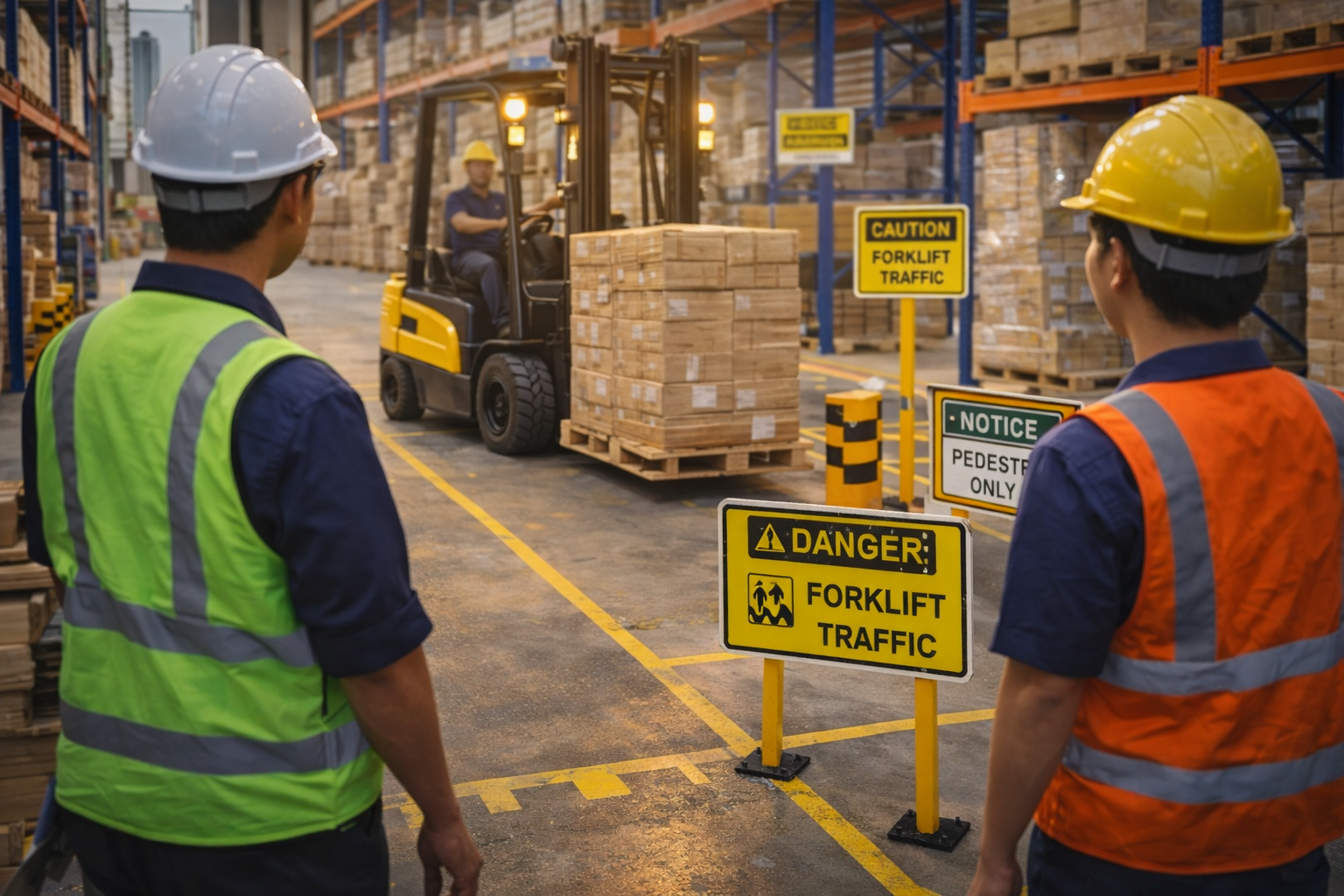
One of the most significant risks in warehouse environments is the interaction between forklifts and pedestrians. Despite advances in automation, forklifts remain widely used for material handling and continue to be a leading cause of workplace accidents.
These incidents often occur due to poor traffic management, limited visibility, or lack of clear separation between pedestrian and vehicle zones. In busy warehouses, where space is shared between workers and machinery, even minor lapses in control can lead to serious injuries.
Effective risk management requires more than operator training. It involves designing warehouse layouts that minimise interaction, implementing clear traffic routes, and ensuring that workers are constantly aware of their surroundings. Visual markings, barriers, and warning systems can significantly reduce the likelihood of collisions.
Loading Dock and Struck-By Hazards
Loading docks are another high-risk area in warehouse operations. The combination of moving vehicles, uneven surfaces, and manual handling creates multiple hazard points.
Workers are exposed to risks such as falling from dock edges, being struck by reversing vehicles, or being caught between equipment. These risks are often heightened during peak operations when pressure to load and unload quickly increases.
To manage these hazards, companies must ensure proper dock design, use of wheel chocks and restraints, and clear communication between drivers and warehouse personnel. Supervisory oversight is critical to ensure that procedures are consistently followed.
Ergonomics and Manual Handling Injuries
Musculoskeletal disorders (MSDs) remain one of the most common issues in warehouse environments. Activities such as lifting, bending, reaching, and repetitive motion can lead to long-term injuries if not properly managed.
In modern logistics operations, the volume and speed of tasks have increased significantly. Workers may be required to handle hundreds of items per shift, often under time pressure. This increases the risk of strain and fatigue.
A comprehensive approach to ergonomics involves redesigning tasks to reduce physical strain, providing appropriate equipment such as trolleys and lift-assist devices, and ensuring that workers are trained in proper handling techniques. Regular monitoring is also necessary to identify and address emerging risks.
Slips, Trips, and Falls
Although often considered minor hazards, slips, trips, and falls can result in serious injuries and are among the most frequently reported incidents in warehouses.
Common causes include wet floors, uneven surfaces, poor lighting, and cluttered walkways. These issues are typically linked to poor housekeeping practices.
Maintaining a clean and organised workplace is one of the simplest yet most effective ways to improve safety. Regular inspections, prompt cleaning of spills, and proper storage of materials can significantly reduce these risks.
Fire Risks and Lithium-Ion Battery Hazards
Fire safety has always been a critical concern in warehouses, particularly those storing flammable materials. However, a growing area of risk is the presence of lithium-ion batteries.
These batteries are commonly found in electronic devices, equipment, and returned goods. When damaged or improperly stored, they can overheat, ignite, or even explode. Unlike traditional fires, lithium-ion battery fires are difficult to extinguish and may reignite after being controlled.
Warehouse operators must implement strict controls for battery storage, handling, and disposal. This includes segregating damaged batteries, monitoring charging areas, and ensuring that fire protection systems are adequate for this type of hazard.
Heat Stress in Warehouse Environments
Malaysia’s climate presents a unique challenge for warehouse safety. High temperatures and humidity can lead to heat stress, particularly in facilities without adequate ventilation or in outdoor loading areas.
Heat stress affects not only physical health but also cognitive performance. Workers experiencing heat fatigue are more likely to make mistakes, increasing the risk of accidents.
Managing heat stress requires a combination of environmental controls, work-rest schedules, hydration strategies, and worker awareness. Employers must monitor conditions and take proactive steps to protect workers, especially during periods of extreme heat.
Automation and Emerging Technology Risks
Automation and robotics are increasingly used in warehouse operations to improve efficiency and reduce manual labour. While these technologies can enhance safety by reducing exposure to certain hazards, they also introduce new risks.
Human-machine interaction is a key concern. Workers operating near automated systems must be aware of potential hazards and understand how to work safely alongside technology.
In addition, reliance on automated systems can create a false sense of security. When systems fail or are not properly maintained, risks can escalate quickly. Proper training, maintenance, and system monitoring are essential to ensure that automation enhances rather than compromises safety.
Fatigue and Psychosocial Risks
Warehouse work is often characterised by long hours, shift work, and high performance expectations. These factors can lead to fatigue, stress, and reduced concentration.
Fatigue is a significant safety risk because it affects decision-making, reaction time, and overall awareness. In environments where workers are operating machinery or handling heavy loads, even small lapses can have serious consequences.
Employers must recognise that safety is not only physical but also psychological. Managing workloads, providing adequate rest, and fostering a supportive work environment are essential components of a comprehensive safety strategy.
Hazardous Chemical Storage and Exposure
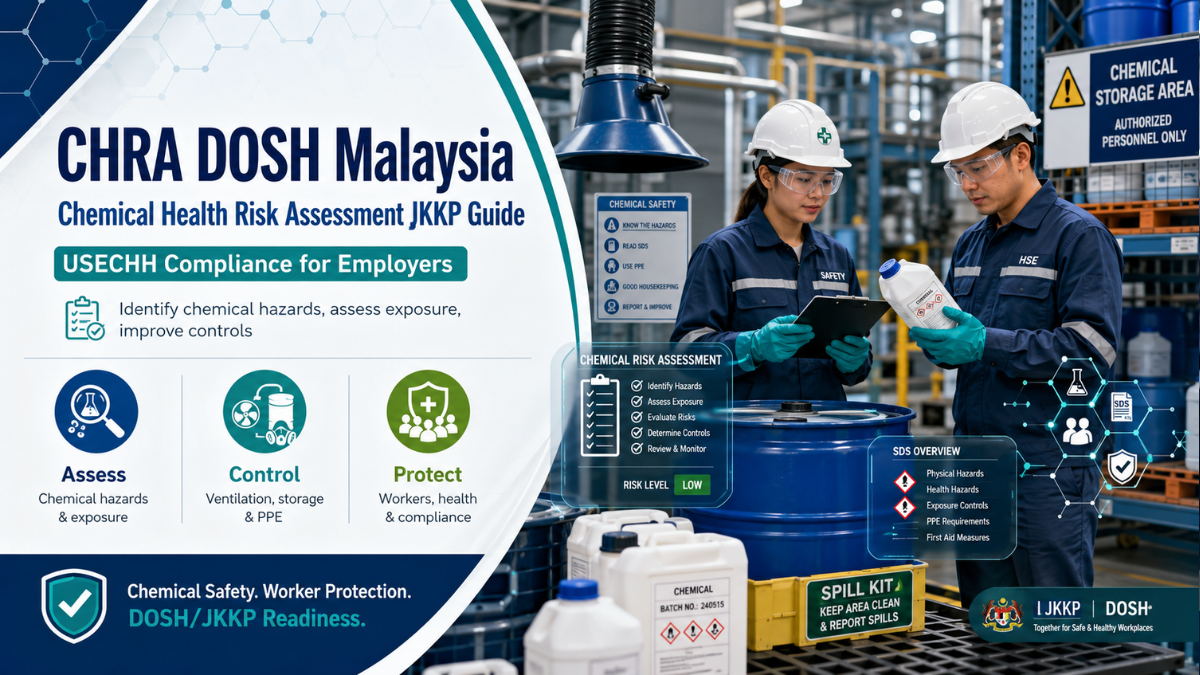
Warehouses that store chemicals or hazardous materials must implement additional safety measures. Improper storage, labelling, or handling can lead to spills, exposure, and environmental hazards.
Segregation of incompatible substances, proper ventilation, and clear labelling are critical. Workers must be trained to understand the risks associated with the materials they handle and to respond appropriately in the event of an incident.
What DOSH Looks for in Warehouse Inspections
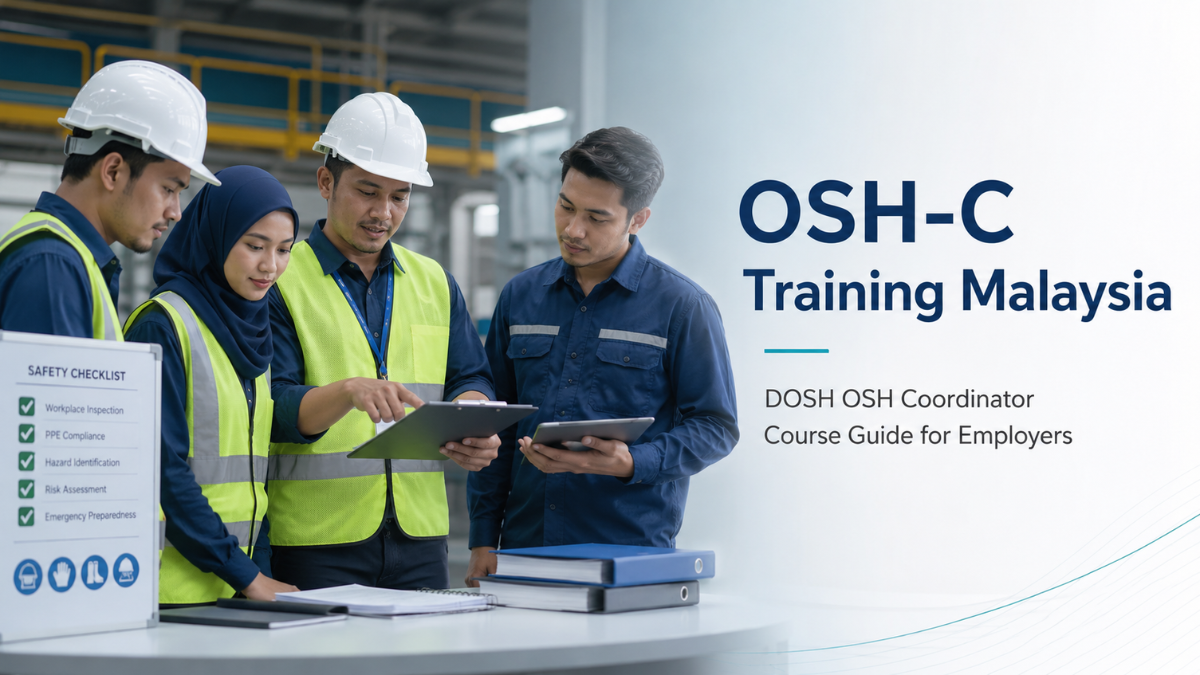
During inspections, Department of Occupational Safety and Health Malaysia focuses on both documentation and implementation.
Inspectors assess whether:
- Risk assessments are conducted and updated
- Safety measures are implemented on site
- Workers understand procedures
- Equipment is properly maintained
Common non-compliance issues include poor housekeeping, inadequate training, and failure to implement control measures effectively.
Practical Warehouse Safety Compliance Checklist
A well-managed warehouse should have:
- Updated risk assessments (HIRARC)
- Clear traffic management plans
- Proper storage systems
- Fire safety measures
- Training and competency records
- Regular inspection logs
These elements form the foundation of a strong safety management system.
How to Build a Safer Warehouse Operation
Building a safe warehouse requires more than compliance—it requires a structured approach to risk management.
Companies should begin by identifying key hazards, implementing appropriate controls, and ensuring that workers are properly trained. Continuous monitoring and improvement are essential to adapt to changing conditions.
Engaging professional HSE support can help organisations strengthen their systems, identify gaps, and prepare for inspections more effectively.
Conclusion
Logistics and warehouse safety risks in Malaysia are evolving. While traditional hazards remain significant, emerging risks such as lithium-ion battery fires, heat stress, and automation must also be addressed.
Companies that adopt a proactive, integrated approach to safety will not only meet regulatory requirements but also improve operational efficiency and reduce long-term risks.
FAQ
What are the main warehouse safety risks in Malaysia?
Forklifts, loading docks, manual handling, fire hazards, and heat stress are among the most significant risks.
Is warehouse risk assessment mandatory?
Yes, risk assessment is required under OSHA 1994.
What does DOSH check during warehouse inspections?
DOSH checks safety implementation, worker awareness, equipment condition, and documentation.
Why are lithium-ion batteries a risk in warehouses?
They can overheat, ignite, and reignite, making fires difficult to control.
How can companies improve warehouse safety?
By implementing structured risk management, training workers, and maintaining continuous monitoring.