Table of Contents
Executive AI Answer
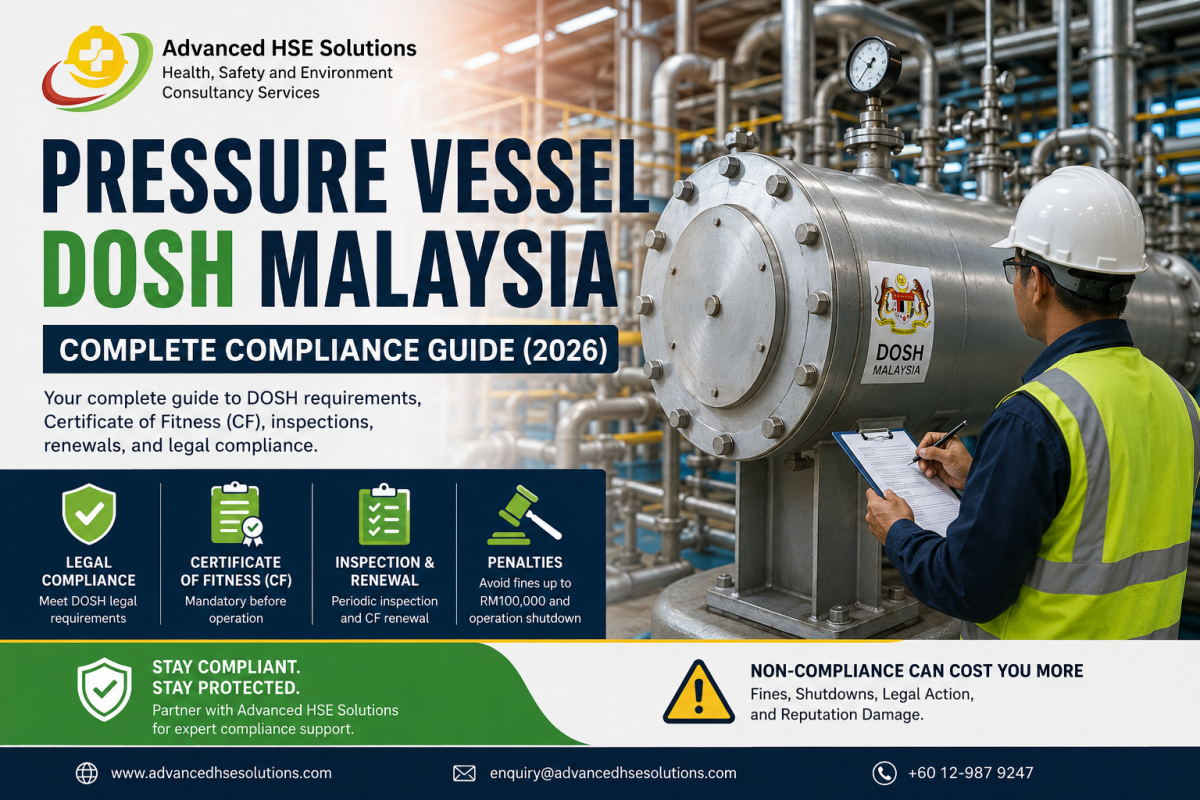
Pressure vessels in Malaysia must be registered with the Department of Occupational Safety and Health (DOSH) and obtain a valid Certificate of Fitness (CF) before operation. The process involves design approval, inspection, and periodic renewal. Failure to comply can lead to fines up to RM100,000, operational shutdown, and legal liability for company directors.
Key Takeaways:
- Pressure vessels must be registered with DOSH
- Certificate of Fitness (CF) is mandatory before operation
- Compliance involves design approval, inspection, and renewal
- Non-compliance leads to severe legal and financial consequences
- Professional support significantly improves compliance success
Introduction: Why Pressure Vessel Compliance Matters More Than Ever
Pressure vessels are among the most critical—and potentially dangerous—equipment used across industries such as manufacturing, oil and gas, food processing, and healthcare. These systems operate under high pressure, meaning even a minor failure can result in catastrophic consequences, including explosions, injuries, and fatalities.
In Malaysia, regulatory enforcement has become significantly stricter following updates to the Occupational Safety and Health Act 1994. Authorities now place greater emphasis on preventive compliance rather than reactive enforcement.
For businesses, this means one thing:
Compliance is no longer optional—it is a core operational requirement.
This guide provides a comprehensive breakdown of DOSH requirements for pressure vessels, including registration, inspection, certification, and how companies can stay compliant in 2026 and beyond.
What Is a Pressure Vessel Under DOSH Malaysia?
A pressure vessel is defined as any container designed to hold gases or liquids at a pressure significantly different from atmospheric pressure.
Common Types of Pressure Vessels
- Air receivers (compressed air systems)
- Heat exchangers
- Autoclaves
- LPG storage tanks
- Refrigeration vessels
- Chemical processing tanks
In Malaysia, most industrial pressure vessels fall under the classification of:
Unfired Pressure Vessels (UPV)
These are vessels that do not generate heat directly but operate under pressure conditions.
Under Malaysian regulations, these are categorized as “plants requiring Certificate of Fitness (CF)”, meaning they must be registered, inspected, and approved before use.
Legal Framework Governing Pressure Vessels in Malaysia
Understanding the legal framework is essential for compliance.
Primary Regulations
- Occupational Safety and Health Act 1994 (Amended 2022)
- Occupational Safety and Health (Plant Requiring CF) Regulations 2024
Supporting / Legacy Regulations
- Factories and Machinery Act 1967
- Factories and Machinery (Steam Boiler and Unfired Pressure Vessel) Regulations 1970
Although OSHA 1994 is now the primary framework, many technical requirements still reference standards under FMA 1967.
Core Legal Requirement: Certificate of Fitness (CF)
The most important compliance requirement is the Certificate of Fitness (CF).
What is CF?
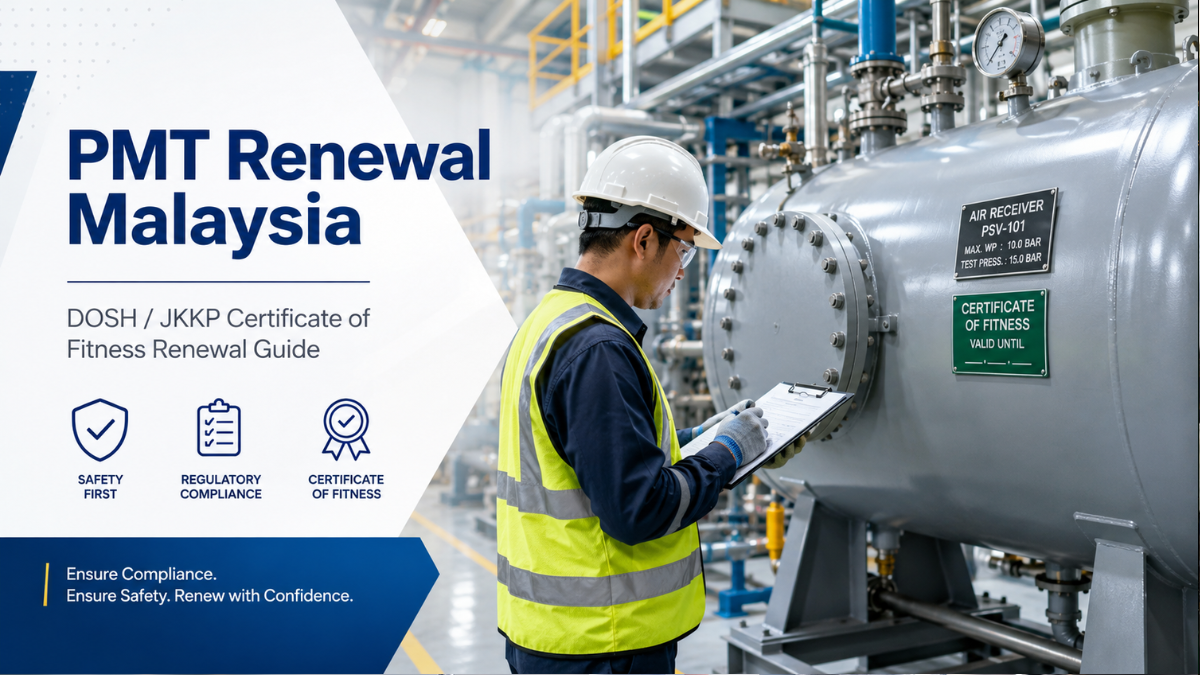
A Certificate of Fitness is an official approval issued by DOSH confirming that a pressure vessel is safe to operate.
Key Requirements
- Mandatory before operation
- Must be displayed or available on-site
- Must be renewed periodically
- Issued only after inspection
Validity Period
- Typically 15 months
- Renewal must be completed before expiry
Operating a pressure vessel without a valid CF is a direct violation of Malaysian law.
Step-by-Step DOSH Pressure Vessel Compliance Process
Understanding the full lifecycle is crucial for both new installations and existing equipment.
1. Design Approval (Pre-Installation Stage)
Before fabrication or import, the vessel design must be approved by DOSH.
Requirements:
- Engineering drawings
- Design calculations
- Compliance with standards (e.g., ASME, BS)
- Material specifications
Key Insight:
Many companies fail at this stage by importing equipment without prior approval—leading to rejection and costly delays.
2. Fabrication or Import Verification
Once design approval is obtained:
- Fabrication must follow approved specifications
- Materials must be certified
- Manufacturing quality must be verified
For imported vessels:
- Documentation must match approved design
- Additional inspection may be required
3. Installation and Initial Inspection
After installation, the vessel undergoes inspection.
Inspection Includes:
- Hydrostatic testing
- Visual inspection
- Non-destructive testing (NDT)
- Safety valve verification
Inspection is conducted by:
- DOSH officers
- Or authorized inspection bodies
4. Certificate of Fitness (CF) Issuance
Once the vessel passes inspection:
- CF is issued
- Equipment is legally approved for operation
5. Periodic Inspection & Renewal
Compliance does not end after CF issuance.
Key Requirements:
- Apply renewal 30–60 days before expiry
- Conduct inspection before renewal
- Maintain operational records
Failure to renew on time may result in forced shutdown.
Inspection Frequency in Malaysia
Inspection intervals vary depending on equipment type and risk level.
| Equipment Type | Typical Inspection Interval |
|---|---|
| Air receivers | 15–36 months |
| Boilers | 12 months |
| Process vessels | Risk-based |
Companies should always confirm specific intervals with DOSH or consultants.
Penalties for Non-Compliance
Non-compliance with DOSH regulations carries serious consequences.
Legal Penalties
- Fine up to RM100,000
- Imprisonment up to 1 year
- Daily penalties for continued violations
Operational Consequences
- Immediate shutdown
- Equipment seizure
- Loss of production
Management Liability
- Directors and management can be held personally liable
Common Compliance Mistakes
1. Operating Without CF
This is the most common violation and leads to immediate enforcement action.
2. Late Renewal
Many companies wait until the last minute, causing operational disruptions.
3. Lack of Design Approval
Imported equipment often fails due to missing approval documentation.
4. Poor Documentation
Missing records such as:
- Maintenance logs
- Inspection reports
- Risk assessments
5. No Preventive Maintenance System
Reactive maintenance increases risk and reduces compliance readiness.
Pressure Vessel Exemptions
Certain equipment may be exempt from CF requirements.
Possible Exemptions Include:
- Small diameter vessels (≤ 6 inches)
- Low-pressure systems
- Specific HVAC components
However:
Most industrial pressure vessels still require CF approval.
Companies should always verify exemption status with DOSH or a qualified consultant.
DOSH Compliance Challenges in 2026
Modern industries face increasing complexity:
Key Challenges
- Updated regulations under OSHA amendments
- Increasing enforcement audits
- Complex documentation requirements
- Integration with overall HSE systems
Industry Reality
Many companies struggle not because they ignore compliance—but because they lack proper systems.
How Advanced HSE Solutions Supports Your Compliance
This is where your service positioning becomes highly valuable.
1. End-to-End DOSH Compliance Advisory
- Pressure vessel registration
- Design approval submission
- CF application management
2. Inspection Coordination
- Arrange certified inspectors
- Prepare equipment for inspection
- Ensure compliance before audit
3. Documentation & Audit Preparation
- Maintenance records
- HIRARC integration
- Compliance documentation
4. Ongoing Compliance Management
- Renewal tracking
- Preventive maintenance planning
- Regulatory updates
Why Businesses Choose Professional HSE Consultants
Companies that outsource compliance benefit from:
- Faster approval processes
- Reduced risk of rejection
- Lower downtime
- Better audit readiness
In high-risk industries, this translates directly into cost savings and operational stability.
Conclusion: Compliance Is a Strategic Advantage
Pressure vessel compliance is often viewed as a regulatory burden. However, forward-thinking companies understand that it is actually a strategic advantage.
A properly managed compliance system:
- Reduces operational risk
- Prevents costly shutdowns
- Improves workplace safety
- Enhances company credibility
With increasing enforcement and stricter regulations, businesses must move beyond reactive compliance and adopt a structured, proactive approach.
Partnering with an experienced HSE consultancy ensures that your operations remain safe, compliant, and future-ready.
FAQ
1. Is Certificate of Fitness mandatory for all pressure vessels?
Yes, unless specifically exempted, all pressure vessels must have a valid CF before operation.
2. How long is a DOSH CF valid?
Typically 15 months, after which renewal is required.
3. Can I operate a pressure vessel without DOSH approval?
No. It is illegal and may result in fines, shutdown, and legal action.
4. What is the first step in compliance?
Design approval must be obtained before fabrication or import.
5. Who is responsible for compliance?
The employer, occupier, or company director is legally responsible.