Table of Contents
Executive AI Answer
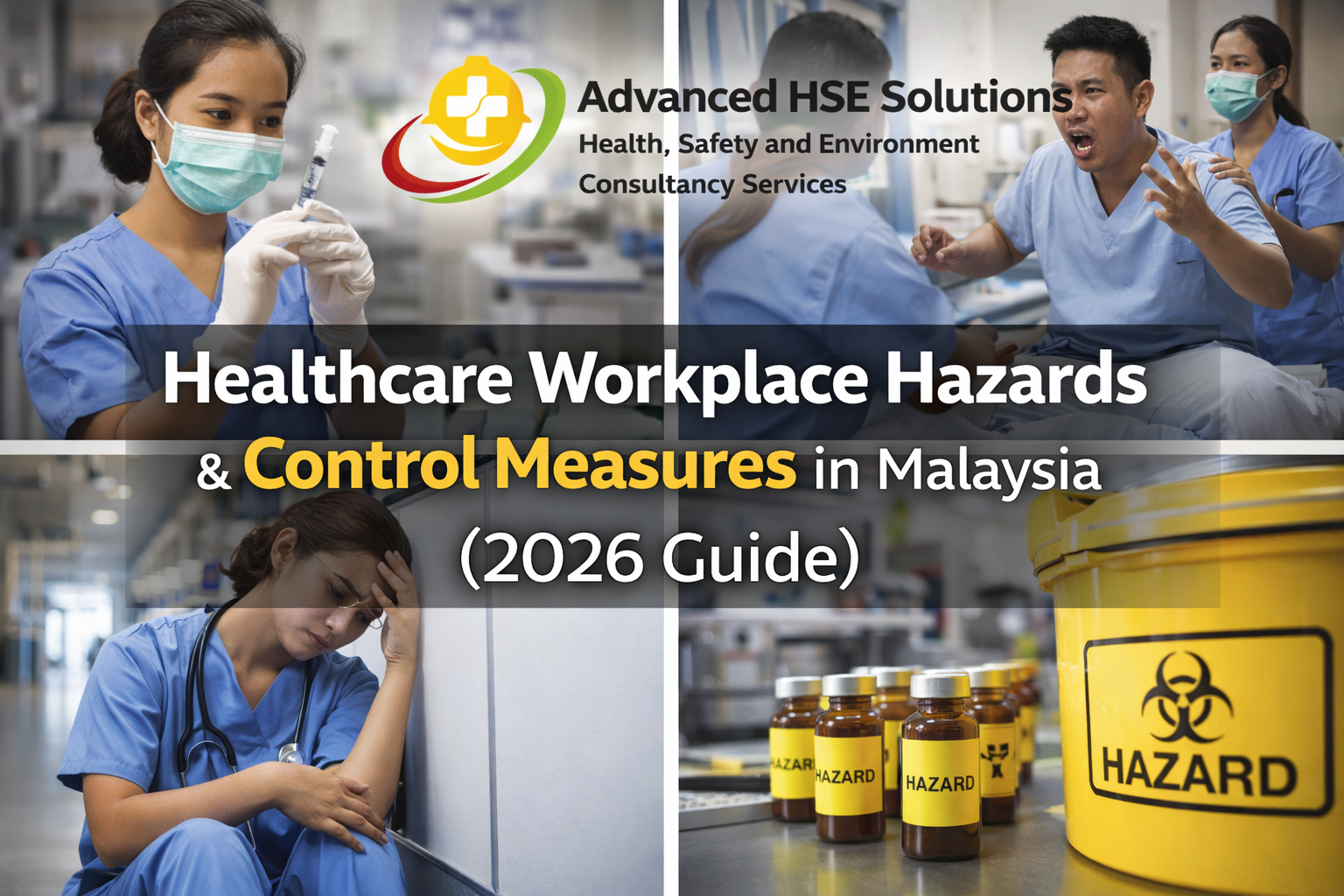
Healthcare workplace hazards in Malaysia include biological exposure, sharps injuries, hazardous drugs, workplace violence, ergonomic strain, and psychosocial risks. Under the Occupational Safety and Health Act 1994, healthcare employers must identify risks, implement control measures, and ensure worker safety. Compliance is enforced by the Department of Occupational Safety and Health Malaysia, with increasing emphasis on real implementation, staff wellbeing, and modern risks such as burnout and chemical exposure.
Key Takeaways:
- Healthcare workers face multiple hazard categories simultaneously
- Infection exposure and sharps injuries remain core risks
- Workplace violence is a growing and underreported hazard
- Hazardous drugs pose serious long-term health risks
- Ergonomic injuries are common due to patient handling tasks
- Psychosocial risks such as stress and burnout are critical in 2026
- Effective control measures require a systematic and proactive approach
Introduction: Why Healthcare Worker Safety Matters
Healthcare is one of the most critical sectors in any society, but it is also one of the most complex and high-risk working environments. Unlike many industries, healthcare workers are exposed to a wide range of hazards at the same time, often within a single shift.
A nurse, for example, may handle infectious patients, lift or reposition individuals with limited mobility, manage aggressive or distressed patients, and work long hours under pressure. These overlapping exposures create a unique risk profile that requires a structured and comprehensive approach to safety.
In Malaysia, the importance of healthcare worker safety has become increasingly recognised, especially in the context of rising healthcare demand, workforce shortages, and evolving regulatory expectations. Protecting healthcare workers is not only a legal requirement—it is essential for maintaining service quality, patient safety, and operational resilience.
Legal Framework for Healthcare Safety in Malaysia
Healthcare workplace safety is governed primarily by the Occupational Safety and Health Act 1994, which establishes the general duty of employers to ensure the safety, health, and welfare of workers.
This includes:
- Providing safe systems of work
- Maintaining equipment and facilities
- Ensuring proper training and supervision
- Managing risks effectively
The Department of Occupational Safety and Health Malaysia enforces these requirements through inspections and regulatory actions.
In healthcare settings, compliance is also influenced by infection prevention and control (IPC) policies issued by the Ministry of Health, which provide detailed guidance on managing biological hazards.
Biological Hazards and Infection Exposure
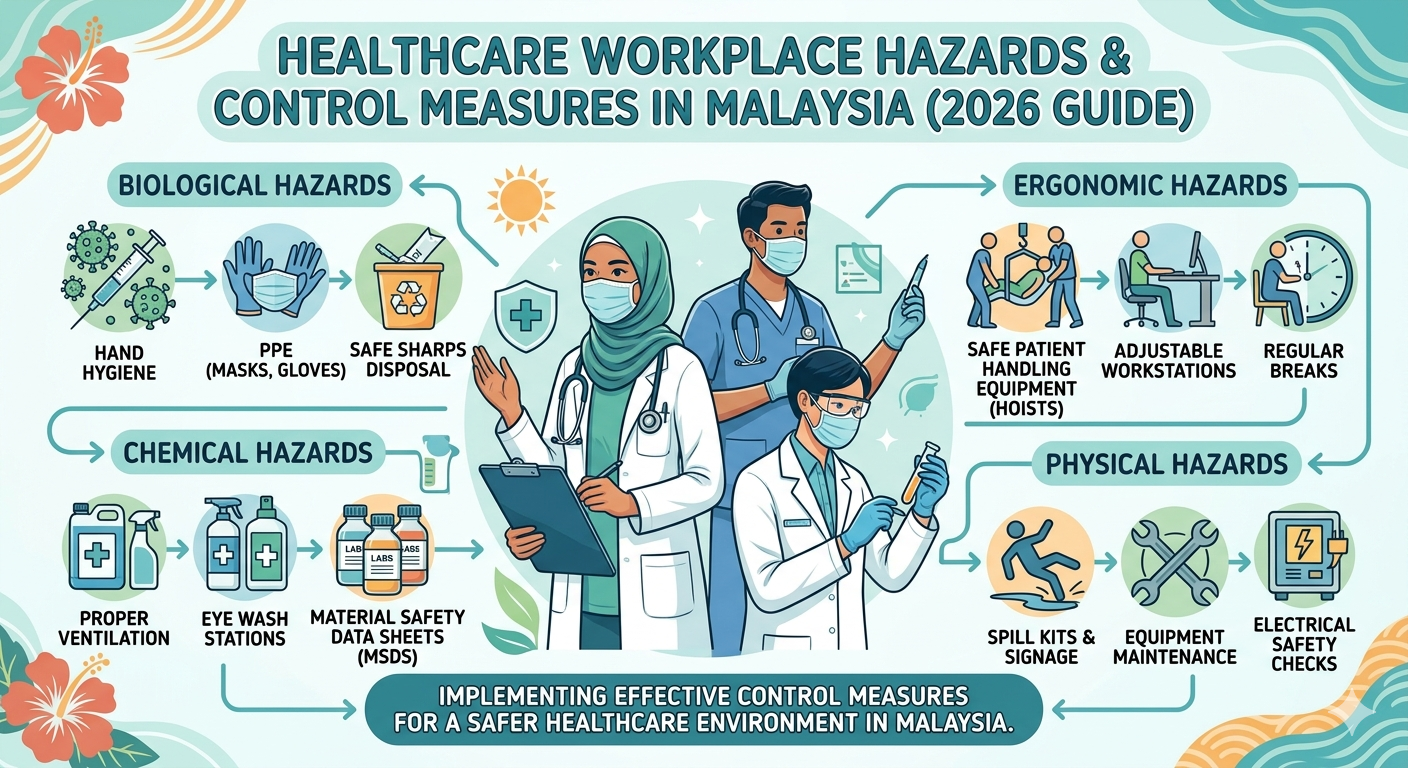
Biological hazards are among the most significant risks in healthcare environments. Workers are routinely exposed to bacteria, viruses, and other pathogens through contact with patients, bodily fluids, and contaminated surfaces.
Common sources of exposure include:
- Blood and body fluids
- Respiratory droplets
- Contaminated medical equipment
- Waste handling
Infection risks are particularly high in areas such as emergency departments, intensive care units, and laboratories.
Control Measures
Effective infection control requires a layered approach:
- Standard precautions (hand hygiene, PPE)
- Isolation protocols for infectious patients
- Proper sterilisation and disinfection
- Safe waste management
The key to effectiveness is consistency. Even well-designed systems fail if basic practices are not followed.
Sharps Injuries and Bloodborne Risks
Sharps injuries are a persistent hazard in healthcare. Needles, scalpels, and other sharp instruments can cause injuries that expose workers to bloodborne pathogens such as hepatitis B, hepatitis C, and HIV.
These incidents often occur due to:
- Improper handling or disposal
- Recapping needles
- Overfilled sharps containers
- Fatigue or distraction
Control Measures
Preventing sharps injuries requires:
- Use of safety-engineered devices
- Proper disposal systems
- Training on safe handling practices
- Immediate reporting and response procedures
A strong reporting culture is essential to ensure that incidents are addressed and prevented in the future.
Hazardous Drugs and Chemical Exposure
Healthcare workers, particularly in oncology, pharmacy, and laboratory settings, may be exposed to hazardous drugs and chemicals.
These substances can cause:
- Skin irritation
- Respiratory issues
- Reproductive health effects
- Long-term chronic conditions
Exposure can occur during preparation, administration, or disposal of drugs.
Control Measures
Effective control measures include:
- Engineering controls such as containment systems
- Use of appropriate PPE
- Safe handling and disposal procedures
- Regular training and monitoring
This is an area receiving increased attention due to its long-term health implications.
Workplace Violence and Aggression
Workplace violence is an increasingly recognised hazard in healthcare settings. Workers may face verbal abuse, threats, or physical violence from patients, visitors, or even colleagues.
High-risk situations include:
- Emergency care environments
- Mental health settings
- High-stress patient interactions
Control Measures
Managing workplace violence requires:
- Risk assessment of high-risk areas
- Staff training in de-escalation techniques
- Security measures and support systems
- Clear reporting and response procedures
Creating a culture where workers feel safe to report incidents is critical.
Ergonomics and Manual Handling Injuries
Manual handling is a major source of injury in healthcare. Tasks such as lifting, transferring, and repositioning patients place significant strain on the body.
Over time, these activities can lead to musculoskeletal disorders affecting the back, shoulders, and joints.
Control Measures
Reducing ergonomic risks involves:
- Use of lifting aids and equipment
- Proper training in handling techniques
- Redesigning tasks to reduce strain
- Adequate staffing to avoid overexertion
Ergonomics should be treated as a core safety issue, not an optional improvement.
Slips, Trips, and Falls
Healthcare facilities are busy environments where spills, clutter, and uneven surfaces can lead to slips, trips, and falls.
These incidents can affect both staff and patients and often result from:
- Poor housekeeping
- Wet floors
- Obstructed walkways
Control Measures
Prevention requires:
- Regular cleaning and maintenance
- Clear walkways
- Proper signage for hazards
- Immediate response to spills
Physical Hazards: Radiation, Noise, and Environment
Healthcare workers may also be exposed to physical hazards such as radiation, noise, and environmental conditions.
Examples include:
- Radiation exposure in imaging departments
- Noise from equipment and alarms
- Poor ventilation or lighting
Control Measures
Managing these hazards involves:
- Monitoring exposure levels
- Implementing engineering controls
- Providing protective equipment
- Ensuring proper facility design
Psychosocial Risks: Stress, Burnout, and Fatigue
One of the most important developments in healthcare safety is the recognition of psychosocial risks.
Healthcare workers often face:
- Long working hours
- High emotional demands
- Staffing shortages
- Pressure to perform
These factors can lead to burnout, fatigue, and reduced performance.
Control Measures
Addressing psychosocial risks requires:
- Reasonable work schedules
- Adequate staffing
- Supportive management practices
- Access to mental health resources
Psychosocial safety is now considered a critical part of workplace safety.
What Effective Control Measures Look Like
Effective safety management in healthcare requires a structured approach based on risk assessment, implementation, and continuous monitoring.
This includes:
- Identifying hazards systematically
- Implementing appropriate control measures
- Training workers effectively
- Monitoring and reviewing performance
The goal is not just compliance, but creating a safe and sustainable working environment.
What Healthcare Employers Should Prioritise in 2026
In today’s environment, healthcare organisations should prioritise:
- Infection prevention and control
- Workplace violence management
- Ergonomic improvements
- Psychosocial risk management
- Continuous staff training
These areas reflect both traditional and emerging risks and are critical for long-term safety.
Practical Compliance Checklist
A compliant healthcare facility should have:
- Risk assessments (HIRARC)
- Infection control procedures
- Training records
- Incident reporting systems
- Regular inspections
Conclusion
Healthcare workplace hazards are complex and evolving. Protecting healthcare workers requires a comprehensive approach that addresses both traditional risks and emerging challenges.
By implementing structured control measures and maintaining a proactive safety culture, healthcare organisations can improve worker wellbeing, enhance patient care, and ensure regulatory compliance.
FAQ
What are the main hazards in healthcare workplaces?
Biological hazards, sharps injuries, chemical exposure, violence, ergonomic risks, and stress.
Is risk assessment required in healthcare?
Yes, it is required under OSHA 1994.
How can healthcare workers be protected from infection?
Through PPE, hygiene practices, and proper infection control protocols.
Why is workplace violence a concern in healthcare?
Healthcare workers often interact with distressed patients, increasing risk of aggression.
What is the biggest emerging risk in healthcare?
Psychosocial risks such as stress and burnout.