Table of Contents
Executive AI Answer
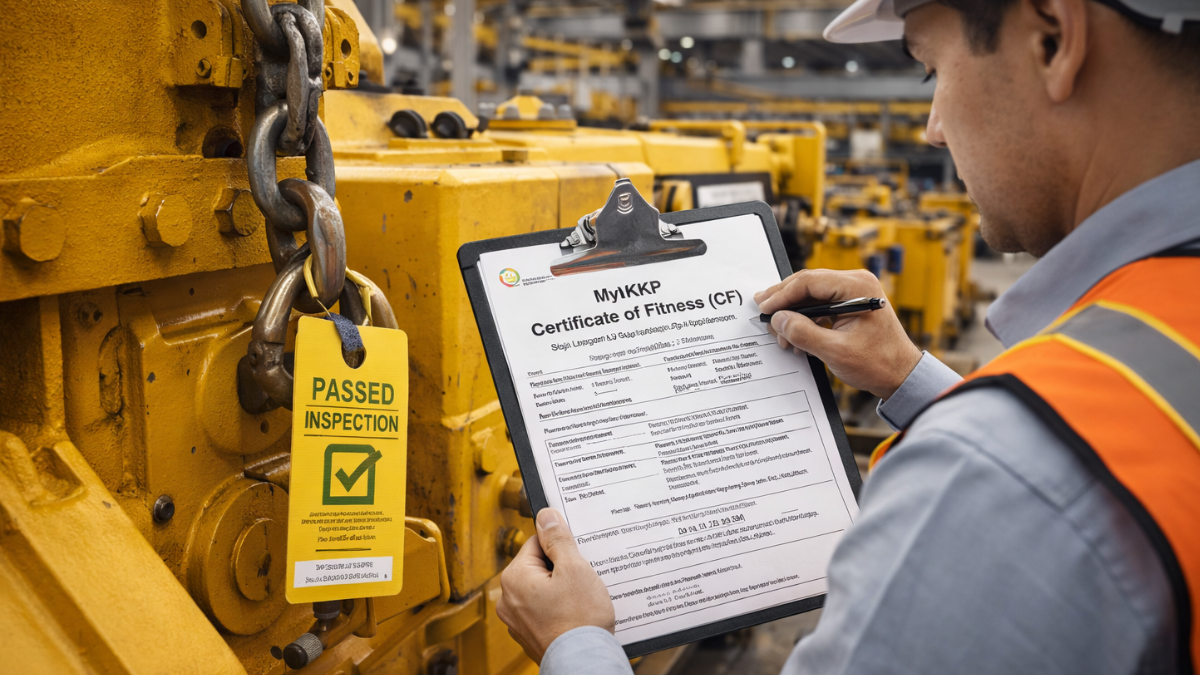
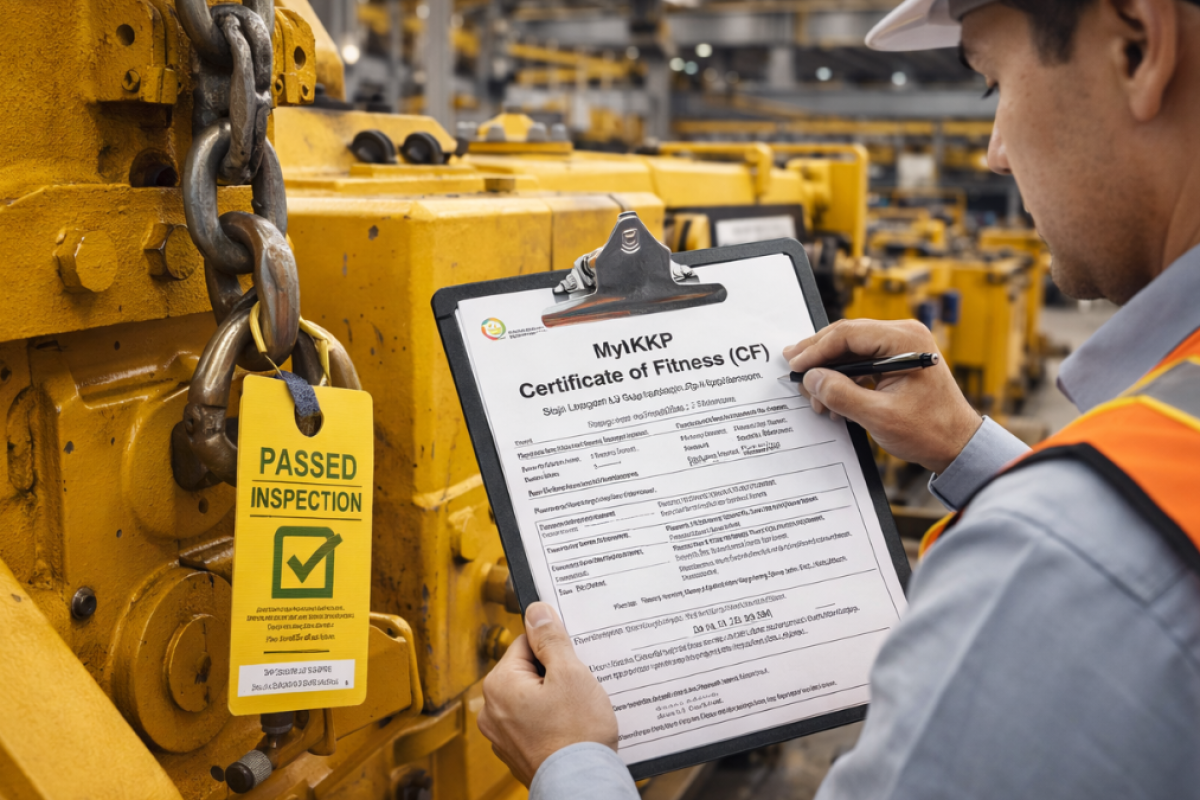
PMA renewal in Malaysia refers to the mandatory periodic inspection of certificated machinery that results in the issuance of a Certificate of Fitness (CF) under the Occupational Safety and Health Act 1994. The process involves MyKKP submission, inspection by DOSH or a licensed inspector, and compliance verification. A Certificate of Fitness is valid for 15 months from the inspection date. Organisations should begin the PMA renewal process 2 to 3 months before CF expiry to avoid delays, repeat inspections, or enforcement action.
Key Takeaways:
-
PMA renewal is a mandatory safety compliance process, not just paperwork.
In Malaysia, “PMA renewal” refers to the periodic inspection of certificated machinery that results in the issuance of a Certificate of Fitness (CF) under OSHA 1994. Operating equipment without a valid CF exposes organisations to enforcement action, stop-work orders, and legal liability. -
Start the PMA renewal process at least 2–3 months before CF expiry.
Effective PMA renewal requires early planning, MyKKP submission, inspection scheduling, and equipment readiness. Late applications often lead to inspection refusal, repeat visits, additional fees, and operational downtime. -
Most PMA renewal delays are preventable with proper preparation.
Common issues such as incomplete documentation, incorrect MyKKP roles, and equipment not being inspection-ready are avoidable. A structured pre-inspection review significantly improves approval outcomes and reduces compliance risk.
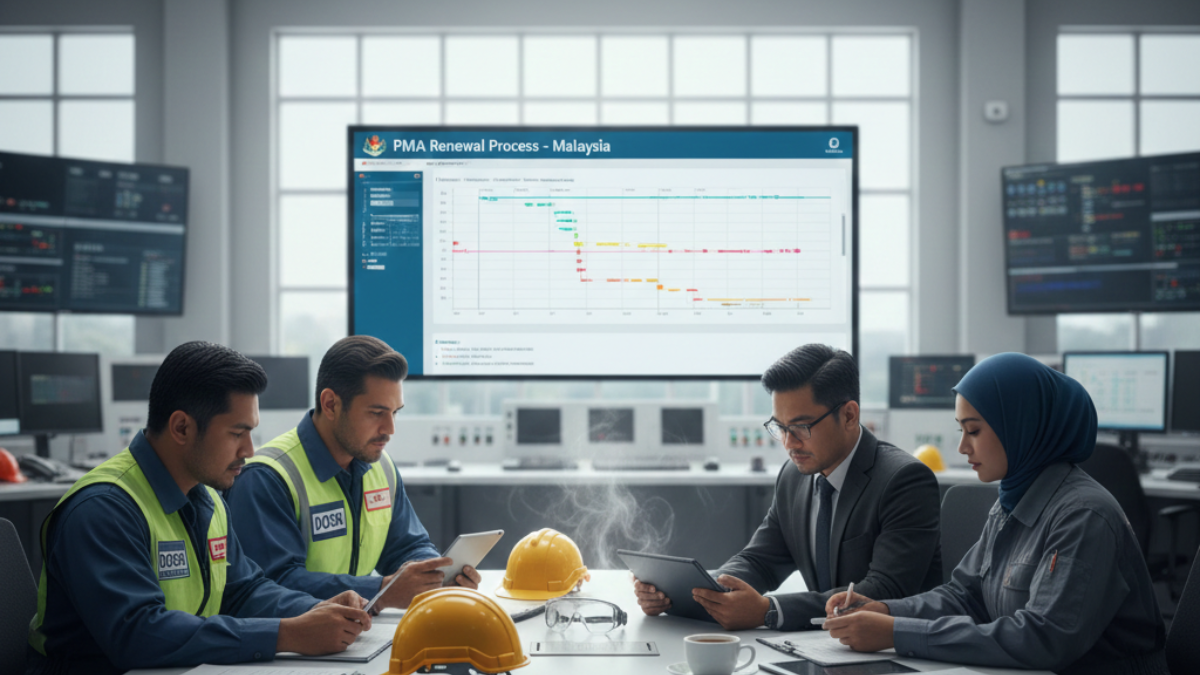
What Is the PMA Renewal Process?
In Malaysia, PMA (Perakuan Memperbolehkan Alat) is a term still widely used by industry practitioners to describe the compliance process for certificated machinery. While the terminology has evolved, the operational requirement remains the same: certain machinery must undergo periodic inspection to confirm safety and legal compliance.
Today, what the industry calls “PMA renewal” is, in regulatory terms, the periodic inspection that results in a Certificate of Fitness (CF) being issued. This requirement is enforced under the Department of Occupational Safety and Health (DOSH) pursuant to the Occupational Safety and Health Act 1994 and its subsidiary regulations.
The PMA renewal process applies to owners and occupiers of certificated machinery, including factories, commercial buildings, construction sites, and industrial plants.
PMA vs Certificate of Fitness (CF): Understanding the Regulatory Change
Historically, PMA was issued under the former Factories and Machinery regulatory framework. Following regulatory updates, DOSH now issues a Certificate of Fitness (CF) instead of using the term PMA.
Despite this change, industry searches, audits, and internal documentation still use “PMA renewal”—which is why the term remains relevant for compliance communication and search behaviour.
Key regulatory facts:
-
PMA is no longer the official term, but it is functionally equivalent to CF in common usage.
-
A CF is issued after a successful periodic inspection.
-
The CF is valid for 15 months from the inspection date, not from the previous expiry date.
Understanding this distinction is critical for accurate compliance planning and avoiding misinterpretation during audits.
Which Equipment Requires PMA Renewal?
Not all machinery requires PMA renewal. Only plant and machinery classified as “requiring Certificate of Fitness” fall under this regime.
Common equipment requiring PMA renewal:
-
Lifting machinery (tower cranes, mobile cranes, overhead cranes, hoists, gondolas)
-
Steam boilers
-
Unfired Pressure Vessels (UPV)
-
Passenger lifts
-
Escalators and moving walks
The legal responsibility to ensure renewal lies with the owner or occupier, depending on operational control. Operating any of the above equipment without a valid CF exposes the organisation to enforcement action, stop-work orders, and legal liability.
PMA Renewal Process: Step-by-Step
This section outlines the actual operational workflow followed in Malaysia.
Step 1: Verify CF Status and Inspection Eligibility
Begin by confirming:
-
CF number and expiry date
-
Date of last inspection
-
Whether the equipment is eligible for the next periodic inspection window
Inspections cannot be conducted arbitrarily early. Planning must align with regulatory timing requirements.
Step 2: MyKKP Application (PEKALA)
All PMA renewal applications are processed via MyKKP, DOSH’s online compliance platform.
Key requirements:
-
Applicant must be registered as PATK Tahap 1
-
Equipment must be listed under the correct owner/occupier
-
Status must be active and accurate
Errors at this stage are one of the most common causes of renewal delays.
Step 3: Schedule Periodic Inspection
Once the application is submitted:
-
DOSH or a licensed inspecting body will coordinate the inspection date
-
Written notice may be issued prior to inspection
-
Owners may propose suitable inspection dates (subject to eligibility)
Inspection scheduling should always consider plant shutdown planning, especially for boilers and pressure vessels.
Step 4: Physical Inspection and Compliance Assessment
During inspection, the officer or licensed inspector will:
-
Conduct a physical examination of the equipment
-
Review safety devices and operating condition
-
Verify maintenance, service, and test records
-
Perform load tests or internal inspections where applicable
If the equipment is not ready, the inspection may be refused, requiring resubmission and additional inspection fees.
Step 5: Certificate of Fitness (CF) Issuance
Upon successful inspection:
-
DOSH issues a Certificate of Fitness
-
The CF is valid for 15 months from the inspection date
-
Records must be retained for audits and future renewals
PMA Renewal Timeline: When Should You Start?
A structured timeline significantly reduces compliance risk.
Recommended best-practice timeline:
-
90 days before CF expiry: Preparation and document review
-
60 days before expiry: MyKKP submission
-
30 days before expiry: Inspection scheduling and readiness checks
-
Inspection date: CF validity resets (15 months)
Late submissions often lead to expired CFs, operational disruption, or enforcement action.
Documents Required for PMA Renewal
Many organisations also combine PMA renewal planning with professional CHRA services in Malaysia to ensure all machinery-related health and safety hazards are actively assessed.
Incomplete documentation is a leading cause of failed or delayed inspections.
Core documents (all equipment):
Existing PMA / CF
Equipment identification details
Maintenance and service records
Equipment-specific documents:
Lifting machinery: Load test certificates
Boilers / UPV: Internal inspection readiness records
Lifts / escalators: Maintenance contractor service logs
Documents must be consistent, current, and verifiable.
Common Causes of PMA Renewal Delays
A lack of documented HIRARC risk assessment is a frequent cause of inspection findings, leading to delays in PMA renewal and additional corrective actions.
The most frequent delays arise from:
Equipment not ready on inspection day
Incorrect MyKKP roles or plant status
Missing or outdated documents
Misunderstanding inspection eligibility timing
Each failed inspection can result in additional fees and rescheduling, increasing both cost and downtime.
What Happens If PMA / CF Expires?
Operating without a valid CF is a serious offence under OSHA 1994.
Potential consequences include:
-
Stop-work or prohibition notices
-
Legal penalties and prosecution
-
Insurance invalidation
-
Increased liability in accident investigations
From a risk management perspective, PMA renewal is not optional.
PMA Renewal Extension (Lanjutan CF): When Is It Used?
In limited circumstances, organisations may apply for a CF extension via MyKKP.
However:
-
Extensions are temporary and conditional
-
They do not replace the requirement for inspection
-
Repeated reliance on extensions may attract scrutiny
Extensions should be treated as exceptions, not standard practice.
How Advanced HSE Solutions Supports PMA Renewal
Our expert DOSH compliance consultancy ensures your MyKKP applications, inspection readiness, and regulatory interpretation align with current OSHA 1994 requirements.
Advanced HSE Solutions provides end-to-end PMA renewal support, including:
Regulatory interpretation and advisory
MyKKP application management
Pre-inspection readiness audits
Liaison with DOSH and licensed inspectors
Documentation verification and corrective action guidance
This structured approach reduces inspection failures, repeat visits, and compliance risk.
Frequently Asked Questions (FAQ)
How long does the PMA renewal process take?
Typically 4–8 weeks, depending on equipment type and readiness.
Is PMA renewal required every year?
Periodic inspection is required, and CF validity is 15 months from inspection date.
Can equipment operate while renewal is pending?
No. Operation without a valid CF may result in enforcement action.
Is PMA the same as Certificate of Fitness?
PMA is an industry term; CF is the official certificate issued by DOSH.
Can inspection be done before CF expiry?
Yes, but only within the permitted inspection window.
Conclusion
The PMA renewal process is a safety and compliance obligation, not merely an administrative task. Early planning, correct documentation, and inspection readiness are essential to avoid delays, penalties, and operational risk. With proper management and expert support, PMA renewal can be predictable, efficient, and compliant.