Table of Contents
Quick Answer
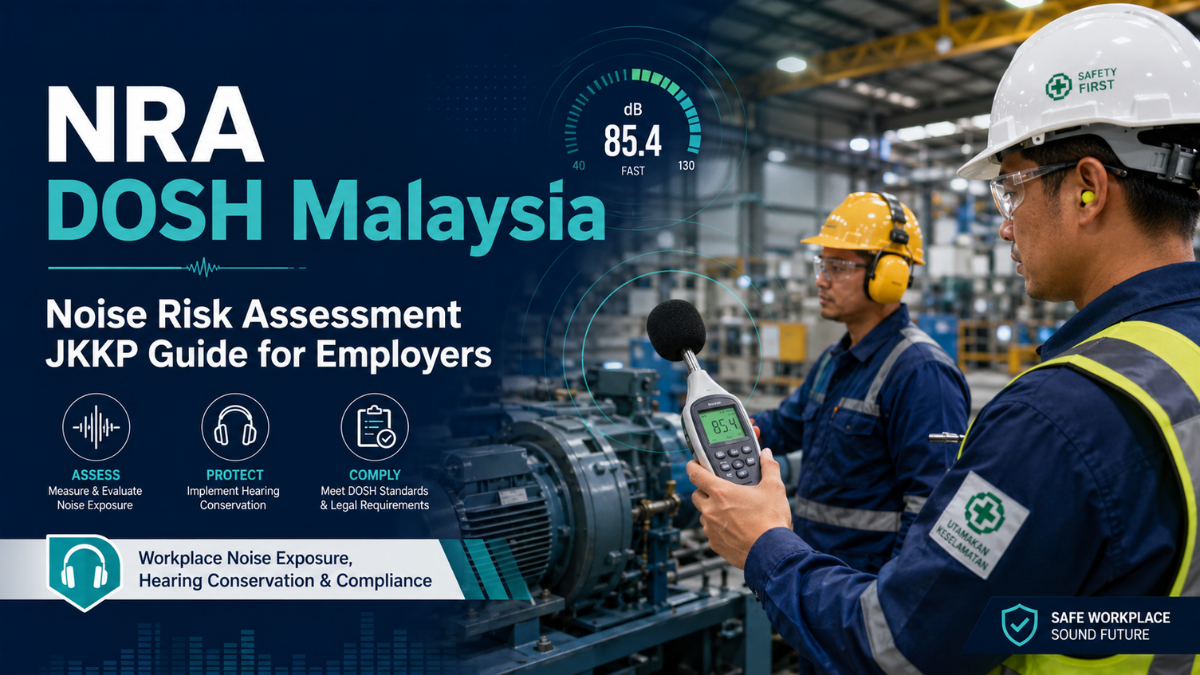
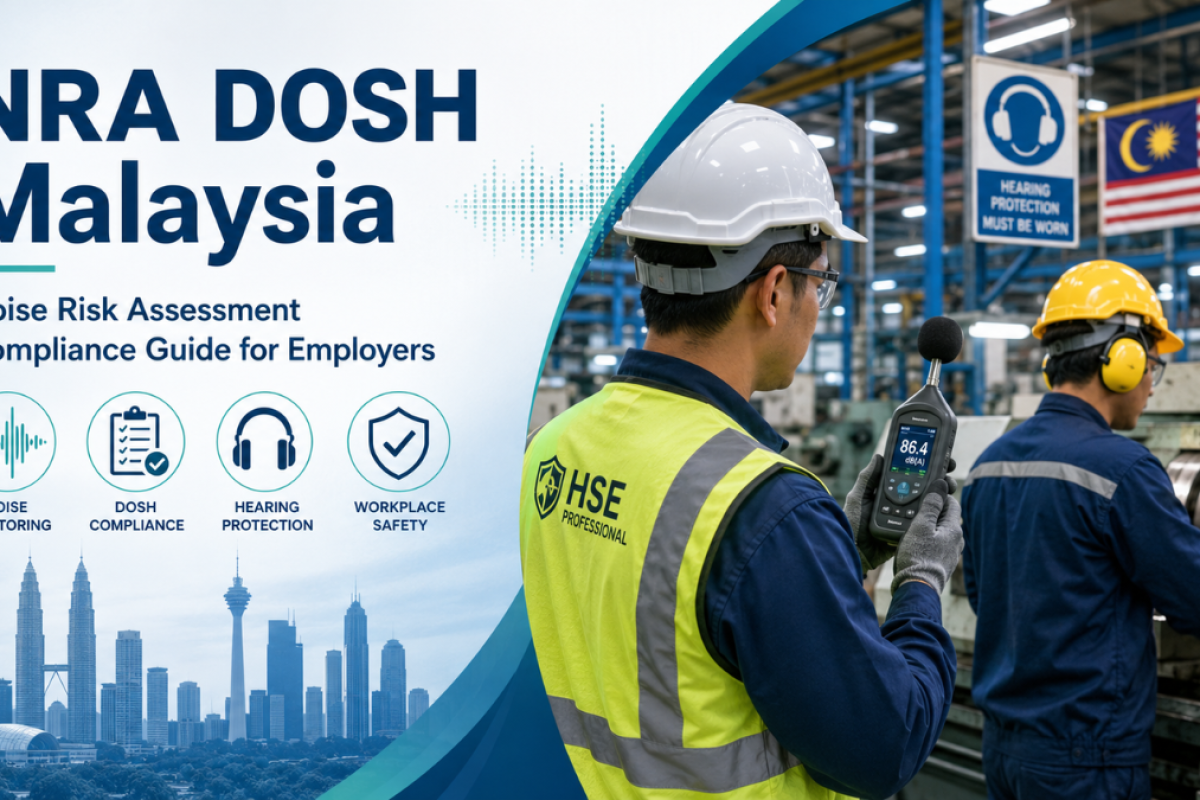
NRA DOSH refers to workplace noise risk assessment requirements under the Department of Occupational Safety and Health Malaysia. In practice, employers often use the term NRA to refer to Noise Risk Assessment, while DOSH also uses NRA to refer to a Noise Risk Assessor, the competent person appointed to conduct workplace noise exposure assessments.
Under DOSH requirements, an employer must appoint, employ or hire a competent Noise Risk Assessor to carry out noise assessment in accordance with the Occupational Safety and Health (Noise Exposure) Regulations 2019.
Noise Risk Assessment is important for workplaces with noisy machinery, production lines, compressors, generators, fabrication work, construction activity, heavy equipment, workshops and other high-noise operations.
Key Takeaways:
- NRA DOSH commonly refers to Noise Risk Assessment compliance under DOSH Malaysia.
- DOSH also uses NRA to mean Noise Risk Assessor, the competent person who conducts workplace noise assessments.
- Excessive noise starts at 82 dB(A) daily exposure or 50% daily personal noise dose.
- The noise exposure limit is 85 dB(A) daily exposure or 100% daily personal noise dose.
- Employers must also control exposure above 115 dB(A) maximum sound pressure level and 140 dB(C) peak sound pressure level.
- NRA should be conducted by a competent Noise Risk Assessor using valid calibrated equipment.
- The Noise Risk Assessor must notify DOSH at least 14 days before assessment and submit/report findings within required timelines.
- Employers should act on the NRA report through engineering controls, administrative controls, PPE, training and hearing conservation.
- NRA reports must be kept for at least 30 years.
- Companies with noisy machinery, compressors, generators, fabrication work, production lines or construction activity should prioritise NRA.

What Is NRA DOSH?
In Malaysia, NRA DOSH commonly refers to a Noise Risk Assessment conducted for workplace noise compliance. It is part of occupational health risk management and is used to identify excessive workplace noise, assess worker exposure and recommend suitable control measures.
DOSH officially describes a Noise Risk Assessor as the person responsible for conducting workplace noise exposure assessments required under the Occupational Safety and Health (Noise Exposure) Regulations 2019.
This means the term NRA can refer to two related things:
- Noise Risk Assessment – the assessment process.
- Noise Risk Assessor – the DOSH-recognised competent person who conducts the assessment.
For employers, the practical question is simple: Does your workplace have excessive noise exposure, and do you need a DOSH-compliant noise risk assessment?
Why Noise Risk Assessment Is Important
Workplace noise is not only a comfort issue. Excessive occupational noise can lead to long-term hearing damage, communication problems, reduced concentration, higher accident risk and occupational noise-related hearing disorders.
Industries commonly affected include:
- Manufacturing
- Metal fabrication
- Food processing
- Printing
- Construction
- Quarrying
- Warehousing and logistics
- Oil and gas
- Automotive workshops
- Woodworking
- Engineering and maintenance operations
Advanced HSE Solutions already identifies Noise Risk Assessment as suitable for workplaces with noisy machinery, compressors, generators, fabrication work, production lines, construction activity and heavy equipment operation.
For employers, NRA is important because it helps identify whether workers are exposed above legal limits and whether further controls, training, audiometric testing or hearing conservation measures are required.
Legal Basis: Occupational Safety and Health (Noise Exposure) Regulations 2019
Noise Risk Assessment in Malaysia is governed mainly by the Occupational Safety and Health (Noise Exposure) Regulations 2019 and supported by DOSH’s Industry Code of Practice for Management of Occupational Noise Exposure and Hearing Conservation 2019.
The regulations define excessive noise as daily noise exposure exceeding 82 dB(A), daily personal noise dose exceeding 50%, maximum sound pressure level exceeding 115 dB(A) at any time, or peak sound pressure level exceeding 140 dB(C).
The regulations also state that employers must ensure employees are not exposed above the following limits:
- Daily noise exposure level exceeding 85 dB(A)
- Daily personal noise dose exceeding 100%
- Maximum sound pressure level exceeding 115 dB(A) at any time
- Peak sound pressure level exceeding 140 dB(C)
If excessive noise is identified, the employer must take action to reduce the noise exposure.
When Is NRA Required?
A Noise Risk Assessment is required when there is indication that employees may be exposed to excessive noise.
This may happen when:
- Employees need to raise their voice to communicate
- Workers complain about loud machinery or ringing ears
- Heavy machines, compressors, generators or grinders are used
- The workplace has stamping, cutting, drilling, blasting or fabrication activity
- Existing noise control measures are unclear or outdated
- DOSH requests evidence of noise exposure control
- There are audiometric test abnormalities or hearing-related complaints
- There are changes in machinery, process, layout or working method
DOSH’s noise-related medical guideline also states that Noise Risk Assessment shall be conducted when excessive noise is identified at the workplace.
Who Can Conduct NRA?
NRA should not be conducted casually by an unqualified person using a basic phone app or uncalibrated device. DOSH states that the employer must appoint, employ or hire a competent person called the Noise Risk Assessor to carry out a noise assessment according to Department standards.
According to DOSH, a Noise Risk Assessor must:
- Conduct noise risk assessment within the valid registration period
- Ensure valid calibration of noise measuring equipment
- Notify the respective DOSH state Director at least 14 days before conducting the assessment
- Complete and furnish the full report to the employer within 30 days after completion
- Present findings and noise control recommendations to the employer within 30 days
- Submit the noise risk assessment summary report to the Director General within 30 days after completion
This is why employers should engage a competent and properly recognised professional for NRA work.
What Does a Noise Risk Assessment Include?
A proper NRA should be more than a simple noise reading. It should evaluate the actual risk of noise exposure in the workplace.
A practical NRA may include:
- Workplace walkthrough and process review
- Identification of noisy machines, tools and work areas
- Noise measurement using calibrated equipment
- Area noise monitoring
- Personal noise exposure monitoring
- Noise mapping
- Identification of Similar Exposure Groups
- Review of work duration and exposure pattern
- Review of existing control measures
- Recommendation of engineering controls
- Recommendation of administrative controls
- Hearing protection evaluation
- Hearing conservation programme recommendations
- Reporting and documentation for compliance
Advanced HSE Solutions’ industrial hygiene page already lists workplace noise survey, high-noise area identification, worker exposure evaluation, noise mapping, control measure review, hearing conservation support, PPE recommendation and reporting as part of its Noise Risk Assessment service scope.
Noise Exposure Limits Employers Must Know
Employers should understand the difference between excessive noise and noise exposure limit.
Excessive Noise Trigger
Excessive noise is triggered when workplace exposure exceeds:
- 82 dB(A) daily noise exposure level
- 50% daily personal noise dose
- 115 dB(A) maximum sound pressure level
- 140 dB(C) peak sound pressure level
Noise Exposure Limit
Employers must ensure employees are not exposed beyond:
- 85 dB(A) daily noise exposure level
- 100% daily personal noise dose
- 115 dB(A) maximum sound pressure level
- 140 dB(C) peak sound pressure level
In simple terms, once excessive noise is identified, employers should assess the risk and take action before exposure becomes harmful or non-compliant.
Employer Duties After NRA
After a Noise Risk Assessment is completed, employers should not treat the report as a filing document only. The report must be reviewed and acted upon.
Employer duties may include:
- Reviewing NRA findings with management and supervisors
- Identifying affected workers and work areas
- Implementing engineering controls where practical
- Implementing administrative controls where needed
- Providing suitable hearing protection
- Conducting employee information, instruction and training
- Arranging audiometric testing for exposed workers
- Establishing or improving a Hearing Conservation Programme
- Keeping NRA and audiometric records
- Reassessing when there are changes in process, machinery or exposure
The Noise Exposure Regulations also require employers to provide information, instruction, training and supervision when employees are exposed to excessive noise. Training must be provided at least once a year for relevant employees.
Noise Control: What Employers Should Do
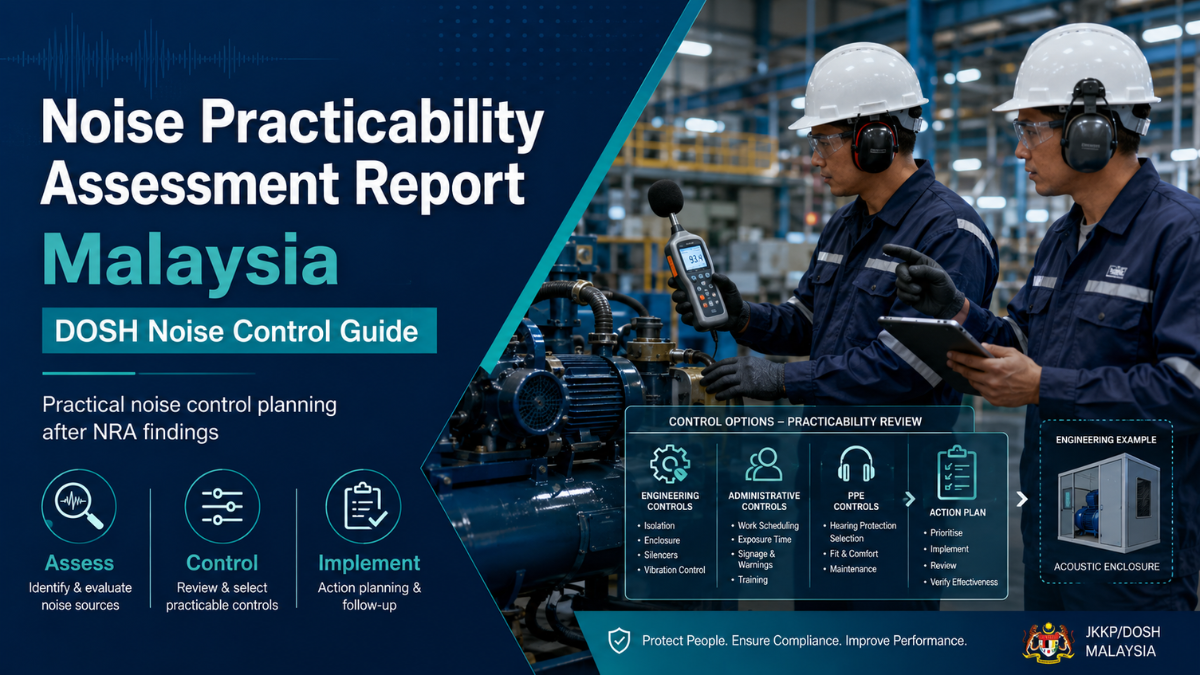
The regulations make it clear that employers should consider engineering and administrative controls when reducing excessive noise.
Practical control measures may include:
Engineering Controls
- Replacing noisy equipment with quieter models
- Installing acoustic enclosures
- Using silencers or mufflers
- Adding vibration isolation
- Maintaining worn bearings, belts and machine parts
- Installing acoustic barriers
- Redesigning noisy processes
- Improving machine foundation or damping
Administrative Controls
- Limiting time spent in noisy areas
- Rotating workers where suitable
- Scheduling noisy work when fewer workers are present
- Restricting access to high-noise zones
- Displaying noise warning signage
- Creating hearing protection zones
- Conducting regular training and supervision
Personal Hearing Protection
- Earplugs
- Earmuffs
- Dual protection for very high-noise areas
- Proper fit testing and user training
- Regular replacement and hygiene control
Hearing protection should not be the only control measure when engineering or administrative controls are practical.
NRA, Audiometric Testing and Hearing Conservation
NRA is closely connected to audiometric testing and hearing conservation. Once noise exposure risks are identified, exposed workers may need to be included in an audiometric testing programme.
DOSH’s guideline on occupational noise-related hearing disorders explains that the NRA report helps the Occupational Health Doctor understand workplace noise exposure risk, Similar Exposure Groups, audiometric programme requirements, personal hearing protector needs and training requirements.
A good Hearing Conservation Programme may include:
- Noise exposure assessment
- Audiometric testing
- Worker training
- Hearing protection selection
- Fit and usage supervision
- Medical review where needed
- Noise control planning
- Recordkeeping
- Continuous monitoring
This is important because occupational hearing loss is often gradual. By the time a worker notices the problem, the damage may already be permanent.
Recordkeeping Requirements
Proper documentation is critical for DOSH compliance.
The Noise Exposure Regulations state that employers must keep the noise risk assessor’s report for at least 30 years. Audiometric testing records must be kept while the employee is employed and for five years after the employee stops working for the employer.
Important records may include:
- Noise Risk Assessment report
- Noise measurement data
- Calibration certificates
- Noise maps
- Similar Exposure Group information
- Control measure records
- Hearing protection records
- Employee training records
- Audiometric testing reports
- Medical review documents where applicable
- Corrective action records
Good records help employers show that occupational noise exposure is being managed systematically.
Common Mistakes Employers Make
Many companies only take action after a DOSH inspection, worker complaint or abnormal audiometric result. This is risky.
Common NRA mistakes include:
- Assuming noise is acceptable without measurement
- Using uncalibrated equipment
- Treating area monitoring as full exposure assessment
- Ignoring workers with intermittent but high exposure
- Not reassessing after machinery or process changes
- Providing earplugs without training
- Not reviewing the effectiveness of hearing protection
- Keeping reports but not implementing control measures
- Not conducting annual training for exposed workers
- Not integrating NRA findings into HSE action plans
The best approach is proactive. Employers should identify noise hazards early, assess exposure properly and implement practical controls before workers are harmed.
Which Workplaces Should Prioritise NRA?
Employers should prioritise NRA if their workplace has:
- Compressors
- Generators
- CNC machines
- Stamping machines
- Grinding tools
- Cutting machines
- Drilling equipment
- Air blowers
- Boilers or turbines
- Production lines
- Packaging machines
- Metal fabrication activity
- Woodworking machines
- Construction equipment
- Heavy vehicles or forklifts
- High-noise maintenance work
Even if noise exposure appears to be “normal” in the industry, employers should not assume compliance without proper assessment.
How Advanced HSE Solutions Can Help
Advanced HSE Solutions provides HSE consultancy, advisory and training services across Malaysia, including industrial hygiene assessment and monitoring. The company already lists Noise Risk Assessment as part of its service scope, covering workplace noise survey, high-noise area identification, worker exposure evaluation, noise mapping, control review, hearing conservation support, PPE recommendation, reporting and documentation.
For employers who need NRA DOSH support, Advanced HSE Solutions can assist with:
- Noise Risk Assessment planning
- Workplace noise survey
- Noise mapping
- Worker exposure evaluation
- Review of existing noise control measures
- Hearing conservation support
- PPE recommendation
- HSE documentation and reporting
- Compliance improvement planning
If your workplace involves noisy machinery, production lines, compressors, generators, fabrication work or construction activities, it is advisable to review your noise exposure risk before it becomes a compliance issue.
Conclusion
NRA DOSH is an important part of occupational health compliance in Malaysia. It helps employers identify excessive workplace noise, assess employee exposure, implement control measures and protect workers from occupational hearing damage.
For employers, the key point is simple: if workers may be exposed to excessive noise, do not rely on assumptions. Conduct a proper Noise Risk Assessment, review the results, implement controls, train employees and maintain the required records.
A well-managed NRA process protects workers, strengthens DOSH compliance and supports a safer, healthier and more productive workplace.
FAQ
What is NRA DOSH?
NRA DOSH usually refers to Noise Risk Assessment requirements under the Department of Occupational Safety and Health Malaysia. It may also refer to a Noise Risk Assessor, the competent person appointed to conduct workplace noise exposure assessments.
When is Noise Risk Assessment required in Malaysia?
Noise Risk Assessment is required when excessive noise is identified or suspected at the workplace. Excessive noise includes daily noise exposure above 82 dB(A), daily personal noise dose above 50%, maximum sound pressure above 115 dB(A), or peak sound pressure above 140 dB(C).
Who can conduct NRA in Malaysia?
NRA should be conducted by a competent Noise Risk Assessor recognised under DOSH requirements. The assessor must use calibrated equipment and follow DOSH requirements under the Occupational Safety and Health (Noise Exposure) Regulations 2019.
What is the legal noise exposure limit in Malaysia?
Employers must ensure employees are not exposed above 85 dB(A) daily noise exposure level, 100% daily personal noise dose, 115 dB(A) maximum sound pressure level, or 140 dB(C) peak sound pressure level.
How long must NRA records be kept?
Noise Risk Assessment reports must be kept for at least 30 years. Audiometric testing records must be kept while the employee is employed and for five years after the employee leaves employment.
What should employers do after NRA?
Employers should review the report, identify affected workers, implement engineering or administrative controls, provide suitable hearing protection, conduct training, arrange audiometric testing where required and maintain proper records.