
Table of Contents
Quick Answer
PMT DOSH, also commonly searched as PMT JKKP, refers to the compliance process for pressure vessels that require a Certificate of Fitness in Malaysia.
In older industry usage, PMT is often understood as Perakuan Mesin Tekanan or pressure vessel certification. Today, the more accurate regulatory term is Certificate of Fitness, or CF, for pressure vessels classified as plant requiring Certificate of Fitness.
If your workplace uses pressure vessels such as air receivers, compressed air tanks, autoclaves, sterilizers, heat exchangers, LPG storage tanks or other pressure-containing equipment, you may need proper DOSH registration, design verification, inspection and a valid Certificate of Fitness before the equipment can be legally operated.
Key Takeaways:
- PMT DOSH commonly refers to pressure vessel registration and Certificate of Fitness compliance in Malaysia.
- PMT JKKP means the same topic because JKKP is the Bahasa Malaysia name for DOSH.
- The current legal term is Certificate of Fitness, or CF, for plant requiring CF.
- Pressure vessels are one of the main categories of plant requiring Certificate of Fitness.
- A pressure vessel should not be operated without the required approval and valid CF.
- Design verification, technical documents, installation approval, inspection and testing may be required.
- A Certificate of Fitness is valid for 15 months from the date of inspection.
- Employers should start PMT renewal planning 2 to 3 months before expiry.
- Incomplete documents, poor inspection readiness and late renewal are common causes of delay.
- Advanced HSE Solutions can support PMT / CF registration, inspection preparation and renewal planning.
What Is PMT DOSH?
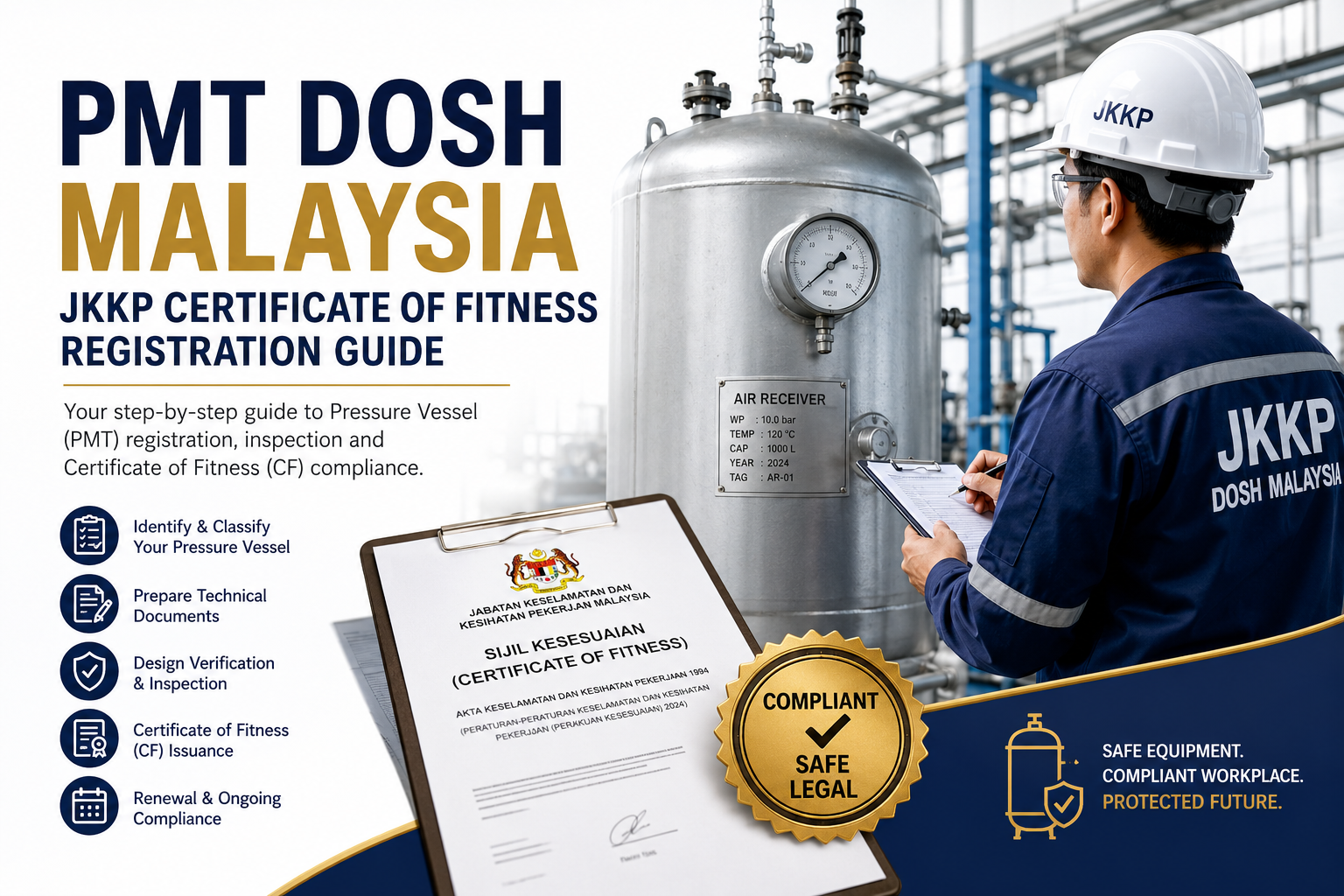
PMT DOSH refers to the registration, inspection and Certificate of Fitness process for pressure vessels under the Department of Occupational Safety and Health Malaysia.
DOSH is also known in Bahasa Malaysia as JKKP, which stands for Jabatan Keselamatan dan Kesihatan Pekerjaan. This is why many businesses search for the same topic using terms such as:
- PMT DOSH
- PMT JKKP
- PMT Certificate of Fitness
- JKKP pressure vessel registration
- DOSH pressure vessel inspection
- PMT renewal Malaysia
The terminology can be confusing because many older workplace documents, maintenance files and industry conversations still use PMT. However, under the current regulatory framework, the key document employers need to understand is the Certificate of Fitness, or CF.
PMT vs Certificate of Fitness: What Has Changed?
In daily industry usage, PMT is still widely used to refer to pressure vessel certification. However, the current compliance framework is based on plant requiring Certificate of Fitness.
This means employers should not only ask, “Do I have PMT?” The more accurate question is:
“Does this pressure vessel require a valid Certificate of Fitness, and is it properly registered, inspected and maintained?”
This distinction is important because enforcement, renewal and inspection records are now tied to the Certificate of Fitness framework under the Occupational Safety and Health Act 1994 and the current plant regulations.
Which Equipment Requires PMT / CF Registration?
PMT generally applies to pressure vessels. Common examples include:
- Air receivers
- Compressed air tanks
- Unfired pressure vessels
- Autoclaves
- Sterilizers
- Heat exchangers
- LPG storage tanks
- Pressure tanks
- Process vessels
- Industrial receivers
- Certain pressurised systems used in manufacturing or processing
Not every tank or vessel automatically requires the same approval process. The actual requirement depends on the equipment type, pressure rating, design, capacity, usage, installation and applicable exemption or classification.
When in doubt, employers should verify the equipment documents and obtain professional advice before installation or operation.
Why PMT Registration Matters
Pressure vessels store energy under pressure. If the design, installation, operation or maintenance is poor, the failure can be serious.
A pressure vessel incident may result in:
- Explosion or rupture
- Serious worker injury
- Damage to machinery and buildings
- Production shutdown
- Enforcement action
- Insurance complications
- Legal liability for owners and occupiers
PMT registration and Certificate of Fitness compliance are not just paperwork. They help confirm that the pressure vessel has gone through the required design verification, inspection and approval process before operation.
Legal Basis for PMT Certificate of Fitness
The current legal framework for PMT-related compliance is the Occupational Safety and Health (Plant Requiring Certificate of Fitness) Regulations 2024.
The regulations prescribe three main categories of plant requiring Certificate of Fitness:
- Steam boilers
- Pressure vessels
- Lifting machinery
For PMT, the key category is pressure vessel.
This means pressure vessels that fall within the regulated scope must comply with Certificate of Fitness requirements before they are operated.
PMT Registration Process in Malaysia
The PMT Certificate of Fitness process may vary depending on whether the pressure vessel is new, imported, used, relocated, altered or already in operation. However, the general workflow normally includes the following steps.
Step 1: Identify Whether the Equipment Is a Regulated Pressure Vessel
The first step is to confirm whether the equipment falls under pressure vessel requirements.
This involves checking:
- Equipment type
- Manufacturer data
- Design pressure
- Design temperature
- Capacity
- Intended use
- Installation location
- Existing certificates or approval records
- Whether the unit is new, imported, used or relocated
This step is important because incorrect classification can delay approval or create compliance gaps.
Step 2: Prepare Technical Documents
Before applying for approval, the owner, occupier, manufacturer, supplier or appointed representative should prepare the required technical documentation.
Documents may include:
- Manufacturer data report
- Design drawing
- Pressure vessel calculation
- Material certificate
- Welding documentation
- Testing and inspection records
- Hydrostatic test certificate, where applicable
- Nameplate details
- Previous use record for used imported units
- Integrity report for used imported units
- Remnant life report, where applicable
- Installation layout
- Foundation or support details
- Essential fitting details
- Safety valve details
- Other documents requested by DOSH or the licensed person
Incomplete documentation is one of the most common causes of delay in PMT registration.
Step 3: Apply for Design Verification
For pressure vessels requiring CF, design verification is an important stage. The design must comply with recognised standards and applicable DOSH requirements.
Design verification helps confirm that the pressure vessel design is suitable before the equipment is manufactured, installed or used.
For imported or used pressure vessels, additional documents may be required to prove previous use, condition, integrity and remaining life.
Step 4: Prepare for Installation Approval
After design verification, the pressure vessel installation must be properly planned.
The installation should consider:
- Suitable foundation or support
- Safe access for inspection and maintenance
- Correct piping connection
- Safety valve discharge arrangement
- Pressure gauge visibility
- Drain and vent points
- Protection against overpressure
- Safe operating area
- Emergency access
- Compliance with recognised standards
Poor installation planning can cause inspection failure even if the pressure vessel itself is acceptable.
Step 5: Inspection and Testing
Before a Certificate of Fitness is issued, the pressure vessel must go through the required inspection and testing process.
This may include:
- Visual inspection
- Document review
- Nameplate verification
- Pressure test review
- Safety fitting inspection
- Functional testing where applicable
- Verification of installation condition
- Review of access, maintenance and safety arrangements
The inspection may be carried out by a DOSH officer or a licensed person, depending on the applicable process.
Step 6: Certificate of Fitness Issuance
If the pressure vessel meets the requirements, a Certificate of Fitness will be issued.
The CF confirms that the regulated pressure vessel has passed the necessary inspection and is allowed to operate within the approved conditions.
Employers should keep the CF properly and ensure the equipment is operated according to its approved safe working pressure and conditions.
How Long Is a PMT Certificate of Fitness Valid?
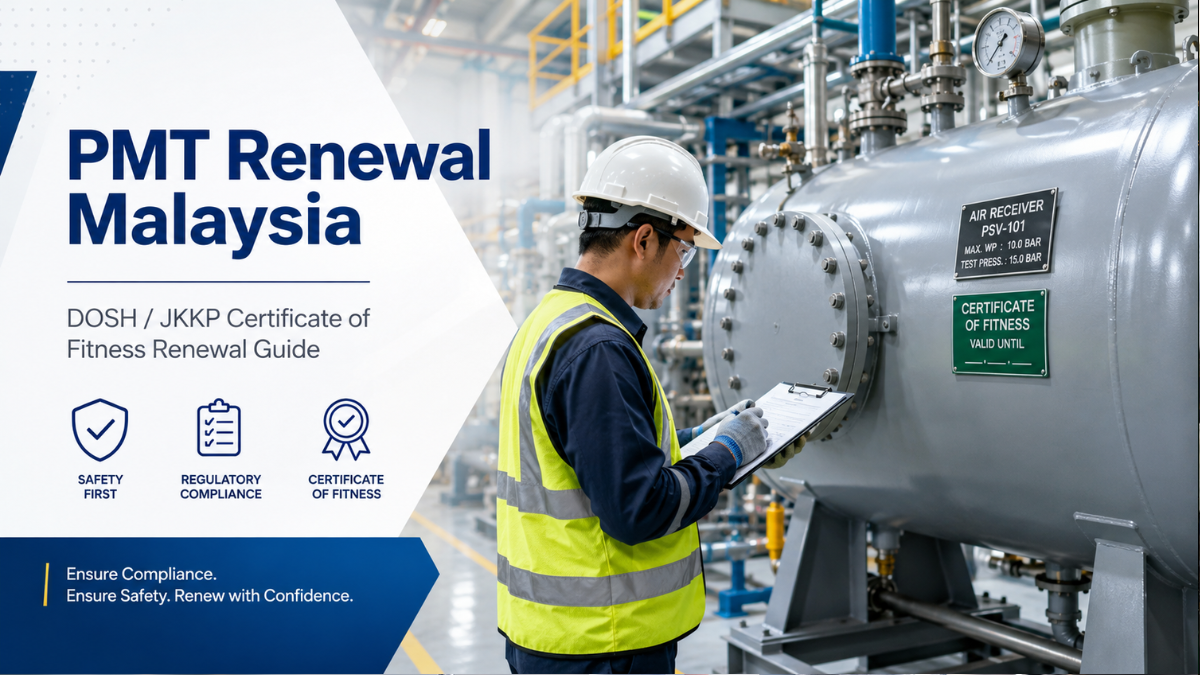
A Certificate of Fitness is valid for 15 months from the date of inspection.
This means employers should not wait until the last minute to arrange renewal. A good practice is to start reviewing the renewal status at least 2 to 3 months before expiry.
Late renewal can result in operational disruption, repeat inspection costs, enforcement risk and equipment downtime.
PMT Renewal: What Employers Should Prepare
For PMT renewal, employers should prepare before the periodical inspection.
Preparation may include:
- Checking CF expiry date
- Reviewing previous inspection findings
- Ensuring the pressure vessel is accessible
- Preparing maintenance records
- Preparing safety valve calibration or servicing records
- Checking pressure gauges and fittings
- Ensuring the vessel is clean and ready for inspection
- Preparing operating records
- Checking for corrosion, leakage, damage or abnormal vibration
- Confirming safe access and isolation procedures
- Preparing the responsible person for inspection day
A pressure vessel that is not ready for inspection may lead to delay, rejection or repeat inspection.
Owner and Occupier Responsibilities
The owner or occupier should ensure that pressure vessels are properly registered, inspected, operated and maintained.
Key responsibilities include:
- Do not operate regulated pressure vessels without a valid CF
- Maintain the pressure vessel in safe working condition
- Ensure safety fittings are functional
- Ensure repairs are carried out properly
- Notify the relevant party before repair or alteration where required
- Keep inspection and maintenance records
- Arrange periodical inspection before CF expiry
- Ensure operators understand safe operating limits
- Notify relevant parties when ownership, lease, transfer or disposal occurs
- Notify if the plant falls into disuse
The responsibility does not end after getting the certificate. CF compliance must be maintained throughout the equipment lifecycle.
Common PMT Registration Mistakes
Many PMT registration delays are preventable.
Common mistakes include:
- Buying imported pressure vessels without checking DOSH requirements
- Installing equipment before design verification or approval
- Missing manufacturer data reports
- Missing pressure test records
- No valid safety valve documentation
- Incorrect nameplate information
- Poor installation access
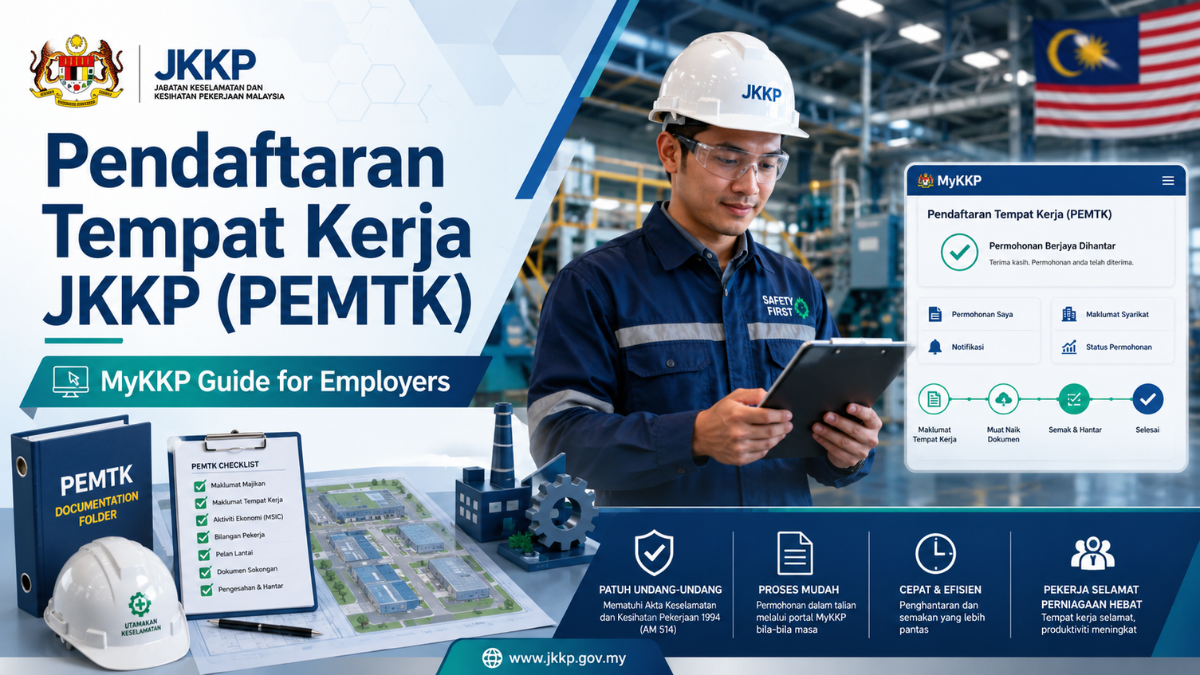
- Incomplete MyKKP submission
- Confusing PMT, PMD and PMA categories
- Waiting until the CF expires before starting renewal
- Repairing or modifying equipment without proper notice or approval
- Assuming supplier documentation is enough for DOSH compliance
The safest approach is to check compliance before purchase, before installation and before operation.
PMT, PMD and PMA: What Is the Difference?
These terms are still commonly used in Malaysia.
PMT usually refers to pressure vessels.
PMD usually refers to steam boilers.
PMA usually refers to lifting machinery or lifting equipment.
Under the current CF framework, the more important classification is whether the equipment falls under plant requiring Certificate of Fitness. The three main regulated categories are pressure vessels, steam boilers and lifting machinery.
For employers, the practical difference is this:
- Pressure vessel: check PMT / CF requirements
- Steam boiler: check PMD / CF requirements
- Lifting machinery: check PMA / CF requirements
When Should You Get Professional Help?
You should seek professional PMT registration support if:
- You are buying a new pressure vessel
- You are importing a pressure vessel
- You are installing a used pressure vessel
- Your CF is expiring soon
- You cannot locate previous PMT or CF records
- You are relocating a pressure vessel
- You are modifying or repairing a pressure vessel
- DOSH or JKKP has requested documentation
- You are preparing for an audit or inspection
- You are unsure whether your equipment requires CF
Professional support helps reduce delays, document gaps and inspection failure risk.
How Advanced HSE Solutions Can Help
Advanced HSE Solutions provides DOSH registration, inspection preparation and compliance support for Malaysian businesses operating pressure vessels, boilers, lifting machinery, industrial plants and other regulated workplace equipment.
For PMT DOSH and PMT JKKP matters, our team can assist with:
- Pressure vessel compliance review
- PMT / CF registration support
- Document preparation checklist
- Inspection readiness review
- CF renewal planning
- Machinery registration support
- Liaison and coordination support
- HSE documentation improvement
- Compliance gap identification
- Practical guidance for owners and occupiers
If your company uses pressure vessels, do not wait until the Certificate of Fitness expires or an inspection issue occurs. Early preparation helps reduce downtime, avoid compliance risk and keep your workplace safer.
Conclusion
PMT DOSH and PMT JKKP remain common search terms in Malaysia, but the current compliance focus is the Certificate of Fitness for pressure vessels under the latest plant regulations.
For employers, the key message is simple: pressure vessels must be properly verified, registered, inspected, maintained and renewed. A valid Certificate of Fitness is not only a legal document. It is part of a broader safety system that protects workers, equipment and business continuity.
If your workplace operates pressure vessels, review your PMT / CF status today and make sure your documentation, inspection schedule and renewal plan are properly managed.
FAQ
What is PMT DOSH?
PMT DOSH commonly refers to the pressure vessel registration, inspection and Certificate of Fitness process under the Department of Occupational Safety and Health Malaysia.
What is PMT JKKP?
PMT JKKP means the same topic as PMT DOSH. JKKP is Jabatan Keselamatan dan Kesihatan Pekerjaan, the Bahasa Malaysia name for DOSH.
Is PMT still the official term?
PMT is still commonly used in industry, but the current regulatory term is Certificate of Fitness, or CF, for pressure vessels classified as plant requiring Certificate of Fitness.
Which equipment usually falls under PMT?
PMT usually applies to pressure vessels such as air receivers, compressed air tanks, autoclaves, sterilizers, heat exchangers, LPG storage tanks and other regulated pressure-containing equipment.
How long is a PMT Certificate of Fitness valid?
A Certificate of Fitness is valid for 15 months from the date of inspection.
Can I operate a pressure vessel without a valid CF?
A regulated pressure vessel should not be operated without the required approval and valid Certificate of Fitness. Doing so may expose the owner or occupier to enforcement action, operational disruption and legal liability.
When should I renew PMT / CF?
Employers should start renewal preparation at least 2 to 3 months before the Certificate of Fitness expires to avoid inspection delays and operational downtime.
Who is responsible for PMT compliance?
The owner or occupier is responsible for ensuring the pressure vessel is properly registered, inspected, maintained and operated safely.
What documents are needed for PMT registration?
Common documents include design drawings, manufacturer data report, pressure test records, material certificates, nameplate details, safety fitting details, installation layout, previous use records for used imported units and any other documents requested by DOSH or the licensed person.
How can Advanced HSE Solutions help with PMT DOSH?
Advanced HSE Solutions can support PMT / CF registration, document preparation, inspection readiness, renewal planning, compliance gap review and HSE documentation improvement for companies operating pressure vessels in Malaysia.