Table of Contents
Quick Answer
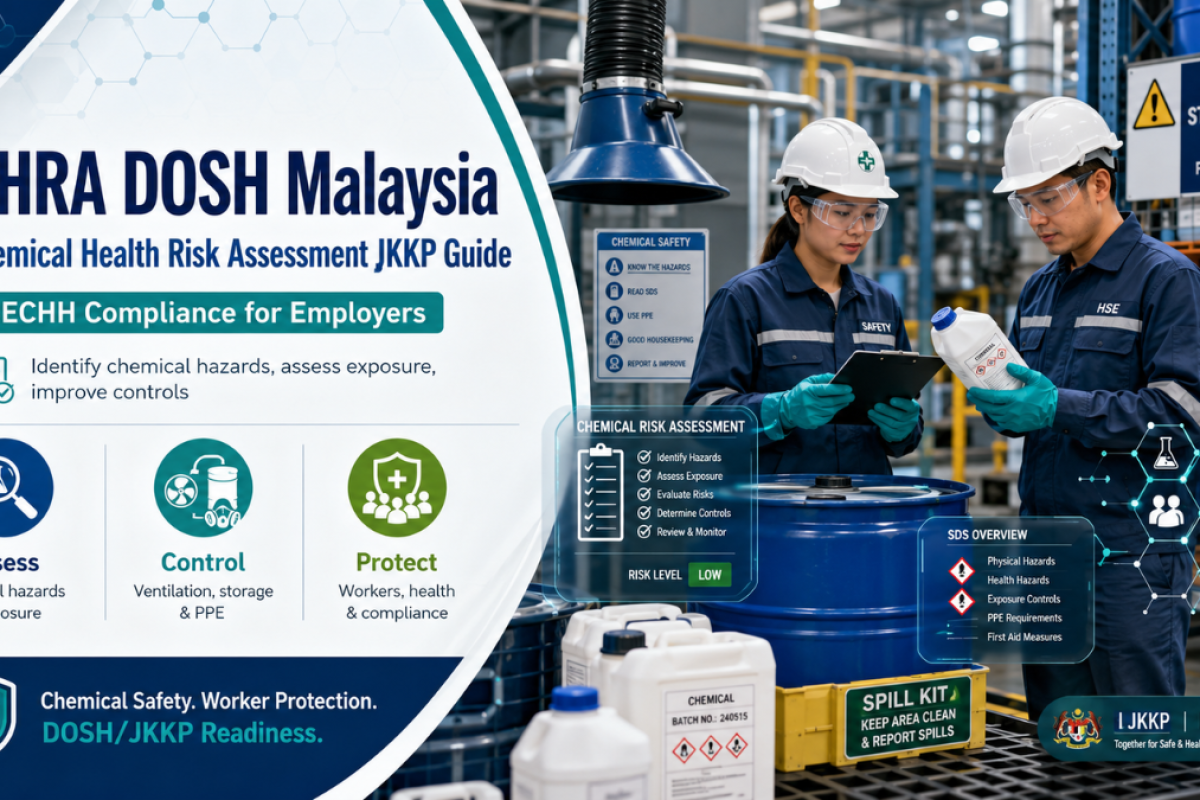
CHRA DOSH refers to Chemical Health Risk Assessment requirements under the Department of Occupational Safety and Health Malaysia, also known as JKKP.
In Malaysia, employers must conduct a Chemical Health Risk Assessment when work involves the use, handling, storage or transportation of chemicals hazardous to health. CHRA helps employers identify chemical health hazards, evaluate employee exposure, review existing control measures and decide what actions are needed to protect workers.
CHRA should be conducted by a DOSH-registered assessor and should be followed by proper control measures, employee training, exposure monitoring, medical surveillance where required and documented action plans.
Key Takeaways:
- CHRA stands for Chemical Health Risk Assessment.
- CHRA DOSH and CHRA JKKP refer to the same chemical health risk assessment requirement in Malaysia.
- CHRA is required when employees may be exposed to chemicals hazardous to health.
- The main legal framework is the USECHH Regulations 2000.
- CHRA should be conducted by a DOSH-registered assessor.
- Employers should maintain a Register of Chemicals Hazardous to Health.
- SDS review alone is not the same as CHRA.
- HIRARC does not replace CHRA for chemical health risk assessment.
- Employers must act on CHRA findings and reduce chemical exposure.
- CHRA may recommend exposure monitoring and medical surveillance.
- Advanced HSE Solutions can support CHRA preparation, assessor coordination, action planning and DOSH/JKKP inspection readiness.
What Is CHRA DOSH?
CHRA stands for Chemical Health Risk Assessment.
CHRA DOSH refers to the workplace chemical health risk assessment required under Malaysia’s occupational safety and health framework. DOSH is the Department of Occupational Safety and Health Malaysia.
In Bahasa Malaysia, DOSH is known as JKKP, or Jabatan Keselamatan dan Kesihatan Pekerjaan. This is why employers may search for the same topic using different terms, such as:
- CHRA DOSH
- CHRA JKKP
- Chemical Health Risk Assessment DOSH
- Chemical Health Risk Assessment JKKP
- Chemical risk assessment Malaysia
- USECHH CHRA Malaysia
- DOSH-registered CHRA assessor
- Chemical exposure assessment Malaysia
Although the search terms may differ, the compliance purpose is the same: to assess and control health risks caused by hazardous chemicals at the workplace.
What Is JKKP?
JKKP stands for Jabatan Keselamatan dan Kesihatan Pekerjaan.
It is the Bahasa Malaysia name for DOSH. For practical workplace compliance, CHRA DOSH and CHRA JKKP refer to the same requirement.
Employers may see DOSH used in English documents and JKKP used in Malay documents, MyKKP, official letters or local industry conversations.
Why CHRA Is Important
Chemical exposure can harm workers even when there is no immediate accident.
Some chemical health effects appear quickly, such as skin irritation, eye irritation, dizziness or breathing difficulty. Others may develop slowly over months or years, including occupational asthma, dermatitis, organ damage, reproductive effects or cancer.
CHRA helps employers understand:
- What chemicals are used
- Which chemicals are hazardous to health
- How workers may be exposed
- Who is exposed
- Whether existing controls are adequate
- Whether exposure monitoring is needed
- Whether medical surveillance is required
- What additional control measures should be implemented
- What training and safe work procedures are needed
For employers, CHRA is not only a compliance report. It is the basis for chemical exposure control and occupational health protection.
Legal Basis: USECHH Regulations 2000
CHRA in Malaysia is mainly governed by the Occupational Safety and Health (Use and Standards of Exposure of Chemicals Hazardous to Health) Regulations 2000, commonly known as the USECHH Regulations 2000.
The purpose of USECHH is to provide a legal framework to control exposure to chemicals hazardous to health at the workplace and to set exposure standards for workers.
Under this framework, an employer should not carry out work that may expose employees to chemicals hazardous to health unless a written assessment of the risk to health has been made.
This written assessment is the Chemical Health Risk Assessment.
What Are Chemicals Hazardous to Health?
Chemicals hazardous to health may include substances that can harm workers through inhalation, skin contact, ingestion or absorption.
Examples include:
- Solvents
- Acids
- Alkalis
- Cleaning chemicals
- Disinfectants
- Pesticides
- Paints and coatings
- Adhesives
- Resins
- Welding fumes
- Metal fumes
- Dusts
- Laboratory reagents
- Degreasers
- Fuels
- Lubricants
- Industrial gases
- Process chemicals
- Chemicals classified as carcinogenic, mutagenic, toxic, corrosive, sensitising or harmful
If a chemical is classified as hazardous and used at the workplace, the employer should check whether it falls under USECHH and whether CHRA is required.
When Is CHRA Required?
CHRA is required when employees may be exposed or are likely to be exposed to chemicals hazardous to health during work.
This may happen during:
- Chemical handling
- Chemical storage
- Chemical mixing
- Chemical transfer
- Cleaning and degreasing
- Painting and coating
- Spraying
- Welding
- Soldering
- Laboratory work
- Maintenance work
- Waste handling
- Production processes
- Chemical transportation within the workplace
- Work involving dust, fumes, vapour, mist, gas or liquid chemicals
Employers should not assume that CHRA is only for chemical factories. Many normal workplaces may require CHRA if hazardous chemicals are used.
Industries That Commonly Need CHRA
CHRA may be relevant to many industries, including:
- Manufacturing
- Electronics and semiconductor
- Automotive workshops
- Metal fabrication
- Food and beverage processing
- Laboratories
- Healthcare facilities
- Printing
- Painting and coating
- Cleaning services
- Pest control
- Warehousing and logistics
- Chemical storage
- Oil and gas support services
- Construction
- Water treatment
- Waste management
- Education and research institutions
- Pharmaceutical and cosmetic manufacturing
Any workplace that uses, stores, handles, transports or generates chemicals hazardous to health should review its CHRA requirement.
Who Can Conduct CHRA?
CHRA should be conducted by a DOSH-registered assessor.
Employers should not rely on an unqualified person or a generic checklist when the workplace requires formal CHRA. A competent assessor understands chemical hazards, exposure routes, risk rating, control adequacy, exposure monitoring needs, medical surveillance triggers and reporting requirements.
A DOSH-registered assessor can help ensure that the CHRA report follows the required assessment method and is suitable for compliance, audit and workplace implementation.
CHRA vs HIRARC: What Is the Difference?
HIRARC is a general workplace risk assessment method used to identify hazards, assess risk and recommend controls.
CHRA is more specific. It focuses on health risks arising from chemicals hazardous to health.
In simple terms:
- HIRARC looks at general safety and health risks.
- CHRA looks specifically at chemical health risks.
- HIRARC may identify chemical hazards at a broad level.
- CHRA evaluates chemical exposure and health risk in more detail.
Employers using hazardous chemicals should not assume HIRARC alone is enough to replace CHRA.
CHRA vs Chemical Register
A Chemical Register is a record of chemicals hazardous to health used at the workplace.
CHRA is the assessment of health risks created by those chemicals.
They are connected but not the same.
A Chemical Register should normally include information such as:
- Chemical name
- Supplier or manufacturer
- Quantity used or stored
- Location
- Classification
- Safety Data Sheet availability
- Hazard information
- Purpose of use
- Workers or areas exposed
- Control measures
The Chemical Register helps the assessor and employer understand what chemicals are present before conducting CHRA.
CHRA vs SDS Review
A Safety Data Sheet, or SDS, provides information on chemical hazards, safe handling, storage, exposure controls, PPE, emergency measures and disposal.
Reviewing SDS is part of CHRA preparation, but SDS review alone is not a full CHRA.
CHRA goes further by assessing actual workplace exposure based on real work activities, duration, frequency, routes of exposure, quantities used, existing controls and worker groups.
What Does CHRA Include?
A proper CHRA should be systematic and workplace-specific.
It may include:
- Review of chemicals used, handled, stored or transported
- Review of Safety Data Sheets
- Chemical hazard classification
- Identification of work units and job tasks
- Identification of exposed workers or Similar Exposure Groups
- Evaluation of exposure routes
- Evaluation of exposure duration and frequency
- Review of existing control measures
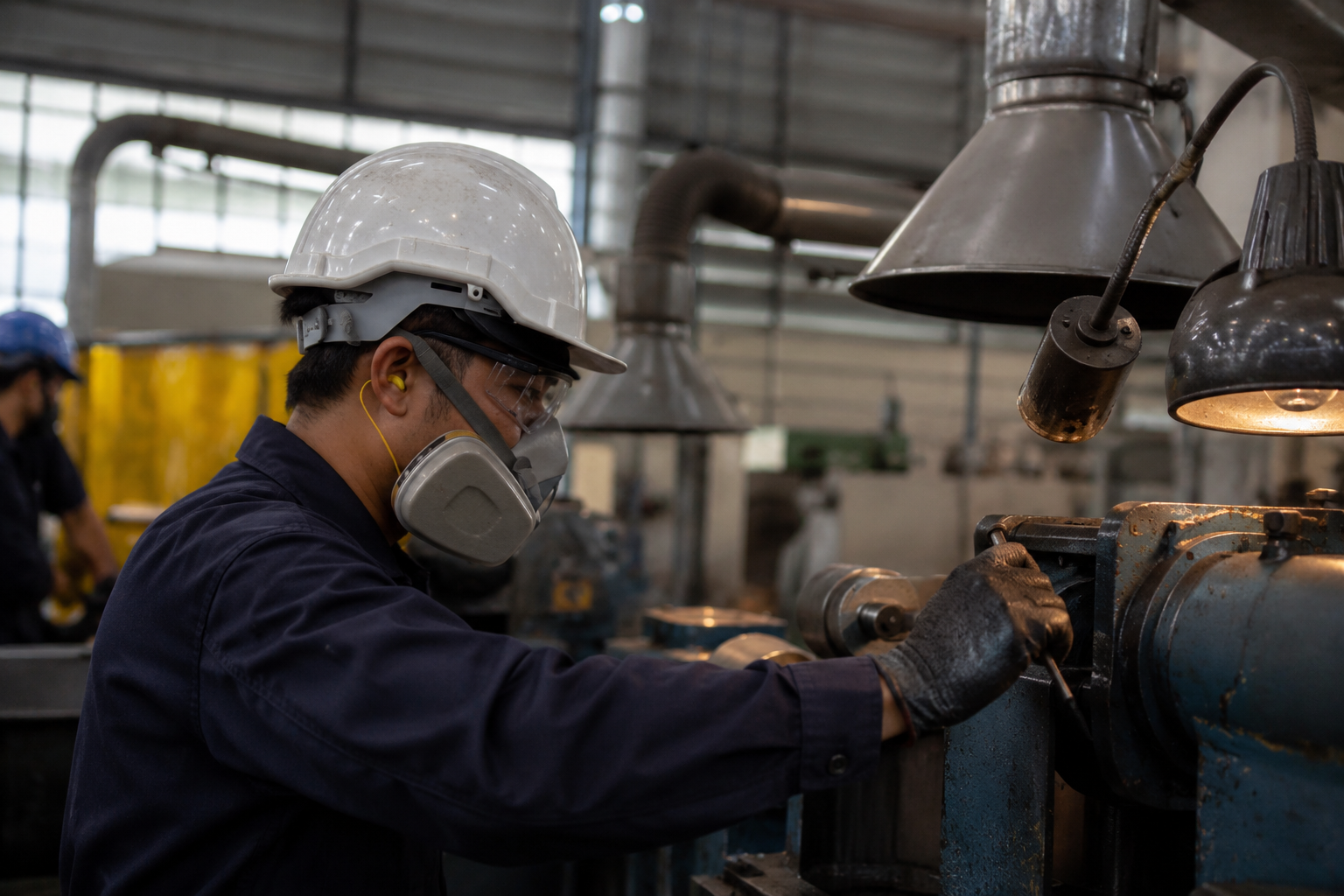
- Review of engineering controls, such as ventilation
- Review of administrative controls and safe work procedures
- Review of PPE suitability
- Risk rating and prioritisation
- Recommendation of additional control measures
- Recommendation on exposure monitoring, where needed
- Recommendation on medical surveillance, where needed
- Employee training recommendations
- Chemical register improvement recommendations
- Preparation of CHRA report
The purpose is to help the employer decide what action is needed to reduce chemical health risk.
CHRA Process for Employers
A practical CHRA process normally includes the following steps.
Step 1: Identify All Hazardous Chemicals
The employer should prepare a complete chemical list before the assessment.
This should include chemicals used in:
- Production
- Maintenance
- Cleaning
- Laboratory work
- Storage
- Utilities
- Waste handling
- Contractor activities
- Emergency response
- Trial or temporary processes
Do not include only production chemicals. Small quantities of maintenance or cleaning chemicals can also create exposure risk.
Step 2: Collect Safety Data Sheets
Employers should collect updated Safety Data Sheets for all relevant chemicals.
SDS should preferably be current, complete and available in a language understood by users where practical.
The assessor uses SDS to review hazard classifications, exposure limits, first aid, PPE requirements, storage requirements and emergency controls.
Step 3: Review Work Activities and Exposure
The assessor reviews how the chemicals are actually used at the workplace.
This includes:
- Who handles the chemical
- How often the chemical is used
- How long workers are exposed
- Whether exposure is by inhalation, skin contact, ingestion or injection
- Whether the chemical is heated, sprayed, mixed or agitated
- Whether dust, fume, vapour, gas or mist is generated
- Whether workers are exposed during cleaning, maintenance or breakdown
- Whether contractors are exposed
Actual work practice is important. Chemical risk cannot be assessed properly from SDS alone.
Step 4: Group Similar Exposures
Workers with similar exposure conditions may be grouped for assessment.
This helps identify which job roles or work units are exposed to similar chemical hazards.
Examples may include:
- Mixing operators
- Spray painters
- Laboratory technicians
- Cleaning workers
- Maintenance technicians
- Welding workers
- Store personnel
- Waste handling workers
Grouping exposure helps employers prioritise control measures and monitoring.
Step 5: Evaluate Existing Controls
The assessor reviews whether existing controls are adequate.
Controls may include:
- Local exhaust ventilation
- General ventilation
- Enclosed systems
- Chemical substitution
- Safe work procedures
- Spill control
- Storage control
- Labelling
- PPE
- Training
- Hygiene facilities
- Emergency shower or eyewash
- Exposure monitoring
- Medical surveillance
A common finding is that PPE is provided but engineering controls, procedures, training or supervision are weak.
Step 6: Determine Risk Level
The assessor determines the level of health risk based on chemical hazard, exposure potential and control adequacy.
The risk rating helps employers decide which chemical exposures require urgent action.
High-risk findings should be prioritised and should not be left unresolved.
Step 7: Recommend Control Measures
The CHRA report should recommend practical control measures.
These may include:
- Eliminating unnecessary hazardous chemicals
- Substituting with less hazardous chemicals
- Installing or improving local exhaust ventilation
- Enclosing the process
- Improving chemical storage
- Reducing manual handling
- Reducing exposure duration
- Improving safe work procedures
- Improving training and supervision
- Improving PPE selection and use
- Improving emergency response
- Conducting exposure monitoring
- Arranging medical surveillance
- Updating chemical register and SDS files
The recommendations should be practical, prioritised and suitable for the workplace.
Step 8: Prepare and Review the CHRA Report
After the assessment, the employer should receive a CHRA report.
The report should be reviewed by management, HSE personnel, supervisors and relevant departments.
The employer should understand:
- Which chemicals create the highest risk
- Which workers are affected
- Which controls are inadequate
- What action is required
- What must be done immediately
- Whether exposure monitoring is needed
- Whether medical surveillance is needed
- What documentation must be improved
- When reassessment is required
The report should lead to action, not just filing.
What Employers Must Do After Receiving CHRA Report
Receiving the CHRA report is not the end of compliance.
The employer must act on the findings.
Actions may include:
- Implementing recommended control measures
- Reviewing chemical substitution options
- Improving ventilation or engineering controls
- Updating safe work procedures
- Providing employee training
- Improving PPE selection and supervision
- Updating the chemical register
- Conducting exposure monitoring where recommended
- Arranging medical surveillance where recommended
- Reviewing emergency preparedness
- Closing corrective actions within the required timeframe
- Keeping records for inspection and audit
DOSH guidance states that employers must take action to eliminate or reduce actual or potential exposure to chemicals hazardous to health within one month after receiving the assessment report, including changes to work processes, practices, procedures, plant or engineering control equipment where required.
Control Measures After CHRA
Chemical exposure control should follow a proper hierarchy of control.
Elimination
Remove the hazardous chemical or eliminate the process where possible.
Example: stop using a chemical that is no longer needed.
Substitution
Replace the hazardous chemical with a safer alternative.
Example: use a water-based product instead of a solvent-based product, where suitable.
Engineering Controls
Control exposure at the source or pathway.
Examples include:
- Local exhaust ventilation
- Enclosed systems
- Automated dispensing
- Splash guards
- Isolation of process
- Fume cupboards
- Extraction systems
- Improved general ventilation
Administrative Controls
Control exposure through procedures and work organisation.
Examples include:
- Safe work procedures
- Permit-to-work
- Restricted access
- Job rotation
- Chemical handling rules
- Storage procedures
- Spill response procedure
- Training and supervision
Personal Protective Equipment
PPE may include:
- Chemical-resistant gloves
- Respirators
- Goggles
- Face shields
- Aprons
- Protective suits
- Safety shoes
PPE is important, but it should not be the only control if better upstream controls are practicable.
Exposure Monitoring After CHRA
CHRA may recommend exposure monitoring when there is a need to measure airborne chemical exposure.
Exposure monitoring may be needed when:
- Chemicals have permissible exposure limits
- Inhalation exposure is likely
- Existing controls are uncertain
- Workers report symptoms
- Ventilation adequacy is unclear
- The assessor recommends confirmation of exposure level
- Process changes may increase exposure
Exposure monitoring helps determine whether workers are exposed above acceptable limits and whether control measures are effective.
Medical Surveillance After CHRA
CHRA may recommend medical surveillance when workers are exposed to certain chemicals that can cause specific health effects.
Medical surveillance may be relevant for exposure to chemicals affecting:
- Lungs
- Skin
- Liver
- Kidneys
- Nervous system
- Blood
- Reproductive system
- Respiratory sensitisation
- Carcinogenic risks
Medical surveillance should be arranged according to legal and occupational health requirements, usually involving an Occupational Health Doctor where required.
CHRA Validity and Review
A CHRA should be reviewed periodically and when there are significant changes.
Employers should review CHRA when:
- New hazardous chemicals are introduced
- Chemical quantity or concentration changes
- Work process changes
- Control measures change
- Workplace layout changes
- New exposure groups are created
- Complaints or symptoms occur
- Exposure monitoring shows concern
- Medical surveillance indicates possible occupational exposure issue
- Accident, spill or chemical incident occurs
- The existing report is outdated
As a practical compliance approach, many employers review CHRA within a five-year cycle or earlier when changes occur.
Documents Employers Should Prepare Before CHRA
Before engaging a CHRA assessor, employers should prepare:
- Chemical inventory
- Chemical Register, if available
- Safety Data Sheets
- Workplace layout
- Process flowchart
- List of departments and work units
- List of job tasks involving chemicals
- Number of workers exposed
- Working hours and shift pattern
- Chemical storage information
- Existing safe work procedures
- Existing PPE records
- Ventilation system information
- Previous CHRA report, if any
- Exposure monitoring reports, if any
- Medical surveillance records, if any
- Incident, spill or complaint records
- Training records
Good preparation improves assessment quality and reduces delay.
Common CHRA Mistakes Employers Make
Common mistakes include:
- Assuming small chemical quantities do not matter
- Not maintaining a chemical register
- Missing or outdated Safety Data Sheets
- Using chemicals without checking classification
- Not appointing a DOSH-registered assessor
- Treating CHRA as a one-time document
- Not acting on CHRA recommendations
- Relying only on PPE
- Ignoring maintenance and cleaning exposures
- Ignoring contractors
- Not conducting exposure monitoring when recommended
- Not arranging medical surveillance when required
- Not reviewing CHRA after process changes
- Keeping chemicals without proper labels
- Poor chemical storage and segregation
- Lack of worker training
The biggest mistake is completing CHRA but failing to implement the action plan.
CHRA Checklist for Employers
Use this checklist before, during and after CHRA.
Before CHRA
- Chemical inventory prepared
- SDS collected
- Chemical register updated
- Workplace layout available
- Process flow available
- Exposed workers identified
- Work activities listed
- Existing controls documented
- Previous reports prepared
- Assessor appointed
During CHRA
- Site access arranged
- Supervisors available
- Workers available for interview
- Chemical storage areas accessible
- Production areas accessible
- Maintenance activities explained
- PPE and ventilation controls shown
- Chemical handling practices observed
After CHRA
- Report reviewed by management
- Action plan prepared
- Control measures implemented
- Training conducted
- Chemical register updated
- SDS file updated
- Exposure monitoring arranged where needed
- Medical surveillance arranged where needed
- Corrective actions tracked
- Review date planned
CHRA and DOSH/JKKP Inspection
During DOSH or JKKP inspection, officers may review chemical safety documentation.
They may ask for:
- CHRA report
- Chemical register
- SDS
- Exposure monitoring records
- Medical surveillance records
- Training records
- PPE records
- Ventilation maintenance records
- Safe work procedures
- Chemical storage records
- Spill response procedure
- Corrective action evidence
A workplace with a current CHRA and documented follow-up actions is usually better prepared for inspection.
CHRA and Advanced HSE Solutions
Advanced HSE Solutions supports Malaysian employers with HSE consultancy, industrial hygiene assessment, chemical risk assessment support, workplace compliance documentation and DOSH/JKKP inspection readiness.
For CHRA DOSH / Chemical Health Risk Assessment JKKP support, our team can assist with:
- CHRA planning and preparation
- Chemical inventory review
- Chemical register improvement
- SDS review support
- Workplace chemical exposure review
- Coordination with competent assessor
- CHRA report review
- Action plan preparation
- Chemical control recommendations
- Exposure monitoring coordination
- Medical surveillance coordination where required
- DOSH/JKKP inspection readiness support
- HSE documentation improvement
If your workplace uses hazardous chemicals, solvents, cleaning agents, fumes, dusts, gases or process chemicals, it is advisable to review your CHRA status before an inspection, incident or worker health complaint occurs.
Conclusion
CHRA DOSH, also known as Chemical Health Risk Assessment JKKP, is a key requirement for workplaces using chemicals hazardous to health in Malaysia.
It helps employers identify chemical hazards, assess worker exposure, evaluate control measures and implement practical actions to reduce health risk.
For employers, the key message is simple: do not wait for a complaint, inspection or chemical incident. If your workplace uses hazardous chemicals, prepare your chemical register, appoint a competent assessor, conduct CHRA, act on the findings and keep proper records.
A well-managed CHRA process protects workers, supports DOSH/JKKP compliance and strengthens overall workplace safety management.
FAQ
What is CHRA DOSH?
CHRA DOSH refers to Chemical Health Risk Assessment required under Malaysia’s occupational safety and health framework. It assesses health risks caused by chemicals hazardous to health at the workplace.
What is CHRA JKKP?
CHRA JKKP means the same thing as CHRA DOSH. JKKP is the Bahasa Malaysia name for DOSH, the Department of Occupational Safety and Health Malaysia.
When is CHRA required in Malaysia?
CHRA is required when employees may be exposed to chemicals hazardous to health through use, handling, storage or transportation at the workplace.
Who can conduct CHRA?
CHRA should be conducted by a DOSH-registered assessor who is competent to assess health risks from workplace chemical exposure.
Is CHRA the same as HIRARC?
No. HIRARC is a general hazard identification and risk assessment process. CHRA is a specific chemical health risk assessment required for chemicals hazardous to health.
Is SDS review enough for CHRA compliance?
No. Safety Data Sheet review is part of CHRA preparation, but CHRA must assess actual workplace exposure, work activities, control measures and health risk.
What documents are needed before CHRA?
Employers should prepare a chemical inventory, SDS, chemical register, workplace layout, process flow, exposed worker list, work activity details, existing controls, training records and previous chemical monitoring reports if available.
What happens after CHRA?
Employers should review the report, implement recommended control measures, update chemical safety documentation, conduct training, arrange exposure monitoring or medical surveillance where required and track corrective actions.
How often should CHRA be reviewed?
CHRA should be reviewed periodically and whenever there are significant changes in chemicals, process, layout, exposure, control measures or worker health findings.
Can Advanced HSE Solutions help with CHRA DOSH?
Yes. Advanced HSE Solutions can assist with CHRA preparation, chemical inventory review, chemical register improvement, assessor coordination, CHRA report review, action planning and DOSH/JKKP inspection readiness.