Table of Contents
Quick Answer
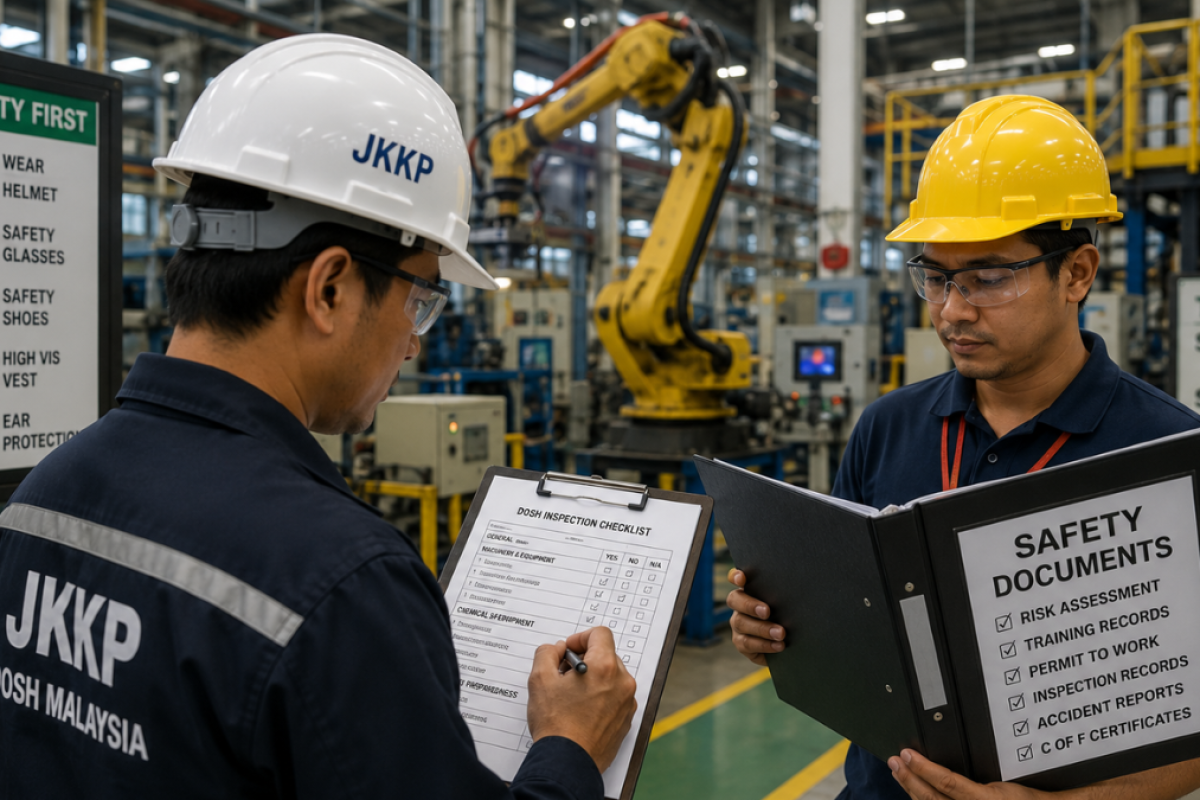
DOSH Inspection, also known as JKKP Inspection, is a workplace inspection carried out by the Department of Occupational Safety and Health Malaysia to check whether a workplace complies with occupational safety and health requirements.
DOSH may inspect workplaces, machinery, work processes, documents, risk assessments, training records, accident records, chemical safety controls, noise exposure controls, plant registration, Certificate of Fitness records and other safety-related matters.
For employers, the best way to prepare for a DOSH or JKKP inspection is to maintain proper safety documentation, conduct regular internal audits, close compliance gaps early and ensure workers, supervisors and management understand their OSH responsibilities.
Key Takeaways:
- DOSH Inspection and JKKP Inspection refer to workplace safety and health inspections by the Department of Occupational Safety and Health Malaysia.
- JKKP is the Bahasa Malaysia name for DOSH.
- Inspections may be routine, complaint-based, accident-related, machinery-related or follow-up inspections.
- Employers should prepare both the workplace condition and documentation.
- Common inspection documents include HIRARC, training records, accident records, machinery CF, CHRA, NRA, emergency plans and maintenance records.
- DOSH may issue an improvement notice when corrective action is required.
- DOSH may issue a prohibition notice when there is immediate danger to life or property.
- Failure to comply with notices can lead to serious penalties.
- Internal audits help employers identify compliance gaps before a DOSH inspection.
- Advanced HSE Solutions can support pre-inspection audits, documentation review, risk assessment, machinery compliance and corrective action planning.
What Is DOSH Inspection?
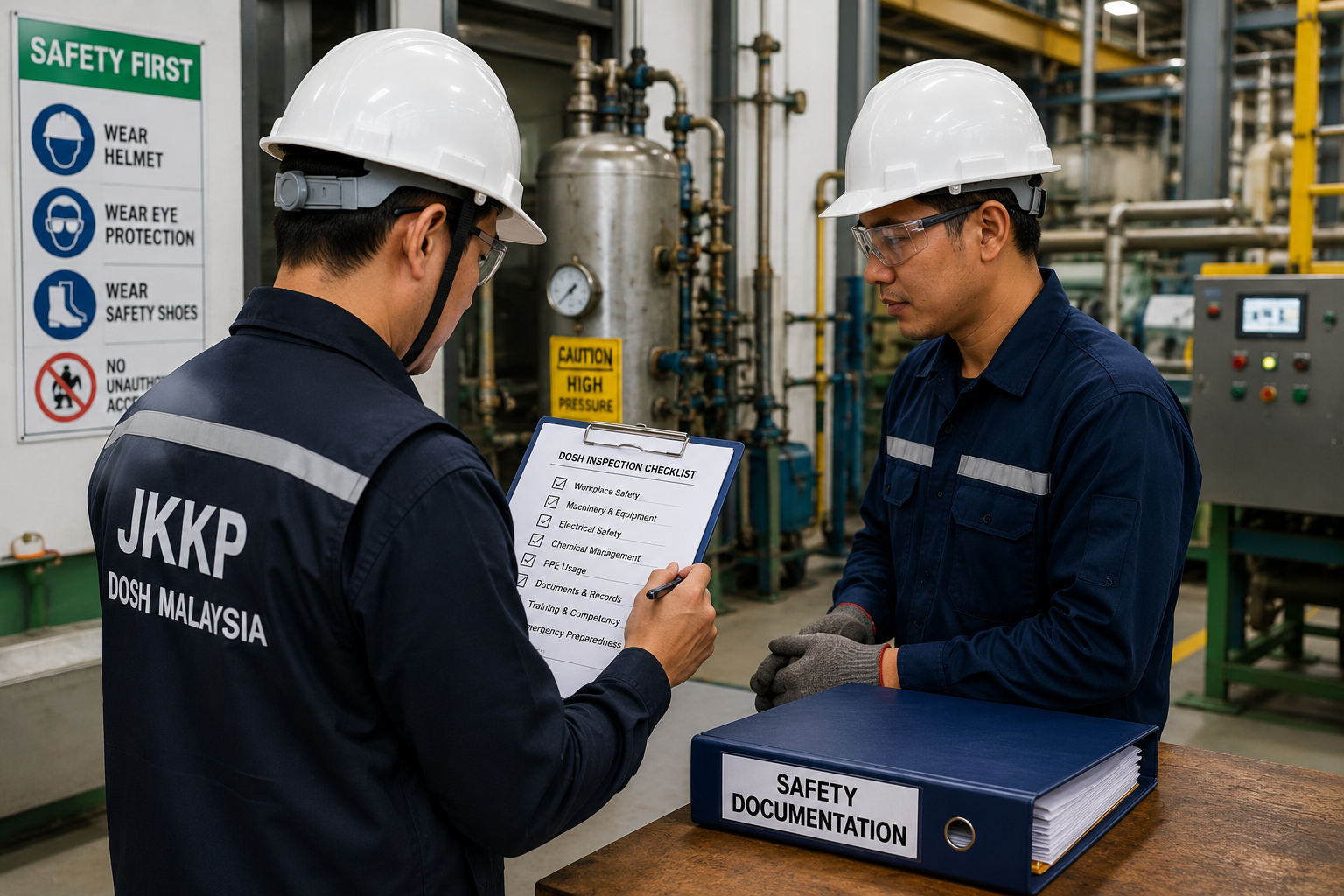
DOSH Inspection refers to an inspection conducted by the Department of Occupational Safety and Health Malaysia.
DOSH is responsible for enforcing occupational safety and health laws in Malaysia. In Bahasa Malaysia, DOSH is known as JKKP, or Jabatan Keselamatan dan Kesihatan Pekerjaan. This is why many employers use the terms DOSH Inspection and JKKP Inspection interchangeably.
A DOSH inspection may be conducted to check whether the workplace is safe, whether legal duties are being followed, whether required documents are available and whether hazardous work activities are properly controlled.
What Is JKKP Inspection?
JKKP Inspection means the same thing as DOSH Inspection. JKKP is the Malay name for DOSH.
Employers may hear terms such as:
- DOSH inspection
- JKKP inspection
- DOSH audit
- JKKP audit
- Workplace safety inspection
- Machinery inspection
- Certificate of Fitness inspection
- Occupational safety and health inspection
Although these terms are sometimes used differently in daily conversation, the main purpose is similar: to verify workplace safety and health compliance.
Why DOSH Inspection Matters
A DOSH inspection is not just a paperwork exercise. It is part of Malaysia’s occupational safety and health enforcement system.
A workplace inspection may help identify:
- Unsafe work conditions
- Missing risk assessments
- Poor machinery guarding
- Expired Certificate of Fitness
- Unsafe lifting operations
- Poor chemical handling
- Excessive noise exposure
- Inadequate worker training
- Poor emergency preparedness
- Weak accident reporting and investigation
- Incomplete safety documentation
- Failure to appoint required OSH personnel
- Poor control of contractor or high-risk work
For employers, inspection readiness reduces the risk of enforcement action, operational disruption, worker injury and reputational damage.
When Can DOSH Conduct an Inspection?
DOSH may conduct inspections for different reasons. Some inspections may be planned, while others may happen because of a complaint, accident, incident, dangerous occurrence or specific enforcement campaign.
Common inspection triggers include:
- Routine workplace inspection
- Accident or fatality investigation
- Employee complaint
- Machinery or plant inspection
- Certificate of Fitness renewal
- Construction site inspection
- Chemical safety issue
- Noise exposure issue
- Unsafe work activity
- Reported dangerous occurrence
- Follow-up after previous notice
- Industry-specific enforcement campaign
Employers should be ready at all times because inspections may not always come with long notice.
What DOSH Officers May Check During Inspection
The actual inspection scope depends on the workplace type, industry, risk profile and inspection purpose.
A DOSH officer may check areas such as:
- Workplace layout and access
- Machinery condition and guarding
- Electrical safety
- Chemical storage and labelling
- Noise exposure controls
- Ventilation and industrial hygiene controls
- Lifting equipment and lifting operations
- Pressure vessels and boilers
- Working at height controls
- Confined space controls
- Fire and emergency arrangements
- Personal protective equipment
- Worker training records
- Risk assessment records
- Accident and incident records
- Safety and Health Committee records
- OSH Coordinator or Safety and Health Officer appointment
- Certificate of Fitness records
- Permit-to-work system
- Contractor safety control
- Housekeeping and workplace condition
For high-risk workplaces, the inspection may be more detailed and may involve both site observation and document review.
Documents Employers Should Prepare
A common inspection problem is that the company may have some safety practices in place, but cannot produce proper documentation.
Important documents may include:
- Company safety and health policy
- HIRARC or risk assessment records
- Safe work procedures
- Training records
- Toolbox meeting records
- Safety induction records
- Accident and incident reports
- Investigation reports
- Corrective action records
- Safety and Health Committee meeting minutes
- OSH Coordinator or Safety and Health Officer appointment records
- Chemical register
- Safety Data Sheets
- CHRA report, where applicable
- Noise Risk Assessment report, where applicable
- Audiometric testing records, where applicable
- Ergonomic Risk Assessment report, where applicable
- Emergency response plan
- Fire drill records
- Machinery Certificate of Fitness records
- Maintenance and inspection records
- Calibration records
- PPE issuance and training records
- Contractor safety records
- Permit-to-work records
- Workplace inspection checklist
- Previous DOSH correspondence or notices
Employers should keep these documents organised and accessible. If records are scattered across departments, inspection response becomes slow and stressful.
Common DOSH Inspection Findings
Many DOSH inspection findings are preventable. Common issues include:
- No updated HIRARC
- Risk assessment does not reflect actual work activity
- Workers are not trained on safe work procedures
- Safety signage is missing or unclear
- PPE is provided but not used correctly
- Machinery guards are removed or damaged
- Lifting equipment lacks valid inspection records
- Pressure vessel CF records are missing or expired
- Chemical containers are not labelled properly
- Safety Data Sheets are unavailable
- CHRA recommendations are not implemented
- Noise exposure controls are weak
- Emergency exits are blocked
- Fire extinguishers are not maintained
- Accident records are incomplete
- Safety committee meetings are not properly documented
- Contractors are not properly controlled
- Corrective actions from previous audits are not closed
The issue is not only whether a document exists. DOSH may also look at whether the document is current, practical, implemented and understood by workers.
What Is a DOSH Improvement Notice?
An improvement notice is issued when an officer believes that a workplace, plant, substance or process may create danger, health risk, bodily injury risk or property damage, and corrective action is required within a specified period.
In simple terms, an improvement notice means:
“The issue must be corrected within the given timeframe.”
Examples of issues that may lead to an improvement notice include:
- Missing or inadequate risk assessment
- Poor machinery guarding
- Inadequate chemical control
- Unsafe storage practice
- Incomplete training records
- Weak emergency preparedness
- Non-compliance with required OSH procedure
- Failure to maintain required safety documentation
Employers should treat improvement notices seriously and respond within the required period.
What Is a DOSH Prohibition Notice?
A prohibition notice is more serious. It may be issued when an officer believes there is immediate danger to life or property.
In simple terms, a prohibition notice means:
“Stop using this workplace, plant, substance or process until the danger is removed.”
Examples of situations that may lead to a prohibition notice include:
- Unsafe lifting operation
- Dangerous machinery condition
- High-risk work without proper controls
- Serious fall hazard
- Unsafe pressure vessel or plant operation
- Imminent risk of serious injury
- Unsafe excavation or construction activity
- Serious electrical hazard
- Operation of plant without required Certificate of Fitness
A prohibition notice may interrupt operations immediately, so employers should act quickly to correct the issue and communicate properly with DOSH.
What Happens If an Employer Fails to Comply?
Failure to comply with an improvement notice or prohibition notice can lead to serious consequences.
Possible consequences include:
- Fine
- Imprisonment
- Continuing daily penalty
- Work stoppage
- Operational disruption
- Additional inspection
- Reputational damage
- Insurance and contractual complications
Employers should not ignore a DOSH notice. Even if an employer disagrees with a notice, the required response process must be handled carefully and professionally.
How Employers Should Respond During a DOSH Inspection
When DOSH officers visit, employers should remain cooperative, organised and transparent.
Recommended response steps:
- Verify the officer’s identity.
- Notify the person in charge, management and safety personnel.
- Assign a competent representative to accompany the officer.
- Provide requested access and documents.
- Take notes during the inspection.
- Do not argue or provide misleading information.
- Clarify findings professionally.
- Record any documents requested.
- Take photos of areas highlighted, if appropriate.
- Arrange immediate correction for urgent hazards.
- Prepare corrective action plan after the inspection.
- Follow up with DOSH within the required timeframe.
The inspection should be treated as a formal compliance matter, not an informal site walk.
How to Prepare Before a DOSH Inspection
The best preparation is continuous compliance, not last-minute document collection.
Employers should:
- Conduct regular internal OSH audits
- Update HIRARC when work activities change
- Review machinery and plant CF status
- Check lifting equipment records
- Review chemical safety documentation
- Review noise and industrial hygiene reports
- Ensure workers receive proper training
- Keep accident and incident records updated
- Close corrective actions from previous audits
- Maintain Safety and Health Committee records
- Ensure emergency equipment is accessible
- Review contractor safety arrangements
- Keep workplace housekeeping under control
- Prepare a central OSH document file
- Train supervisors to answer basic safety questions
A workplace that is inspection-ready is usually also safer, better managed and more operationally stable.
DOSH Inspection Checklist for Employers
Before an inspection, employers should review the following:
General OSH Management
- Safety and health policy available
- OSH roles and responsibilities defined
- HIRARC updated
- Safe work procedures available
- Training records maintained
- Safety committee records maintained
- OSH Coordinator or SHO appointment checked
- Incident reporting process available
Workplace Condition
- Walkways clear
- Emergency exits not blocked
- Housekeeping maintained
- Warning signs displayed
- Fire extinguishers accessible
- First aid box available
- Emergency assembly point identified
Machinery and Plant
- Machine guards in place
- Emergency stop buttons functional
- Maintenance records available
- Certificate of Fitness valid where required
- Lifting equipment records available
- Pressure vessels and boilers properly maintained
Chemical Safety
- Chemical register updated
- Safety Data Sheets available
- Containers labelled
- Storage compatible and controlled
- Spill kit available
- CHRA report available where applicable
- PPE suitable for chemical exposure
Noise and Industrial Hygiene
- Noise Risk Assessment available where required
- Hearing protection provided
- Audiometric testing records available where required
- Ventilation controls maintained
- Industrial hygiene monitoring records available where applicable
Emergency Preparedness
- Emergency response plan available
- Fire drill records maintained
- Emergency contact list displayed
- Evacuation route displayed
- Trained emergency response team identified
Contractor and High-Risk Work
- Contractor induction records available
- Permit-to-work system implemented
- Working at height controls checked
- Confined space entry controls checked
- Hot work controls checked
- Lifting plan available where required
Industries That Should Prioritise DOSH Inspection Readiness
All workplaces should comply with OSH requirements, but some industries should be especially proactive.
These include:
- Manufacturing
- Construction
- Engineering and fabrication
- Warehousing and logistics
- Food and beverage manufacturing
- Chemical and petrochemical
- Oil and gas
- Healthcare facilities
- Water treatment plants
- Automotive workshops
- Electronics and semiconductor
- Industrial buildings
- Facilities using pressure vessels, boilers or lifting equipment
These workplaces often involve higher-risk machinery, chemicals, lifting operations, confined spaces, noise exposure, contractor activity or regulated plant.
DOSH Inspection vs Internal Safety Audit
A DOSH inspection is conducted by the authority. An internal safety audit is conducted by the company or appointed consultant.
Both are important, but they serve different purposes.
A DOSH inspection checks legal compliance and may result in enforcement action.
An internal safety audit helps the employer find and fix problems before an authority inspection, accident or complaint.
The best practice is to conduct internal audits regularly so that DOSH inspection becomes a confirmation of good practice rather than a surprise compliance crisis.
How Advanced HSE Solutions Can Help
Advanced HSE Solutions supports companies in Malaysia with HSE consultancy, workplace safety audits, DOSH registration, inspection preparation, machinery compliance, risk assessment and training.
For DOSH Inspection and JKKP Inspection readiness, our team can assist with:
- Pre-inspection compliance audit
- HIRARC review and improvement
- DOSH documentation review
- Machinery Certificate of Fitness checking
- PMA, PMT and PMD inspection preparation
- CHRA, NRA and ERA coordination
- Safety and health policy review
- Workplace inspection checklist preparation
- Corrective action planning
- Training and awareness support
- Contractor safety documentation review
- Compliance gap identification
Our role is to help employers move from uncertainty to clear compliance action.
If your company is preparing for a DOSH inspection, has received a notice, or wants to reduce workplace safety compliance risk, Advanced HSE Solutions can support your inspection readiness process.
Conclusion
DOSH Inspection, or JKKP Inspection, is an important part of workplace safety and health enforcement in Malaysia. Employers should not wait until an inspection notice, accident or complaint before reviewing their compliance status.
A well-prepared workplace should have updated risk assessments, valid machinery records, proper training documentation, safe work procedures, accident records, emergency plans and clear corrective action tracking.
The goal is not only to pass inspection. The real objective is to build a safer, more compliant and more resilient workplace.
FAQ
What is DOSH Inspection?
DOSH Inspection is a workplace inspection conducted by the Department of Occupational Safety and Health Malaysia to check occupational safety and health compliance.
What is JKKP Inspection?
JKKP Inspection means the same thing as DOSH Inspection. JKKP stands for Jabatan Keselamatan dan Kesihatan Pekerjaan, the Bahasa Malaysia name for DOSH.
What documents are needed for DOSH inspection?
Common documents include safety and health policy, HIRARC, training records, accident reports, machinery Certificate of Fitness, CHRA, NRA, emergency response plan, maintenance records, Safety Data Sheets and safety committee records.
Can DOSH enter my workplace for inspection?
Employers, occupiers and responsible persons are expected to provide assistance to officers during entry, inspection, examination or inquiry under occupational safety and health law.
What is a DOSH improvement notice?
A DOSH improvement notice is issued when an officer believes that a workplace, plant, substance or process may create danger or health risk and corrective action is required within a specified period.
What is a DOSH prohibition notice?
A DOSH prohibition notice is issued when an officer believes there is immediate danger to life or property. It may prohibit the use or operation of a workplace, plant, substance or process until the danger is removed.
What should I do after receiving a DOSH notice?
Review the notice carefully, identify the required corrective action, stop unsafe activity where required, assign a responsible person, document all corrective actions and follow up within the required timeframe.
How can I prepare for a DOSH inspection?
Conduct internal audits, update HIRARC, check Certificate of Fitness records, review training documents, inspect machinery, correct unsafe conditions, organise OSH files and train supervisors on inspection response.
Can Advanced HSE Solutions help with DOSH inspection preparation?
Yes. Advanced HSE Solutions can assist with pre-inspection compliance audits, HIRARC review, DOSH documentation review, machinery compliance checking, corrective action planning and inspection readiness support.