Table of Contents
Quick Answer
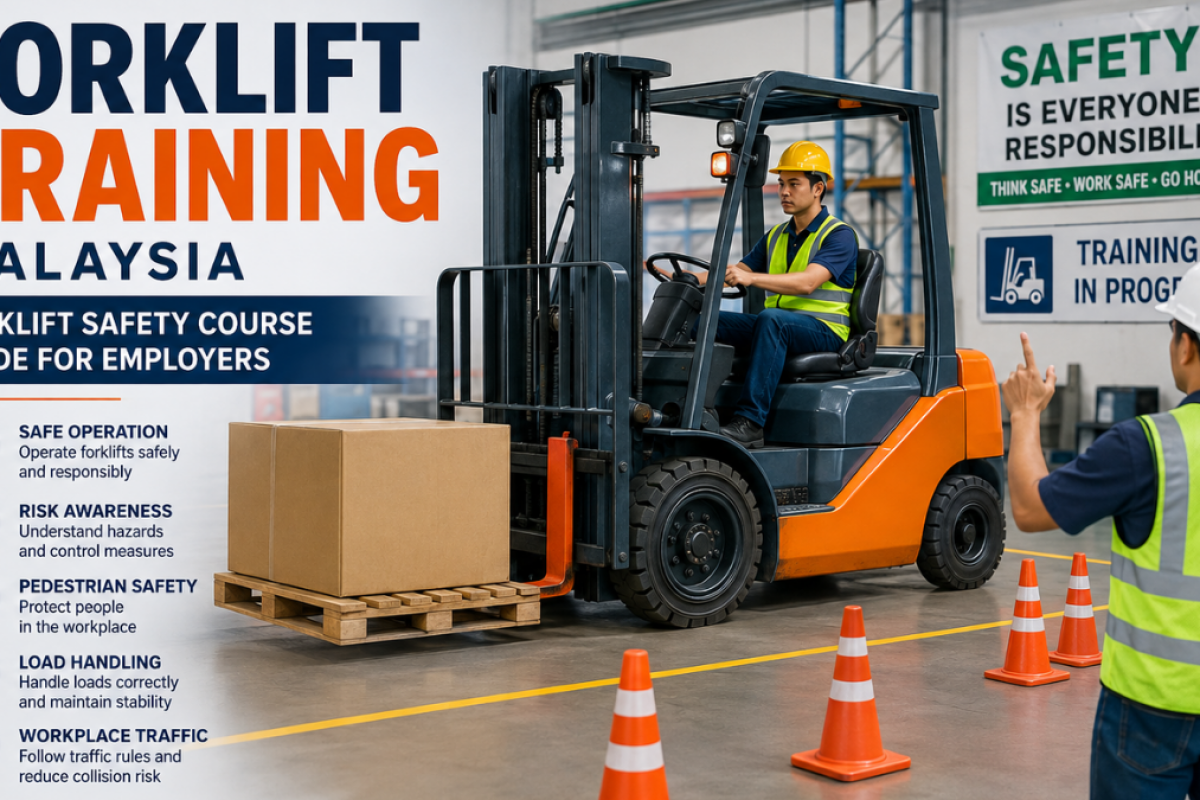
Forklift Training is a workplace safety course that teaches forklift operators and supervisors how to operate forklifts safely, inspect the equipment, handle loads, control workplace traffic and reduce the risk of collision, overturning, falling loads and pedestrian accidents.
In Malaysia, forklift safety training supports the employer’s duty to provide suitable information, instruction, training and supervision for workplace safety.
A proper forklift training programme should include theory, practical operation, pre-use inspection, load handling, stability, travelling, parking, refuelling or charging, pedestrian safety, workplace traffic rules and operator assessment.
Key Takeaways:
- Forklift Training teaches safe forklift operation, load handling, inspection and workplace traffic control.
- Operators should be trained on the forklift type and attachment they use.
- Forklift training should include theory and practical assessment.
- Supervisors should understand forklift safety because they monitor daily compliance.
- Pedestrian safety and traffic segregation are critical.
- Refresher training should be considered after incidents, unsafe behaviour, workplace changes or forklift type changes.
- Employers should keep proper training and authorisation records.
- Forklift Training may be HRD Corp claimable for eligible employers.
- Advanced HSE Solutions can support forklift safety training, supervisor briefing, SOP improvement and DOSH/JKKP inspection readiness.
What Is Forklift Training?
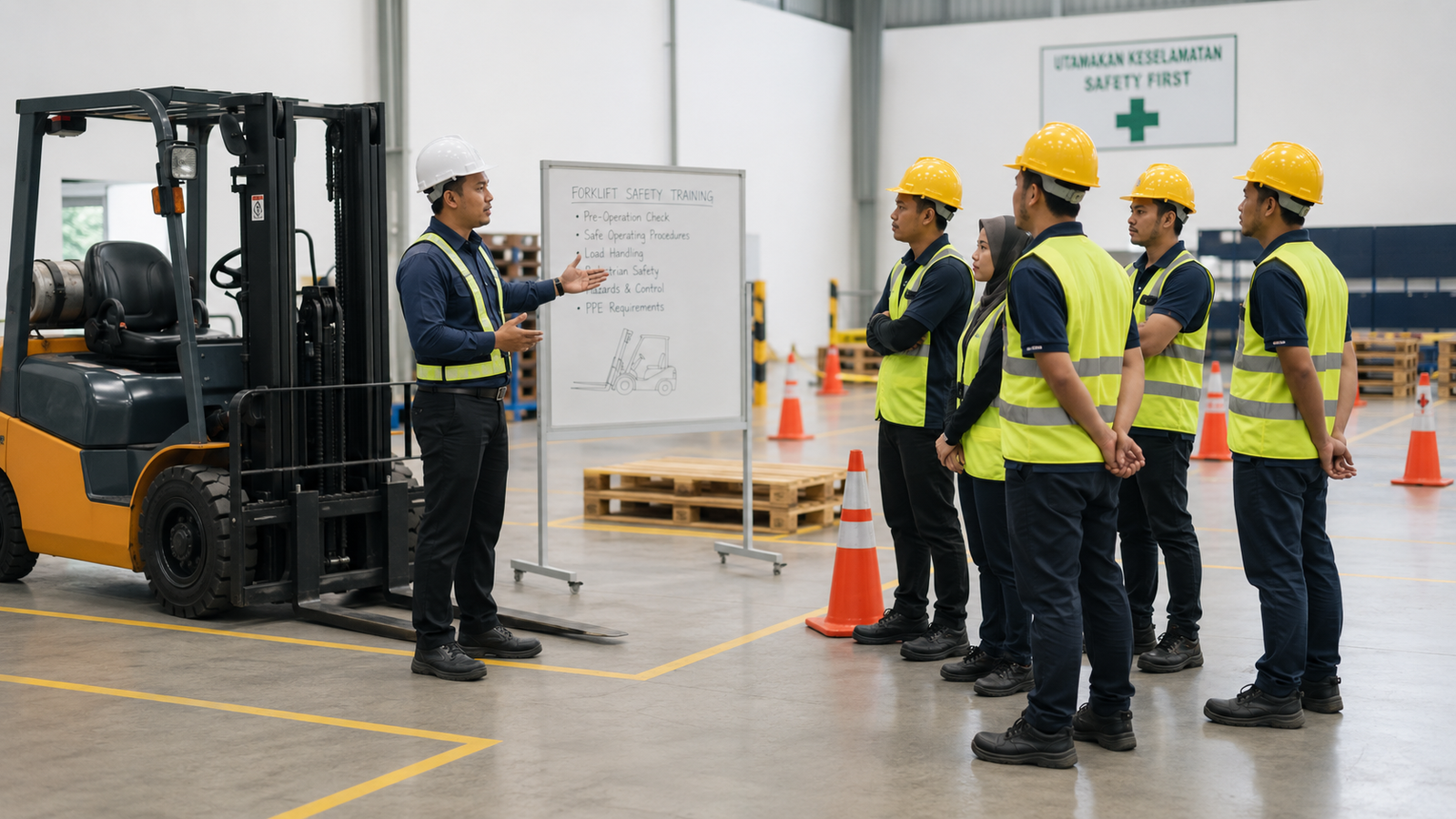
Forklift Training is a practical safety training programme for employees who operate or supervise forklift operations.
It is also commonly searched as:
- Forklift Training Malaysia
- Forklift safety training
- Forklift operator training
- Forklift course Malaysia
- Forklift licence Malaysia
- Forklift certificate Malaysia
- DOSH forklift training
- JKKP forklift training
- Warehouse forklift safety training
- Forklift refresher training
The main purpose is to ensure forklift operators understand how to operate the forklift safely in their actual workplace environment.
Why Forklift Training Matters
Forklifts are useful, but they can be dangerous when operated incorrectly.
Common forklift risks include:
- Collision with pedestrians
- Collision with racks, walls or vehicles
- Forklift overturning
- Falling loads
- Unstable loads
- Poor visibility
- Speeding
- Unsafe reversing
- Overloading
- Driving on slopes incorrectly
- Poor parking
- Mechanical defects
- Battery charging or refuelling hazards
- Unauthorised operation
Forklift Training helps operators understand these risks and follow safe operating procedures.
For employers, training helps reduce accidents, property damage, downtime, injury risk and enforcement risk.
Legal and Compliance Background
Employers have a duty to ensure safety and health at work, so far as practicable. This includes providing suitable information, instruction, training and supervision.
Forklift operation is a workplace transport activity with serious risk. Therefore, employers should ensure operators are trained, competent and authorised before allowing them to operate forklifts.
Employers should also ensure supervisors understand forklift risks, workplace traffic rules and pedestrian control.
Forklift Training vs Forklift Licence
In Malaysia, many people use the term “forklift licence” casually.
Employers should be careful with wording. A training certificate is not the same as a government driving licence unless the course or authorisation specifically meets the relevant recognised requirement.
For workplace safety, the practical focus should be:
- Has the operator received suitable training?
- Has the operator been assessed?
- Is the operator competent for the forklift type used?
- Is the operator authorised by the employer?
- Is the operator familiar with the actual workplace traffic rules?
- Are training records kept?
Employers should avoid allowing untrained or unauthorised workers to operate forklifts.
Who Should Attend Forklift Training?
Forklift Training is suitable for:
- New forklift operators
- Existing forklift operators
- Warehouse workers assigned to forklift operation
- Production workers using forklifts
- Logistics workers
- Storekeepers
- Loading and unloading workers
- Maintenance personnel who move forklifts
- Supervisors
- Line leaders
- Warehouse managers
- HSE personnel
- Safety and Health Committee members
- Contractors operating forklifts on site
Supervisors should attend or receive separate forklift safety awareness because they monitor daily operation.
Which Workplaces Need Forklift Training?
Forklift Training is relevant to workplaces such as:
- Warehouses
- Factories
- Manufacturing plants
- Logistics hubs
- Distribution centres
- Cold rooms
- Construction material yards
- Retail warehouses
- Food and beverage processing plants
- Engineering workshops
- Automotive workshops
- Chemical storage areas
- Loading bays
- Ports and industrial yards
Any workplace using forklifts should ensure operators are trained and supervised.
What Should Forklift Training Cover?
A practical Forklift Training course should include the following topics.
1. Introduction to Forklift Safety
Participants should understand why forklift safety matters.
This section should cover:
- Common forklift accidents
- Operator responsibility
- Employer rules
- Pedestrian risk
- Property damage risk
- Importance of safe driving behaviour
Forklift operators should understand that they are operating heavy equipment, not a normal car.
2. Forklift Types and Attachments
Training should match the type of forklift used at the workplace.
Examples include:
- Counterbalance forklift
- Reach truck
- Electric forklift
- Diesel forklift
- LPG forklift
- Pallet truck
- Order picker
- Forklift with attachment
- Fork extension
- Clamp attachment
- Rotator or special attachment
An operator trained on one forklift type should not automatically operate another type without suitable familiarisation or conversion training.
3. Pre-Use Inspection
Operators should learn how to inspect the forklift before use.
Pre-use inspection may include:
- Tyres
- Forks
- Mast
- Chains
- Hydraulic system
- Brakes
- Steering
- Horn
- Lights
- Reversing alarm
- Seatbelt
- Battery or fuel system
- Warning devices
- Dashboard indicators
- Leaks
- General condition
Defects should be reported before operation.
4. Forklift Stability
Forklift stability is one of the most important topics.
Training should cover:
- Centre of gravity
- Load centre
- Stability triangle
- Effects of lifting height
- Effects of turning
- Effects of slopes
- Effects of speed
- Overloading
- Unstable loads
- Sudden braking
- Uneven floor conditions
Operators should understand why forklifts can overturn if used incorrectly.
5. Load Handling
Load handling training should cover:
- Checking load weight
- Checking load condition
- Correct fork position
- Lifting and lowering safely
- Keeping load low while travelling
- Avoiding unstable loads
- Avoiding overloading
- Safe stacking
- Safe unstacking
- Pallet condition
- Load visibility
- Use of banksman or spotter where needed
Poor load handling can cause falling loads, collisions and injuries.
6. Safe Driving and Travelling
Operators should learn safe forklift movement.
Training should cover:
- Speed control
- Safe turning
- Reversing safely
- Horn use
- Blind spots
- Junctions and corners
- Slopes and ramps
- Wet or uneven floors
- Doorways
- Loading bays
- Pedestrian areas
- Seatbelt use
- No passengers
- No mobile phone use while operating
Safe travelling is especially important in mixed pedestrian and vehicle areas.
7. Pedestrian Safety
Forklift and pedestrian interaction is one of the biggest workplace transport risks.
Training should cover:
- Pedestrian segregation
- Walkways
- Crossings
- Blind spots
- Reversing areas
- Warning lights and alarms
- Speed limits
- Communication with pedestrians
- High-traffic areas
- Loading and unloading zones
Employers should not rely only on training. Pedestrian routes and vehicle routes should be properly managed.
8. Loading Bay Safety
Loading bays can be high-risk areas.
Training should cover:
- Trailer condition
- Dock edge awareness
- Wheel chocks where required
- Dock leveller safety
- Communication with lorry drivers
- Load stability
- Trailer movement risk
- Falling from loading bay
- Safe reversing
- Clear traffic control
Loading bay rules should be clear and enforced.
9. Parking and Shutdown
Operators should learn safe parking and shutdown.
This may include:
- Park in designated area
- Lower forks
- Neutralise controls
- Apply parking brake
- Switch off power
- Remove key where required
- Do not block emergency routes
- Do not park on slopes unless authorised
- Report defects after use
Poor parking can create trip, collision and obstruction risks.
10. Refuelling and Battery Charging
Training should cover safe refuelling or charging depending on forklift type.
This may include:
- Battery charging safety
- LPG cylinder handling
- Diesel refuelling precautions
- Fire prevention
- Ventilation
- Spill control
- No smoking
- PPE requirements
- Emergency action
- Reporting leaks or damage
Battery charging and refuelling areas should be controlled.
11. Emergency Procedures
Forklift operators should know what to do during emergencies.
Training should cover:
- What to do if forklift becomes unstable
- What to do during collision
- What to do if load falls
- What to do during hydraulic failure
- What to do during fire
- What to do during fuel or battery incident
- Incident reporting
- First response and escalation
Operators should be trained to report incidents and near misses.
12. Workplace-Specific Rules
Generic forklift training is not enough.
Operators must understand site-specific rules such as:
- Speed limits
- Traffic routes
- One-way systems
- Pedestrian crossings
- Loading bay rules
- Restricted areas
- PPE requirements
- Parking locations
- Refuelling or charging areas
- Emergency routes
- Contractor rules
- Communication rules
The training should reflect the actual workplace.
Suggested Forklift Training Course Outline
A practical Forklift Training course may include:
- Introduction to forklift safety
- Employer and operator responsibilities
- Forklift types and limitations
- Pre-use inspection
- Forklift stability and load centre
- Load handling and stacking
- Safe driving and reversing
- Pedestrian safety and traffic control
- Loading bay safety
- Parking and shutdown
- Refuelling or battery charging safety
- Emergency procedures
- Workplace-specific rules
- Practical operation and observation
- Assessment and training record
The course should include practical assessment, not only classroom briefing.
Forklift Training for Supervisors
Supervisors should understand forklift risks even if they do not operate the forklift.
Supervisor training may cover:
- How to monitor forklift operators
- How to enforce traffic rules
- How to check training records
- How to respond to unsafe driving
- How to manage pedestrian routes
- How to review loading bay safety
- How to report and investigate near misses
- How to trigger refresher training
Supervisors are important because daily enforcement depends on them.
Forklift Refresher Training
Refresher training should be considered when:
- Operator has not used forklift for some time
- Operator changes forklift type
- Operator changes workplace or environment
- Unsafe behaviour is observed
- Accident or near miss occurs
- New attachment is used
- New traffic route is introduced
- Loading bay layout changes
- Supervisor identifies performance issues
- Employer sets periodic refresher training requirement
Refresher training should focus on actual weaknesses and updated workplace risks.
Forklift Operator Assessment
Training should include assessment to confirm understanding and basic competency.
Assessment may include:
- Theory questions
- Pre-use inspection demonstration
- Forklift control check
- Load pick-up
- Load travel
- Stacking and unstacking
- Reversing
- Turning
- Parking
- Workplace rule understanding
Employers should keep assessment records as evidence of training.
Training Records Employers Should Keep
Employers should keep proper forklift training records, including:
- Training date
- Course title
- Trainer name
- Participant name
- Forklift type covered
- Theory topics covered
- Practical assessment record
- Result or competency status
- Authorisation record
- Refresher training date
- Incident or retraining record
Training records are important for internal audit, customer audit and DOSH/JKKP inspection readiness.
Common Forklift Safety Mistakes
Common mistakes include:
- Allowing untrained workers to operate forklifts
- Treating a certificate as permanent competency
- No site-specific traffic briefing
- No pre-use inspection
- Poor pedestrian segregation
- Driving too fast
- Carrying passengers
- Travelling with raised load
- Overloading
- Poor reversing control
- Unsafe loading bay practices
- Poor parking
- No refresher training after incidents
- Not training supervisors
- Poor training records
Forklift safety depends on training, supervision and site traffic control.
Forklift Training Checklist for Employers
Before Training
- Identify forklift types used
- Identify operators and supervisors
- Review incident and near-miss records
- Prepare site traffic rules
- Prepare pre-use inspection checklist
- Confirm practical training area
- Prepare training record form
- Confirm HRD Corp claimability where applicable
During Training
- Cover theory and practical topics
- Demonstrate pre-use inspection
- Practise safe operation
- Review actual site rules
- Conduct assessment
- Discuss common workplace risks
- Brief supervisors where needed
After Training
- Keep records
- Authorise competent operators
- Monitor driving behaviour
- Review pedestrian routes
- Enforce speed and traffic rules
- Conduct refresher training where needed
- Update HIRARC and SOPs
HRD Corp Claimable Forklift Training
For eligible Malaysian employers, Forklift Training may be arranged as HRD Corp claimable HSE training, depending on provider arrangement, course approval and employer eligibility.
This is useful for companies that need to train forklift operators, warehouse staff, supervisors and logistics teams while managing training cost.
Employers should confirm claimability and course documentation before training is conducted.
Benefits of Forklift Training for Employers
Forklift Training can help employers:
- Reduce forklift accidents
- Improve operator competency
- Improve pedestrian safety
- Reduce product and property damage
- Improve warehouse traffic control
- Improve loading bay safety
- Improve supervisor monitoring
- Support HIRARC and SOP implementation
- Improve audit and inspection readiness
- Reduce downtime and operational disruption
- Build a stronger safety culture
The real benefit is not only a certificate. The real benefit is safer daily forklift operation.
How Advanced HSE Solutions Can Help
Advanced HSE Solutions supports Malaysian employers with HRD Corp claimable HSE training, forklift safety training, HIRARC support, SOP improvement, workplace safety audits and DOSH/JKKP inspection readiness.
For Forklift Training, our team can assist with:
- Forklift safety awareness training
- Forklift operator training coordination
- Supervisor forklift safety briefing
- Pre-use inspection training
- Load handling awareness
- Pedestrian safety training
- Warehouse traffic safety review
- Forklift SOP improvement
- HIRARC support for forklift operations
- Training record documentation support
- Refresher training planning
If your workplace uses forklifts in warehouses, factories, loading bays, logistics areas or production facilities, Advanced HSE Solutions can help improve operator awareness, supervisor control and workplace transport safety.
Conclusion
Forklift Training is an essential part of workplace transport safety.
Forklifts can cause serious injury, property damage and operational disruption when operated by untrained, unauthorised or poorly supervised workers.
For employers, the key message is simple: forklift safety should not depend only on operator experience. Operators must be trained, assessed, authorised and supervised. Workplace traffic rules, pedestrian segregation, pre-use inspection and refresher training should also be managed properly.
A practical Forklift Training programme helps protect workers, reduce incidents and strengthen workplace safety compliance.
FAQ
What is Forklift Training?
Forklift Training is a workplace safety course that teaches operators how to inspect, operate, travel, handle loads, park and control forklifts safely.
Who should attend Forklift Training?
Forklift operators, warehouse staff, logistics workers, production workers, supervisors, HSE personnel and contractors who operate or supervise forklift work should attend.
Is Forklift Training required in Malaysia?
Employers should ensure workers operating forklifts receive suitable information, instruction, training and supervision before they operate forklifts at work.
Is a forklift certificate the same as a forklift licence?
Not always. Many people use the term “forklift licence” casually. Employers should check whether the training, assessment and authorisation meet the requirement for their workplace and industry.
What should Forklift Training cover?
Forklift Training should cover pre-use inspection, stability, load handling, safe driving, reversing, pedestrian safety, parking, charging or refuelling, emergency action and workplace-specific traffic rules.
Should forklift supervisors attend training?
Yes. Supervisors should understand forklift risks, traffic rules, pedestrian control and how to monitor operator behaviour.
How often should forklift refresher training be conducted?
Refresher training should be considered when operators change forklift type, return after long absence, show unsafe behaviour, are involved in incidents, or when workplace traffic conditions change.
Can Forklift Training be HRD Corp claimable?
It may be arranged as HRD Corp claimable HSE training for eligible employers, depending on provider arrangement, course approval and HRD Corp requirements.
Can Advanced HSE Solutions provide Forklift Training?
Yes. Advanced HSE Solutions can support forklift safety training, operator awareness, supervisor briefing, pre-use inspection training, HIRARC support, SOP improvement and DOSH/JKKP inspection readiness.