
Table of Contents
Quick Answer
HIRARC Training is a workplace safety training programme that teaches participants how to identify hazards, assess risk levels and recommend suitable control measures.
HIRARC stands for Hazard Identification, Risk Assessment and Risk Control. In Malaysia, HIRARC is widely used to support workplace risk assessment, safe work procedures, safety audits, DOSH/JKKP inspection readiness and occupational safety and health compliance.
A good HIRARC Training programme should help participants understand the HIRARC process, use likelihood and severity scoring, apply the risk matrix, select control measures using the hierarchy of control, prepare a HIRARC report and convert findings into practical workplace action.
Key Takeaways:
-
HIRARC Training teaches hazard identification, risk assessment and risk control.
-
HIRARC stands for Hazard Identification, Risk Assessment and Risk Control.
-
HIRARC Training is useful for managers, supervisors, OSH Coordinators, Safety Committee members, workers and HSE personnel.
-
Training should cover hazard categories, work activity classification, likelihood, severity, risk matrix and hierarchy of control.
-
Participants should practise completing a HIRARC form using actual workplace examples.
-
HIRARC Training should be linked to SOPs, permit-to-work, corrective actions and workplace inspections.
-
Managers and supervisors should attend because they are responsible for implementing and monitoring controls.
-
HRD Corp claimable HIRARC Training may be available for eligible employers, subject to provider arrangement and approval.
-
Employers should keep proper training records for audit and DOSH/JKKP inspection readiness.
-
Advanced HSE Solutions can support HIRARC Training, practical workshops, HIRARC review and post-training action planning.

What Is HIRARC Training?
HIRARC Training is a practical course that teaches employees, supervisors and safety personnel how to conduct workplace risk assessment.
It is also commonly searched as:
-
HIRARC Training Malaysia
-
HIRARC course Malaysia
-
HIRARC DOSH training
-
HIRARC JKKP training
-
Hazard Identification Risk Assessment Risk Control training
-
Workplace risk assessment training
-
Risk assessment course Malaysia
-
HIRARC report training
-
HIRARC and SOP training
-
HRD Corp claimable HIRARC training
The purpose of the training is to move HIRARC from paperwork into real workplace safety action.
What Does HIRARC Stand For?
HIRARC stands for:
-
Hazard Identification
-
Risk Assessment
-
Risk Control
Each part has a different purpose.
Hazard Identification means identifying anything that can cause harm.
Risk Assessment means evaluating how likely the harm is and how severe the outcome may be.
Risk Control means selecting and implementing suitable measures to eliminate or reduce the risk.
In simple terms, HIRARC helps participants answer three questions:
-
What can go wrong?
-
How serious is the risk?
-
What should we do to control it?
Why HIRARC Training Matters
Many companies have HIRARC forms, but not everyone understands how to use them properly.
Common problems include:
-
Hazards are copied from old templates
-
Risk ratings are guessed
-
Workers are not consulted
-
Existing controls are overstated
-
Recommendations only mention PPE
-
No person in charge is assigned
-
No due date is set
-
Reports are filed but not acted upon
HIRARC Training helps prevent these problems by teaching participants how to assess actual workplace activities and recommend practical controls.
For employers, HIRARC Training can help:
-
Improve workplace hazard identification
-
Strengthen risk assessment quality
-
Improve safe work procedures
-
Support DOSH/JKKP inspection readiness
-
Reduce accident and near-miss risk
-
Improve supervisor safety competency
-
Support OSH Coordinator and Safety Committee functions
-
Improve contractor safety control
-
Improve internal audit preparation
-
Strengthen overall safety culture
Legal and Compliance Background
Employers in Malaysia have a duty to manage workplace safety and health risks.
HIRARC is one of the most practical methods for documenting hazard identification, risk assessment and risk control.
A proper HIRARC process supports the employer’s ability to show that workplace hazards have been identified, risks have been assessed and control measures have been planned or implemented.
HIRARC Training supports this process by ensuring the people involved understand how to conduct risk assessment correctly.
HIRARC Training and OSHA 1994 Risk Assessment Duties
Under Malaysia’s updated occupational safety and health framework, employers, self-employed persons and principals have duties relating to risk assessment and risk control.
HIRARC Training helps workplace personnel understand how to practically fulfil this duty by:
-
Breaking work into activities
-
Identifying hazards
-
Evaluating likelihood and severity
-
Ranking risk levels
-
Selecting suitable control measures
-
Documenting findings
-
Assigning corrective actions
-
Reviewing the assessment when workplace conditions change
This makes HIRARC Training useful for both compliance and day-to-day safety management.
Who Should Attend HIRARC Training?
HIRARC Training is suitable for anyone involved in workplace safety, supervision, operations or risk assessment.
Recommended participants include:
-
Employers
-
Directors or business owners
-
Factory managers
-
Operations managers
-
Production managers
-
Maintenance managers
-
HSE officers
-
Safety and Health Officers
-
OSH Coordinators
-
Safety and Health Committee members
-
Supervisors
-
Line leaders
-
Team leaders
-
HR and admin personnel involved in safety records
-
Contractor management personnel
-
Workers involved in high-risk activities
-
Internal auditors
-
ISO 45001 implementation team members
Managers and supervisors should attend because they are directly involved in approving, implementing and monitoring control measures.
Which Industries Need HIRARC Training?
HIRARC Training is relevant to almost every workplace, but it is especially important for higher-risk industries.
Examples include:
-
Manufacturing
-
Construction
-
Engineering and fabrication
-
Warehousing and logistics
-
Food and beverage processing
-
Chemical handling
-
Automotive workshops
-
Oil and gas support services
-
Healthcare facilities
-
Laboratories
-
Maintenance services
-
Water treatment
-
Cleaning services
-
Retail and commercial premises
-
Industrial facilities using machinery
-
Contractors and service providers
Even office-based companies can benefit from HIRARC Training because offices still have risks such as ergonomics, electrical hazards, slips and trips, emergency evacuation and psychosocial hazards.
What Should HIRARC Training Cover?
A practical HIRARC Training programme should cover the full risk assessment process, from identifying work activities to preparing action plans.
1. Introduction to HIRARC
Participants should first understand the purpose of HIRARC.
This section should cover:
-
Meaning of HIRARC
-
Why risk assessment is important
-
Link between HIRARC, workplace accidents and prevention
-
Difference between hazard and risk
-
Difference between existing control and recommended control
-
Role of management, supervisors and workers
The goal is to make participants understand that HIRARC is not only a form. It is a decision-making tool for workplace safety.
2. Understanding Workplace Hazards
Participants should learn how to identify different types of hazards.
Common hazard categories include:
-
Safety hazards
-
Machinery hazards
-
Electrical hazards
-
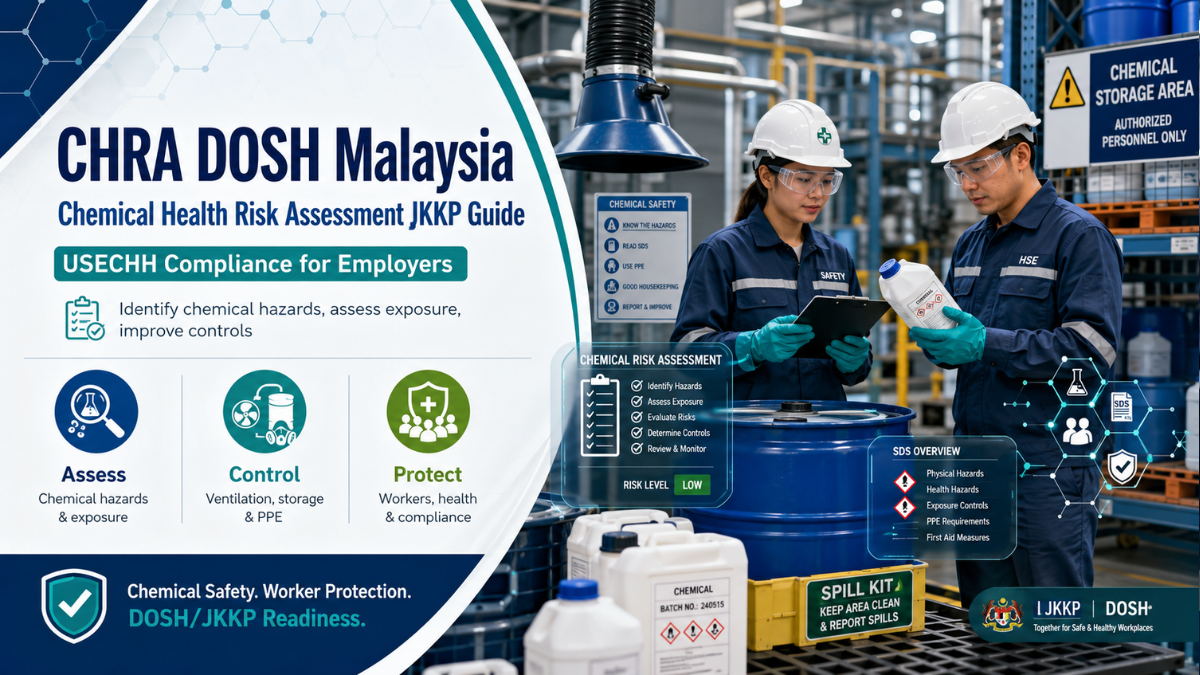
Chemical hazards
-
Physical hazards
-
Biological hazards
-
Ergonomic hazards
-
Fire and explosion hazards
-
Manual handling hazards
-
Vehicle and traffic hazards
-
Working at height hazards
-
Confined space hazards
-
Environmental hazards
-
Psychosocial hazards
Training should use real workplace examples instead of only generic textbook examples.
3. Classifying Work Activities
Before hazards can be identified, participants must know how to break work into suitable activities.
Examples include:
-
Machine operation
-
Chemical mixing
-
Loading and unloading
-
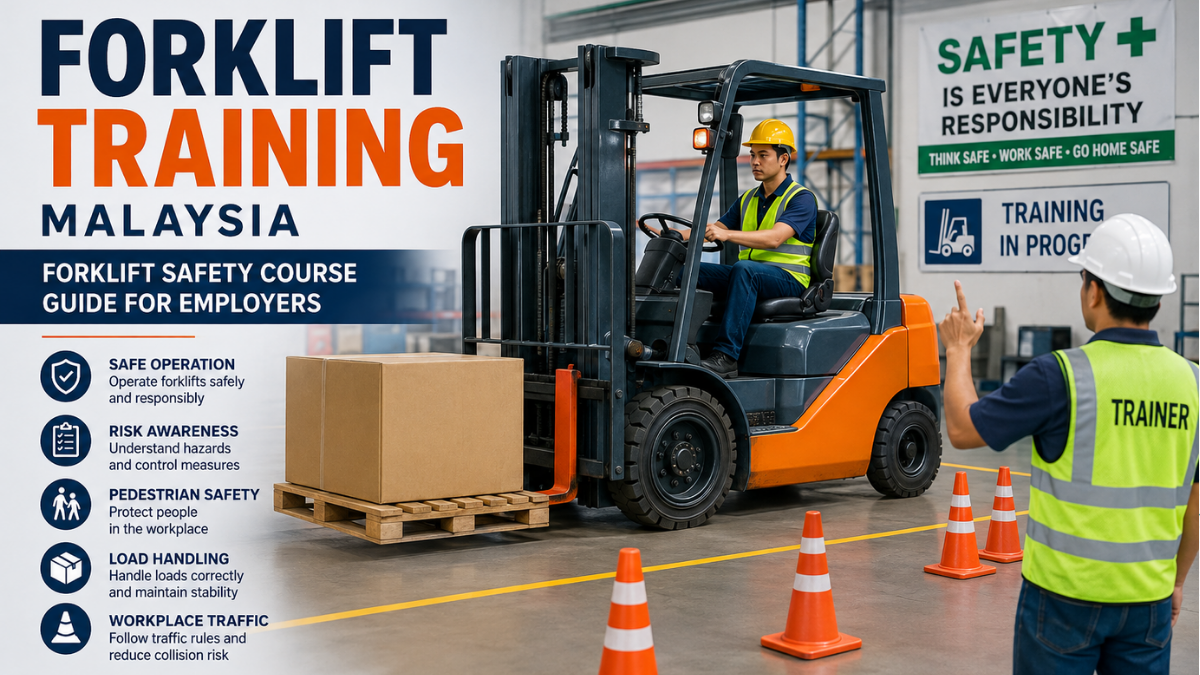
Forklift operation
-
Welding
-
Grinding
-
Maintenance work
-
Cleaning work
-
Working at height
-
Confined space entry
-
Manual lifting
-
Packing
-
Office workstation work
The work activity should not be too broad or too narrow.
For example, “factory operation” is too broad. “Press one button” may be too narrow. A good HIRARC activity should be specific enough to assess risk properly.
4. Hazard Identification Techniques
HIRARC Training should teach participants how to identify hazards using practical methods.
Useful methods include:
-
Workplace inspection
-
Task observation
-
Job Hazard Analysis
-
Review of accident and near-miss records
-
Worker consultation
-
Review of Safety Data Sheets
-
Review of machine manuals
-
Review of maintenance records
-
Review of previous audit findings
-
Review of contractor work activities
-
Review of emergency scenarios
Participants should learn that worker input is important because workers understand the real work better than anyone else.
5. Risk Assessment Using Likelihood and Severity
Participants should learn how to assess risk using likelihood and severity.
Likelihood means how likely the hazardous event is to happen.
Severity means how serious the consequence could be if it happens.
A simple scoring method may use a 1 to 5 scale for likelihood and severity.
Example:
-
Likelihood: 1 to 5
-
Severity: 1 to 5
-
Risk Rating: Likelihood × Severity
This helps participants classify risks as low, medium or high and prioritise action.
6. Understanding the Risk Matrix
The risk matrix helps participants decide the risk level.
For example:
-
Low risk: monitor and maintain existing control
-
Medium risk: improve controls and set action plan
-
High risk: take urgent action before work continues or as soon as practicable
Participants should be trained not to manipulate the score just to make the risk look acceptable.
Risk scoring must reflect the actual workplace condition.
7. Existing Control Review
Participants should learn how to assess existing controls honestly.
Examples of existing controls include:
-
Machine guard
-
Emergency stop button
-
Local exhaust ventilation
-
Safe work procedure
-
Permit-to-work
-
Training
-
Supervision
-
Warning signage
-
PPE
-
Housekeeping
-
Maintenance schedule
-
Barricade
-
Fire extinguisher
-
Spill kit
-
Traffic route
-
Lockout-tagout procedure
A control should only be counted if it is actually implemented, effective and understood by workers.
8. Hierarchy of Control
HIRARC Training should strongly emphasise the hierarchy of control.
The hierarchy of control includes:
-
Elimination
-
Substitution
-
Engineering control
-
Administrative control
-
Personal protective equipment
Participants should understand that PPE is the last line of defence.
A good HIRARC recommendation should not automatically rely only on PPE when better controls are practicable.
9. Preparing Recommended Control Measures
Participants should learn how to write practical and specific recommendations.
Weak recommendation:
“Use PPE.”
Better recommendation:
“Install fixed machine guard at rotating shaft, brief operators on safe operation, display warning signage and require cut-resistant gloves during blade handling.”
Good recommendations should be:
-
Specific
-
Practical
-
Linked to the hazard
-
Based on hierarchy of control
-
Assigned to a responsible person
-
Given a target date
-
Trackable
10. Preparing a HIRARC Report
HIRARC Training should include how to prepare a proper HIRARC report.
A good HIRARC report should include:
-
Work area
-
Work activity
-
Hazard
-
Possible effect
-
Existing controls
-
Likelihood score
-
Severity score
-
Risk rating
-
Risk level
-
Recommended control measures
-
Person in charge
-
Due date
-
Status
-
Review date
Participants should practise completing a HIRARC form during training.
11. Linking HIRARC to SOP
HIRARC findings should be used to improve safe work procedures.
For example:
-
If HIRARC identifies chemical splash risk, the SOP should include correct PPE, handling steps and spill response.
-
If HIRARC identifies machine entanglement risk, the SOP should include guarding, lockout and emergency stop procedures.
-
If HIRARC identifies working at height risk, the SOP should include fall prevention, access control and inspection requirements.
Training should show participants how HIRARC and SOP work together.
12. Linking HIRARC to Permit-to-Work
High-risk activities may require a permit-to-work system.
Examples include:
-
Hot work
-
Confined space entry
-
Work at height
-
Electrical work
-
Excavation
-
Lifting operations
-
Pressure system maintenance
-
Contractor maintenance work
HIRARC helps identify the hazards and controls that should be checked before the permit is approved.
13. HIRARC Review and Updating
HIRARC should be reviewed periodically and whenever workplace conditions change.
Review may be needed when:
- New machinery is installed
- New chemical is introduced
- Process changes
- Layout changes
- New work activity starts
- Accident or near miss occurs
- Worker complaint is received
- Control measure fails
- Contractor work changes
- DOSH/JKKP inspection identifies gaps
Training should make participants understand that HIRARC is a living document.
Learning Outcomes
After training, participants should be able to:
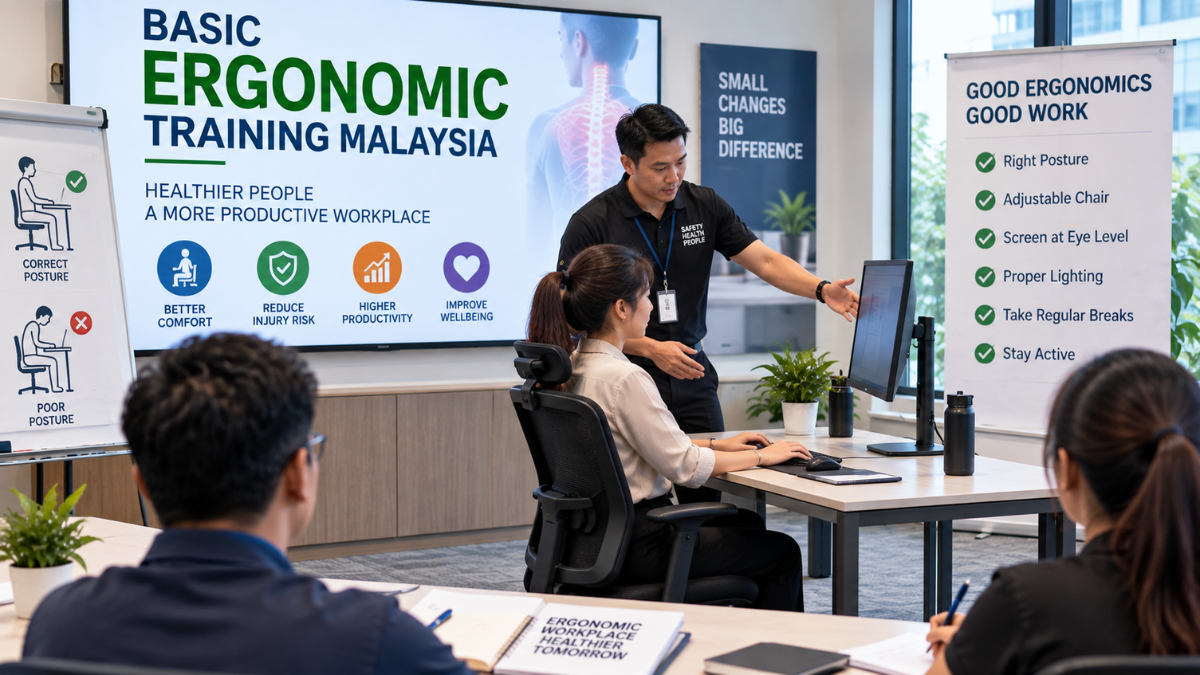
- Explain basic ergonomic risk factors
- Recognise poor posture and repetitive task risks
- Understand manual handling risk
- Adjust basic workstation setup
- Identify early discomfort symptoms
- Report ergonomic concerns early
- Follow safer work practices
- Understand when further assessment may be needed
Suggested HIRARC Training Course Outline
A practical course outline may include:
-
Introduction to occupational safety risk assessment
-
Meaning and purpose of HIRARC
-
Legal and DOSH/JKKP compliance background
-
Hazard vs risk vs control
-
Hazard categories and workplace examples
-
Classifying work activities
-
Hazard identification techniques
-
Risk assessment using likelihood and severity
-
Risk matrix and risk rating exercise
-
Hierarchy of control
-
Writing effective control recommendations
-
HIRARC form and report preparation
-
HIRARC, SOP and permit-to-work link
-
Case study and group exercise
-
Participant presentation and review
-
Knowledge check and training record
The best HIRARC Training should include hands-on exercises using the company’s actual work activities.
Learning Outcomes
After attending HIRARC Training, participants should be able to:
-
Explain the purpose of HIRARC
-
Identify common workplace hazards
-
Differentiate hazard, risk and control
-
Classify work activities properly
-
Assess risk using likelihood and severity
-
Use a risk matrix
-
Apply the hierarchy of control
-
Recommend practical control measures
-
Complete a basic HIRARC form
-
Understand how HIRARC supports SOP development
-
Understand when HIRARC should be reviewed
-
Support workplace safety improvement and inspection readiness
HIRARC Training for Managers
Managers should attend HIRARC Training because they approve resources, assign responsibility and decide whether controls are implemented.
Manager-focused training should highlight:
-
Legal responsibility
-
High-risk decision-making
-
Resource allocation
-
Corrective action tracking
-
Contractor risk management
-
Importance of worker consultation
-
How to review and approve HIRARC
-
How to avoid paper compliance
Managers do not need to perform every risk assessment personally, but they must understand what a good HIRARC looks like.
HIRARC Training for Supervisors
Supervisors are critical because they understand the daily work and worker behaviour.
Supervisor-focused training should cover:
-
How to identify actual hazards
-
How to involve workers
-
How to review existing controls
-
How to report unsafe conditions
-
How to brief workers on HIRARC findings
-
How to monitor control measures
-
How to trigger HIRARC review after changes
Supervisors are often the best people to identify whether a HIRARC document matches the real workplace.
HIRARC Training for Workers
Workers should also receive suitable awareness because they are exposed to the hazards.
Worker-focused training should cover:
-
Hazards in their work area
-
Safe work procedures
-
Required controls
-
PPE requirements
-
Reporting unsafe conditions
-
Near-miss reporting
-
Emergency actions
-
Why controls must be followed
Worker-level training does not need to be overly technical, but it must be practical and easy to understand.
HIRARC Training and Safety Committee
Safety and Health Committee members should understand HIRARC because they may review incidents, inspections, unsafe conditions and corrective actions.
HIRARC Training can help committee members:
-
Review risk assessment records
-
Identify repeated hazards
-
Discuss corrective actions
-
Track unresolved risks
-
Support worker consultation
-
Improve meeting quality
-
Prepare better recommendations to management
This makes the Safety and Health Committee more effective.
HIRARC Training and OSH Coordinator
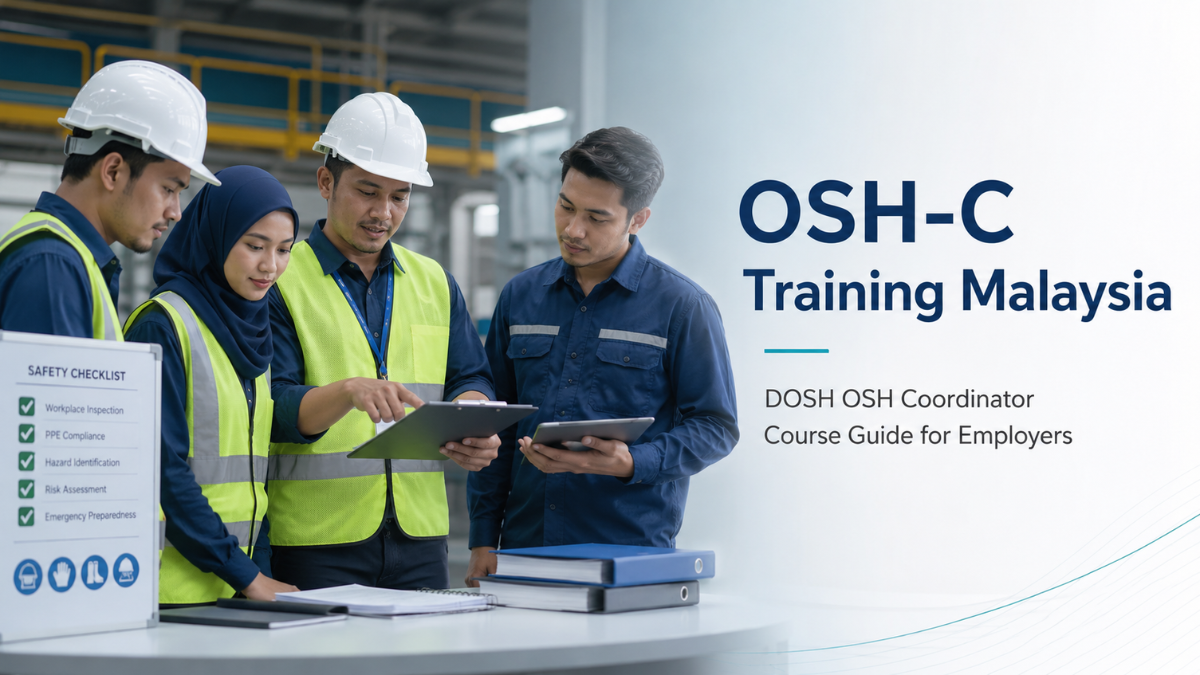
For workplaces with an OSH Coordinator, HIRARC Training is especially useful.
An OSH Coordinator may need to assist with:
-
Hazard identification
-
Workplace inspection
-
Risk assessment records
-
Corrective action tracking
-
Worker awareness
-
Safety documentation
-
DOSH/JKKP inspection preparation
HIRARC Training gives OSH Coordinators a practical foundation for workplace safety management.
HRD Corp Claimable HIRARC Training
For eligible Malaysian employers, HIRARC Training may be arranged as HRD Corp claimable HSE training, depending on provider arrangement, course approval and employer eligibility.
This is useful for companies that want to train supervisors, line leaders, managers, OSH Coordinators, Safety Committee members and workers while managing training cost.
Employers should confirm course claimability, documentation requirements and approval status before training is conducted.
Training Records Employers Should Keep
Employers should keep proper HIRARC Training records for internal audit and DOSH/JKKP inspection readiness.
Records may include:
-
Training date
-
Training title
-
Trainer name
-
Training content
-
Attendance list
-
Department or job role of participants
-
Training materials
-
Group exercise records
-
Assessment results
-
Certificates, where applicable
-
Photos, where appropriate
-
Feedback forms
-
Refresher training plan
Training records help show that employees involved in risk assessment have received suitable instruction.
Common HIRARC Training Mistakes
Common mistakes include:
-
Training is too theoretical
-
No workplace case study is used
-
Participants do not practise completing a HIRARC form
-
Only HSE personnel attend but supervisors are excluded
-
No follow-up after training
-
Training is not linked to actual SOPs
-
Training is not linked to existing HIRARC gaps
-
Risk matrix scoring is not explained clearly
-
Participants are not taught how to write practical controls
-
No management support after training
-
Training records are not maintained
The best HIRARC Training should lead to better workplace risk assessments after the course.
HIRARC Training Checklist for Employers
Before Training
-
Identify target participants
-
Review existing HIRARC documents
-
Collect accident and near-miss examples
-
Prepare workplace process examples
-
Select departments or tasks for group exercise
-
Prepare training room or site access
-
Confirm HRD Corp claimability where applicable
-
Prepare attendance sheet
During Training
-
Explain HIRARC clearly
-
Use actual workplace examples
-
Discuss hazard categories
-
Practise likelihood and severity scoring
-
Practise risk matrix use
-
Practise hierarchy of control
-
Complete group HIRARC exercise
-
Review participant answers
-
Conduct knowledge check
After Training
-
Keep training records
-
Review existing HIRARC documents
-
Update weak risk assessments
-
Improve SOPs based on HIRARC
-
Assign corrective actions
-
Monitor control implementation
-
Plan refresher or advanced training
-
Prepare for DOSH/JKKP inspection readiness
Benefits of HIRARC Training for Employers
HIRARC Training can help employers:
-
Improve risk assessment quality
-
Reduce workplace accidents
-
Improve supervisor competency
-
Improve worker hazard awareness
-
Strengthen safety documentation
-
Improve SOP quality
-
Support permit-to-work systems
-
Improve Safety Committee discussions
-
Strengthen DOSH/JKKP inspection readiness
-
Support OSHA risk assessment duties
-
Improve internal audit performance
-
Build a more practical safety culture
The real benefit is not the certificate. The real benefit is a workforce that can recognise hazards and control risks before accidents happen.
How Advanced HSE Solutions Can Help
Advanced HSE Solutions supports Malaysian employers with HRD Corp claimable HSE training, HIRARC preparation, workplace safety audits, SOP improvement, risk assessment support and DOSH/JKKP inspection readiness.
For HIRARC Training, our team can assist with:
-
HIRARC awareness training
-
HIRARC practical workshop
-
Risk matrix training
-
Hazard identification exercise
-
Supervisor HIRARC training
-
Safety Committee HIRARC training
-
OSH Coordinator support training
-
HIRARC and SOP integration
-
Workplace-specific case studies
-
Group exercise using actual work activities
-
Training records and documentation support
-
Post-training HIRARC review support
If your company needs to train managers, supervisors, OSH Coordinators, Safety Committee members or workers on workplace risk assessment, Advanced HSE Solutions can provide practical HIRARC Training tailored to your workplace risks.
Conclusion
HIRARC Training is an important part of workplace safety management in Malaysia.
It helps employees, supervisors and managers understand how to identify hazards, assess risk and implement suitable control measures. It also supports OSHA 1994 risk assessment duties, DOSH/JKKP inspection readiness, SOP improvement and better workplace safety culture.
For employers, the key message is simple: HIRARC should not be handled only by one safety officer or copied from a template. The people who manage and perform the work must understand the risks and controls.
A practical HIRARC Training programme helps turn safety documents into real workplace action.
FAQ
What is HIRARC Training?
HIRARC Training is a workplace safety course that teaches participants how to identify hazards, assess risk levels and recommend suitable control measures.
Who should attend HIRARC Training?
Managers, supervisors, OSH Coordinators, Safety Committee members, HSE personnel, line leaders, workers involved in high-risk tasks and internal auditors should attend.
Is HIRARC Training required in Malaysia?
People involved in risk assessment should understand hazard identification, risk assessment and risk control methods. HIRARC Training helps employers build the competency needed to conduct and implement workplace risk assessment properly.
What does HIRARC stand for?
HIRARC stands for Hazard Identification, Risk Assessment and Risk Control.
What should HIRARC Training cover?
HIRARC Training should cover hazard identification, work activity classification, likelihood and severity scoring, risk matrix use, hierarchy of control, HIRARC report preparation and action planning.
Is HIRARC Training only for safety officers?
No. Supervisors, managers, line leaders, workers, OSH Coordinators and Safety Committee members can also benefit because they are directly involved in workplace risk control.
Is HIRARC Training HRD Corp claimable?
HIRARC Training may be arranged as HRD Corp claimable HSE training for eligible employers, depending on provider arrangement, course approval and HRD Corp requirements.
How long is HIRARC Training?
The duration depends on the training scope. Basic awareness may take half a day, while a practical HIRARC workshop with group exercises may take one or two days.
What should employers do after HIRARC Training?
Employers should review existing HIRARC documents, update weak assessments, improve SOPs, assign corrective actions, monitor controls and keep proper training records.
Can Advanced HSE Solutions provide HIRARC Training?
Yes. Advanced HSE Solutions can support HIRARC awareness training, practical HIRARC workshops, supervisor training, Safety Committee training, risk matrix training, HIRARC review and DOSH/JKKP inspection readiness support.