Table of Contents
Quick Answer
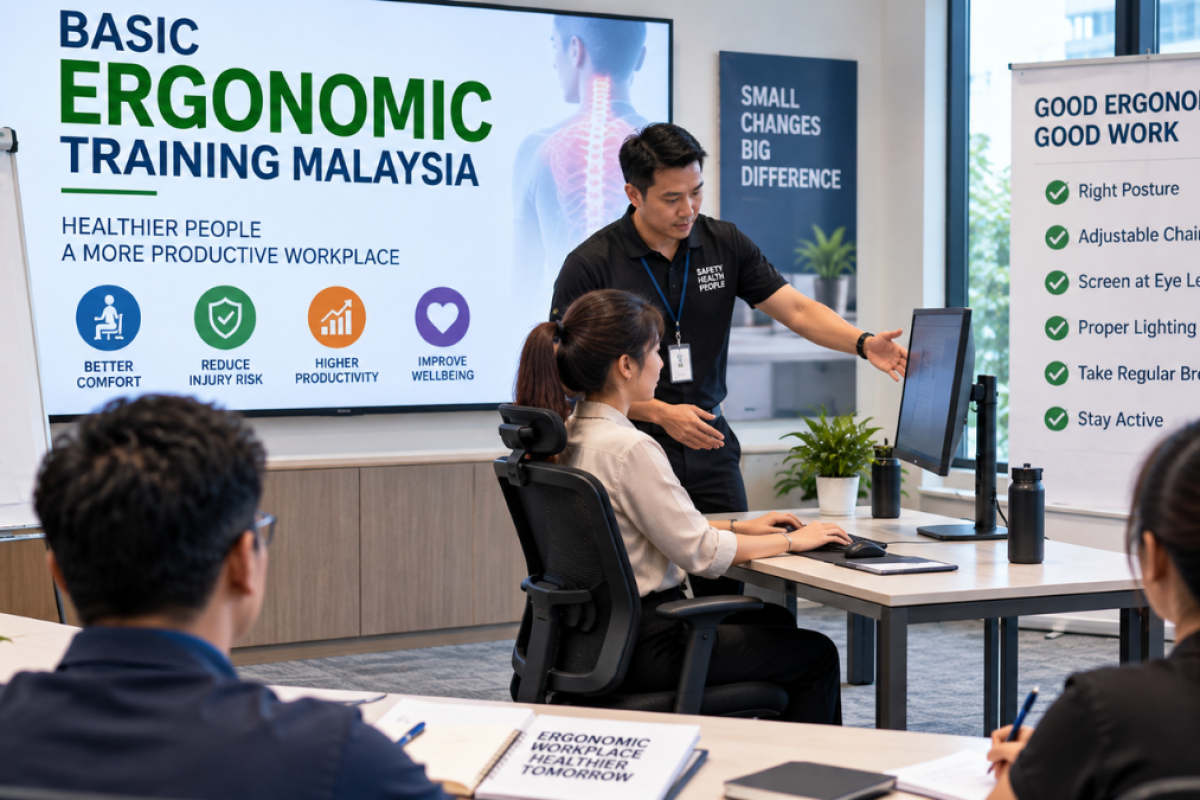
Basic Ergonomic Training is a workplace training programme that helps employees, supervisors and managers understand ergonomic risk factors and how to reduce discomfort, fatigue and work-related musculoskeletal problems.
It is useful for offices, factories, warehouses, laboratories, healthcare workplaces, retail counters and production areas where employees may be exposed to awkward posture, repetitive movement, manual handling, prolonged sitting, prolonged standing or poor workstation setup.
For employers, Basic Ergonomic Training supports ergonomic risk management, ERA readiness, worker awareness, early discomfort reporting and practical workplace improvement.
Key Takeaways:
- Basic Ergonomic Training helps workers understand ergonomic risk factors.
- It is useful for office, factory, warehouse, laboratory, healthcare and retail workplaces.
- Training should cover posture, workstation setup, manual handling, repetitive work, prolonged sitting and prolonged standing.
- Basic Ergonomic Training does not replace Initial ERA or Advanced ERA.
- Early reporting of discomfort is important.
- Supervisors should attend because they help monitor work practices.
- Training should use actual workplace examples.
- HRD Corp claimable training may be available for eligible employers.
- Advanced HSE Solutions can support ergonomic awareness training, ERA support and DOSH/JKKP inspection readiness.
What Is Basic Ergonomic Training?
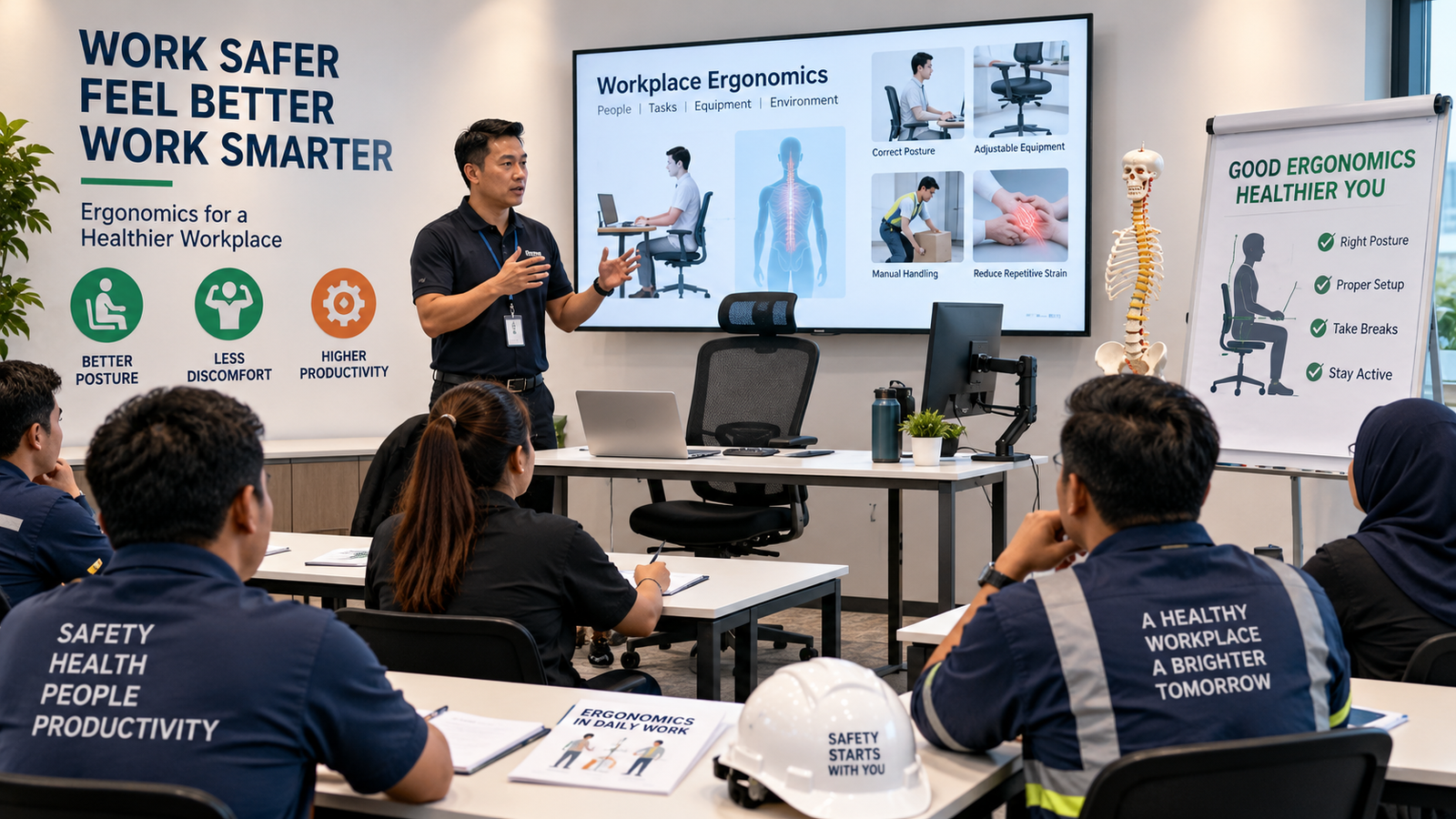
Basic Ergonomic Training teaches employees how to work in a safer and more comfortable way by improving the fit between the worker, task, equipment and work environment.
It is also commonly searched as:
- Basic Ergonomic Training Malaysia
- Ergonomic awareness training
- Workplace ergonomics training
- Office ergonomic training
- Manual handling and ergonomic training
- Ergonomic safety training
- Ergonomic training for employees
- Ergonomic training for factory workers
- Ergonomic training for office workers
- ERA awareness training
The goal is simple: employees should understand ergonomic risk factors and know what practical actions can reduce discomfort and injury risk.
Why Basic Ergonomic Training Matters
Ergonomic problems often develop slowly.
Employees may first experience mild discomfort, tired muscles, neck pain, back pain, shoulder pain or wrist pain. If the issue is ignored, it can become a more serious work-related musculoskeletal disorder.
Basic Ergonomic Training helps workers understand:
- What ergonomic risk factors are
- Why posture matters
- How repetitive movement affects the body
- Why manual handling must be controlled
- How workstation setup affects comfort
- Why early reporting is important
- How to adjust work habits and equipment
- When to inform supervisors or HSE personnel
For employers, ergonomic training helps reduce complaints, absenteeism, poor productivity and avoidable workplace health issues.
Legal and Compliance Background
Employers in Malaysia have a duty to provide and maintain a safe working environment, so far as practicable.
Ergonomic risks should be managed as part of workplace safety and health, especially when workers perform repetitive tasks, manual handling, computer work, prolonged sitting, prolonged standing or awkward postures.
Basic Ergonomic Training does not replace Initial ERA or Advanced ERA. However, it supports ergonomic risk management by improving awareness and helping workers recognise early warning signs.
Basic Ergonomic Training vs ERA
Basic Ergonomic Training and Ergonomic Risk Assessment are related, but they are not the same.
Basic Ergonomic Training teaches employees and supervisors about ergonomic risks and good work practices.
ERA assesses actual workplace tasks and identifies ergonomic risk levels.
In simple terms:
- Basic Ergonomic Training teaches awareness and behaviour.
- Initial ERA screens workplace ergonomic risks.
- Advanced ERA provides detailed ergonomic assessment where required.
A workplace may need all three depending on the risk level.
Who Should Attend Basic Ergonomic Training?
Basic Ergonomic Training is suitable for many workplace groups.
Recommended participants include:
- Office workers
- Computer users
- Production operators
- Assembly workers
- Packing workers
- Warehouse workers
- Manual handling workers
- Laboratory staff
- Healthcare workers
- Retail and cashier staff
- Maintenance workers
- Supervisors
- Line leaders
- HSE personnel
- OSH Coordinators
- Safety and Health Committee members
- HR personnel involved in workplace health
Supervisors should attend because they play an important role in identifying early discomfort and correcting unsafe work practices.
Which Workplaces Need Basic Ergonomic Training?
Basic Ergonomic Training is useful in many industries, including:
- Manufacturing
- Warehousing and logistics
- Offices
- Call centres
- Laboratories
- Healthcare facilities
- Retail counters
- Food and beverage processing
- Electronics and semiconductor
- Automotive workshops
- Engineering workshops
- Cleaning operations
- Packaging lines
- Assembly lines
- Maintenance operations
Any workplace with repetitive work, manual handling, awkward posture or workstation-related discomfort should consider ergonomic training.
What Should Basic Ergonomic Training Cover?
A practical Basic Ergonomic Training programme should cover the following topics.
1. Introduction to Ergonomics
Participants should understand what ergonomics means.
Ergonomics is about designing work, tools, equipment and workstations to fit the worker and reduce unnecessary strain.
The training should explain that ergonomics is not only about office chairs. It also applies to production work, manual handling, tools, workflow, layout and work organisation.
2. Common Ergonomic Risk Factors
Participants should learn the main ergonomic risk factors, such as:
- Awkward posture
- Repetitive movement
- Forceful exertion
- Manual handling
- Heavy lifting
- Pushing and pulling
- Prolonged sitting
- Prolonged standing
- Poor workstation height
- Poor monitor position
- Long reach distance
- Contact stress
- Vibration
- Insufficient rest or recovery time
Workers should be able to recognise these risk factors in their own work.
3. Signs and Symptoms of Musculoskeletal Discomfort
Employees should understand early warning signs, including:
- Neck pain
- Shoulder pain
- Lower back pain
- Wrist pain
- Knee discomfort
- Muscle fatigue
- Numbness or tingling
- Stiffness
- Reduced grip strength
- Repeated discomfort after work
Training should encourage early reporting before discomfort becomes more serious.
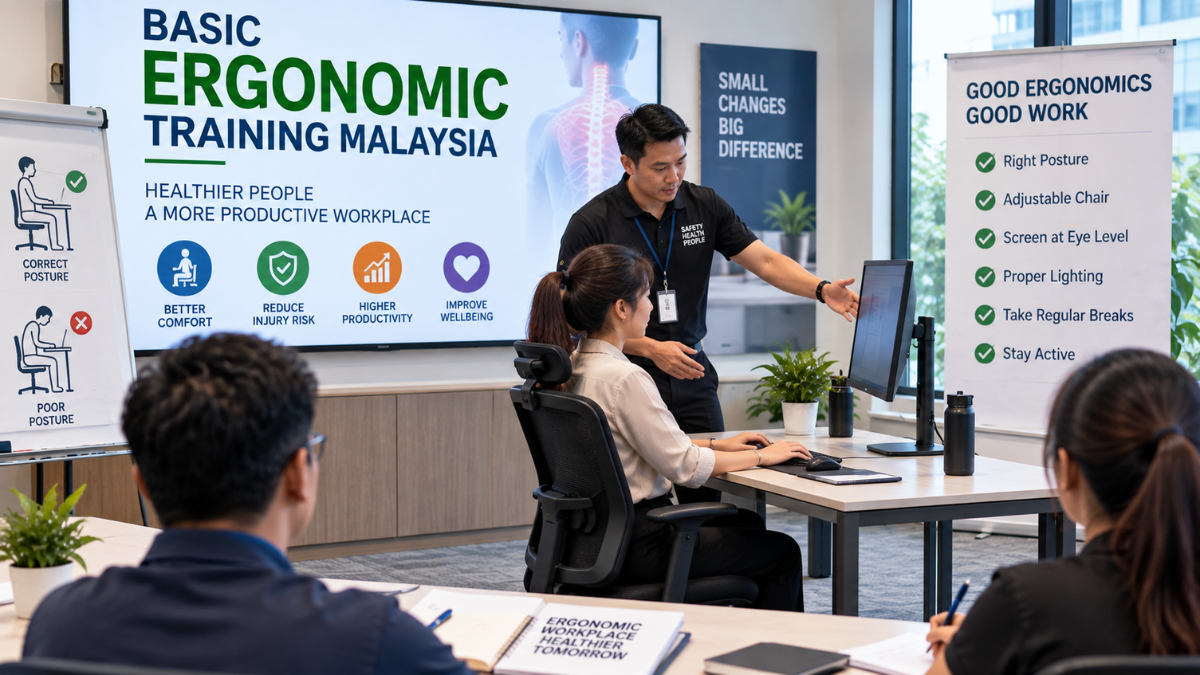
4. Office Workstation Ergonomics
For office workers, training should cover:
- Chair adjustment
- Monitor height and distance
- Keyboard and mouse position
- Sitting posture
- Foot support
- Desk height
- Laptop setup
- Lighting and glare
- Micro-breaks
- Movement during the workday
Workers should understand how small workstation changes can reduce discomfort.
5. Manual Handling Basics
For workers involved in lifting, carrying, pushing or pulling, training should cover:
- Planning the lift
- Checking load weight
- Keeping load close to the body
- Avoiding twisting while lifting
- Using mechanical aids
- Asking for help when needed
- Reducing carrying distance
- Avoiding lifting from floor level where possible
- Reporting unsafe manual handling tasks
Manual handling training should be linked to actual workplace activities.
6. Repetitive Task Awareness
Repetitive tasks can create strain over time.
Training should cover:
- Repetition frequency
- Short work cycles
- Forceful gripping
- Awkward wrist posture
- Static shoulder posture
- Lack of recovery time
- Tool design
- Work pace
Workers should understand why job rotation, rest breaks, tool improvement and workstation changes may be needed.
7. Prolonged Standing
Prolonged standing can affect the lower back, legs, knees and feet.
Training should cover:
- Standing posture
- Anti-fatigue mat use
- Footrest use
- Suitable footwear
- Sit-stand options
- Job rotation
- Movement breaks
- Workstation height
This is important for production workers, retail staff, laboratory workers and machine operators.
8. Prolonged Sitting
Prolonged sitting can also create ergonomic problems.
Training should cover:
- Chair support
- Neutral sitting posture
- Screen position
- Frequent movement
- Stretching
- Avoiding static posture for long periods
- Sit-stand work practices where practical
The goal is not to sit perfectly all day. The goal is to avoid staying in one poor posture for too long.
9. Stretching and Movement Breaks
Training may include simple stretching and movement guidance.
This can include:
- Neck movement
- Shoulder relaxation
- Wrist and hand movement
- Back extension
- Leg movement
- Short walking breaks
Stretching should be presented as a support measure, not a replacement for proper workstation design or work process improvement.
10. Worker and Supervisor Responsibilities
Workers should understand their role in ergonomic safety.
Worker responsibilities include:
- Follow safe work practices
- Adjust workstation where possible
- Use mechanical aids where provided
- Report discomfort early
- Report poor workstation setup
- Avoid unsafe lifting methods
- Attend training and refresher sessions
- Cooperate with supervisors and HSE personnel
Supervisor responsibilities include:
- Observe work practices
- Encourage early reporting
- Review repetitive and manual handling tasks
- Support workstation improvement
- Escalate unresolved ergonomic issues
- Monitor effectiveness of improvements
Suggested Course Outline
A practical Basic Ergonomic Training course may include:
- Introduction to ergonomics
- Common ergonomic risk factors
- Musculoskeletal discomfort and early reporting
- Office workstation setup
- Manual handling awareness
- Repetitive task awareness
- Prolonged sitting and prolonged standing
- Practical posture and workstation examples
- Worker and supervisor responsibilities
- Workplace-specific discussion
- Knowledge check and training record
The course should be customised based on whether the participants are office workers, production workers, warehouse workers or mixed groups.
Learning Outcomes
After training, participants should be able to:
- Explain basic ergonomic risk factors
- Recognise poor posture and repetitive task risks
- Understand manual handling risk
- Adjust basic workstation setup
- Identify early discomfort symptoms
- Report ergonomic concerns early
- Follow safer work practices
- Understand when further assessment may be needed
Basic Ergonomic Training and HRD Corp Claimability
For eligible Malaysian employers, Basic Ergonomic Training may be arranged as HRD Corp claimable HSE training, depending on provider arrangement, course approval and employer eligibility.
Employers should confirm course scope, claimability and documentation requirements before training is conducted.
Training Records Employers Should Keep
Employers should keep proper records, including:
- Training date
- Training title
- Trainer name
- Attendance list
- Training materials
- Participant department
- Assessment results
- Feedback forms
- Refresher training plan
- Photos, where appropriate
Training records help support internal audit, management review and DOSH/JKKP inspection readiness.
Common Mistakes Employers Make
Common mistakes include:
- Treating ergonomics as comfort only
- Training office workers but ignoring production workers
- Buying chairs without assessing work tasks
- Asking workers to stretch but not fixing poor workstation design
- Ignoring manual handling
- Ignoring repetitive production tasks
- Not involving supervisors
- No early discomfort reporting process
- No follow-up after training
- No training records
Good ergonomic training should lead to practical workplace improvement.
Basic Ergonomic Training Checklist for Employers
Before Training
- Identify participant groups
- Review common discomfort complaints
- Identify workstations or tasks to discuss
- Prepare workplace photos or examples
- Review existing ERA findings, if any
- Prepare attendance records
- Confirm HRD Corp claimability where applicable
During Training
- Explain ergonomic risk factors
- Use actual workplace examples
- Demonstrate workstation adjustment
- Discuss manual handling risks
- Discuss repetitive task risks
- Encourage early reporting
- Conduct knowledge check
After Training
- Keep training records
- Review reported ergonomic concerns
- Improve workstations where needed
- Plan ERA if risk appears significant
- Monitor discomfort trends
- Plan refresher training
Benefits of Basic Ergonomic Training
Basic Ergonomic Training can help employers:
- Improve worker awareness
- Reduce discomfort complaints
- Improve posture and work habits
- Support manual handling improvement
- Support office workstation improvement
- Support ERA readiness
- Improve productivity
- Reduce absenteeism risk
- Improve supervisor awareness
- Strengthen workplace health culture
The main benefit is practical: workers and supervisors become better at recognising ergonomic risks before they become serious problems.
How Advanced HSE Solutions Can Help
Advanced HSE Solutions supports Malaysian employers with HRD Corp claimable HSE training, ergonomic awareness training, ERA support, workplace safety audits and DOSH/JKKP inspection readiness.
For Basic Ergonomic Training, our team can assist with:
- Ergonomic awareness training
- Office workstation ergonomic training
- Manual handling awareness
- Repetitive task awareness
- Prolonged sitting and standing awareness
- Supervisor ergonomic awareness
- ERA follow-up training
- Workplace-specific ergonomic examples
- Training records and documentation support
If your employees experience back pain, neck pain, shoulder discomfort, wrist strain, repetitive task fatigue or workstation issues, Advanced HSE Solutions can help your team understand the risks and take practical action.
Conclusion
Basic Ergonomic Training is an important first step in workplace ergonomic risk management.
It helps employees and supervisors understand posture, manual handling, repetitive movement, workstation setup, prolonged sitting, prolonged standing and early reporting of discomfort.
For employers, the key message is simple: ergonomic problems should not be ignored just because they develop slowly. Train workers, involve supervisors, improve workstations and conduct ERA where further assessment is needed.
A practical ergonomic training programme supports worker health, productivity and workplace safety compliance.
FAQ
What is Basic Ergonomic Training?
Basic Ergonomic Training teaches employees and supervisors how to recognise ergonomic risk factors and reduce discomfort from posture, manual handling, repetitive movement and poor workstation setup.
Who should attend Basic Ergonomic Training?
Office workers, production workers, warehouse workers, manual handling workers, supervisors, HSE personnel, OSH Coordinators and Safety Committee members can benefit from the training.
Is Basic Ergonomic Training the same as ERA?
No. Basic Ergonomic Training teaches awareness and good practices. ERA is an assessment process used to identify and evaluate ergonomic risks at the workplace.
What should Basic Ergonomic Training cover?
It should cover ergonomic risk factors, posture, workstation setup, manual handling, repetitive tasks, prolonged sitting, prolonged standing, early reporting and worker responsibilities.
Is Basic Ergonomic Training only for office workers?
No. It is also useful for manufacturing, warehouse, laboratory, healthcare, retail and industrial workers.
Can Advanced HSE Solutions provide Basic Ergonomic Training?
Yes. Advanced HSE Solutions can support Basic Ergonomic Training, workstation awareness, manual handling awareness, repetitive task awareness, ERA support and DOSH/JKKP inspection readiness.