
Table of Contents
Quick Answer
Initial and Advanced ERA DOSH refers to Ergonomic Risk Assessment under Malaysia’s Department of Occupational Safety and Health, also known as JKKP.
ERA helps employers identify workplace ergonomic risk factors that may contribute to musculoskeletal discomfort, repetitive strain, back pain, shoulder pain, neck pain, wrist pain, manual handling injuries and other work-related musculoskeletal disorders.
Initial ERA is normally used as the first-level screening assessment to identify whether ergonomic risks exist. Advanced ERA is a more detailed assessment using recognised ergonomic assessment tools such as RULA, REBA, ROSA, QEC, MAC, ART and OCRA, depending on the type of task being assessed.
Key Takeaways:
-
ERA stands for Ergonomic Risk Assessment.
-
ERA DOSH and ERA JKKP refer to ergonomic risk assessment under Malaysia’s occupational safety and health framework.
-
Initial ERA is a first-level screening assessment.
-
Advanced ERA is a more detailed assessment using recognised ergonomic tools.
-
Common Advanced ERA tools include RULA, REBA, ROSA, QEC, MAC, ART and OCRA.
-
ERA helps identify risks from awkward posture, repetition, force, manual handling, prolonged sitting and prolonged standing.
-
Ergonomic risk can affect office workers, production workers, warehouse workers, healthcare workers and many other job groups.
-
ERA should be conducted by ergonomically trained persons.
-
Employers should act on the ERA report through practical control measures and action plans.
-
Advanced HSE Solutions can support Initial ERA, Advanced ERA coordination, ergonomic improvement planning and DOSH/JKKP inspection readiness.

What Is ERA DOSH?
ERA stands for Ergonomic Risk Assessment.
ERA DOSH refers to workplace ergonomic risk assessment carried out according to DOSH Malaysia’s ergonomic guidance. DOSH is the Department of Occupational Safety and Health Malaysia.
In Bahasa Malaysia, DOSH is known as JKKP, or Jabatan Keselamatan dan Kesihatan Pekerjaan. This is why employers may search using different terms, such as:
-
ERA DOSH
-
ERA JKKP
-
Ergonomic Risk Assessment DOSH
-
Ergonomic Risk Assessment JKKP
-
Initial ERA DOSH
-
Advanced ERA DOSH
-
Advance Ergonomic Risk Assessment
-
Initial Ergonomic Risk Assessment
-
Workplace ergonomic assessment Malaysia
-
Ergonomic assessment for office workers
-
Ergonomic assessment for factory workers
Although the wording may differ, the purpose is the same: to identify ergonomic risks at work and recommend practical control measures.
What Is JKKP?
JKKP stands for Jabatan Keselamatan dan Kesihatan Pekerjaan.
It is the Bahasa Malaysia name for DOSH. For workplace compliance purposes, ERA DOSH and ERA JKKP refer to the same topic.
Employers may see DOSH used in English documents and JKKP used in Malay documents, MyKKP references, official correspondence or local industry conversations.
Why Ergonomic Risk Assessment Matters
Ergonomic risks are common in many workplaces. They may not cause immediate injury like a machine accident, but they can slowly affect employees over time.
Poor ergonomics can contribute to:
-
Neck pain
-
Shoulder pain
-
Lower back pain
-
Wrist pain
-
Knee discomfort
-
Muscle fatigue
-
Repetitive strain injury
-
Manual handling injury
-
Reduced productivity
-
Increased absenteeism
-
Worker complaints
-
Higher compensation or medical cost
-
Poor workplace morale
Ergonomic Risk Assessment helps employers identify the real causes of these problems and improve the way work is designed.
Legal and Compliance Background
Employers in Malaysia have a duty to provide and maintain a safe workplace, so far as practicable. Ergonomic risks should be considered as part of workplace health risk management, especially when workers are exposed to repetitive tasks, awkward posture, forceful exertion, manual handling, poor workstation setup, prolonged sitting or prolonged standing.
DOSH has issued ergonomic guidance to help employers manage these risks. Employers should use these guidelines to assess ergonomic risk and implement practical control measures.
ERA should not be treated as a general comfort survey only. It is part of workplace safety and health management.
Initial ERA vs Advanced ERA
Initial ERA and Advanced ERA are related, but they are not the same.
What Is Initial ERA?
Initial ERA is the first-level ergonomic screening assessment.
It helps employers identify whether ergonomic risk factors are present in a work activity, workstation or job task.
Initial ERA is useful for:
-
Early identification of ergonomic risk
-
Screening multiple workstations or job tasks
-
Prioritising high-risk areas
-
Identifying tasks that need further assessment
-
Supporting basic ergonomic improvement planning
-
Creating a baseline for ergonomic risk management
In simple terms, Initial ERA answers this question:
“Is there an ergonomic risk that needs attention?”
What Is Advanced ERA?
Advanced ERA is a more detailed ergonomic risk assessment.
It is usually conducted when Initial ERA identifies significant risk, when complaints are reported, when tasks are complex, or when the employer needs a more detailed assessment using specific ergonomic tools.
Advanced ERA may use recognised assessment methods such as:
-
RULA: Rapid Upper Limb Assessment
-
REBA: Rapid Entire Body Assessment
-
ROSA: Rapid Office Strain Assessment
-
QEC: Quick Exposure Check
-
MAC: Manual Handling Assessment Chart
-
ART: Assessment of Repetitive Tasks
-
OCRA: Occupational Repetitive Action
In simple terms, Advanced ERA answers this question:
“How serious is the ergonomic risk, what body areas are affected, and what specific control measures are needed?”
When Is Ergonomic Risk Assessment Needed?
ERA may be needed when workers are exposed to ergonomic risk factors or when there are signs of musculoskeletal discomfort.
Common triggers include:
-
Workers complain of neck, shoulder, back, wrist or knee pain
-
Tasks involve repetitive hand or arm movement
-
Workers perform frequent lifting or carrying
-
Work requires awkward posture
-
Employees stand for long hours
-
Employees sit for long hours
-
Workstations are poorly designed
-
Workers reach, twist, bend or squat frequently
-
Tasks require forceful exertion
-
Tools create vibration or contact stress
-
Production speed increases
-
New machinery or layout is introduced
-
Accident or injury records show ergonomic concerns
-
DOSH/JKKP inspection highlights ergonomic risk
-
Company wants to improve workplace health and productivity
Employers should not wait until injuries become serious before conducting ERA.
Common Ergonomic Risk Factors
Ergonomic risks can appear in office, factory, warehouse, laboratory, healthcare, retail and industrial environments.
Common ergonomic risk factors include:
-
Awkward posture
-
Repetitive movement
-
Forceful exertion
-
Manual handling
-
Heavy lifting
-
Pushing and pulling
-
Prolonged sitting
-
Prolonged standing
-
Poor workstation height
-
Poor monitor position
-
Poor chair support
-
Poor tool design
-
Poor reach distance
-
Contact stress
-
Vibration exposure
-
Insufficient rest or recovery time
-
High work pace
-
Poor work organisation
A good ergonomic assessment looks at both the worker and the task. The goal is to improve the fit between the person, equipment, workstation and work process.
Which Workplaces Commonly Need ERA?
ERA may be relevant to many types of workplaces, including:
-
Manufacturing plants
-
Assembly lines
-
Warehouses
-
Logistics operations
-
Offices
-
Call centres
-
Laboratories
-
Healthcare facilities
-
Dental clinics
-
Retail counters
-
Supermarkets
-
Food and beverage processing plants
-
Engineering workshops
-
Automotive workshops
-
Construction-related activities
-
Maintenance teams
-
Cleaning operations
-
Packaging lines
-
Semiconductor and electronics factories
Any workplace with repetitive tasks, manual handling, prolonged posture or workstation-related discomfort should consider Ergonomic Risk Assessment.
Initial ERA Process
A practical Initial ERA process may include the following steps.
Step 1: Identify Work Areas and Tasks
The employer should identify departments, workstations, job roles and tasks that may involve ergonomic risk.
Examples include:
-
Packing station
-
Assembly workstation
-
Computer workstation
-
Cashier counter
-
Warehouse picking activity
-
Manual lifting task
-
Laboratory bench work
-
Maintenance task
-
Repetitive inspection task
-
Seated production task
-
Standing machine operation
The goal is to identify where ergonomic risk may exist.
Step 2: Observe Work Activities
The assessor observes actual work activities during normal operation.
Observation may include:
-
Working posture
-
Repetition
-
Force used
-
Lifting and carrying
-
Pushing and pulling
-
Reach distance
-
Tool use
-
Workstation height
-
Work duration
-
Rest breaks
-
Worker movement
-
Work pace
Actual observation is important because written job descriptions may not reflect real work practice.
Step 3: Identify Ergonomic Risk Factors
The assessor identifies the ergonomic risk factors present in each task.
Examples include:
-
Neck bending
-
Trunk twisting
-
Shoulder elevation
-
Wrist deviation
-
Repetitive gripping
-
Heavy lifting
-
Prolonged standing
-
Static sitting
-
Long reach distance
-
Poor screen position
-
Insufficient leg space
-
Poor chair adjustment
-
Awkward tool handling
These findings help determine whether the task requires improvement or further assessment.
Step 4: Prioritise Risk
Initial ERA helps prioritise which tasks need attention first.
High-priority tasks may include:
-
Tasks with worker complaints
-
Tasks with injury history
-
Tasks involving awkward posture
-
Tasks involving heavy or frequent lifting
-
Tasks involving high repetition
-
Tasks affecting many workers
-
Tasks with poor workstation design
-
Tasks requiring long exposure duration
This allows the employer to focus resources on the most important risks.
Step 5: Recommend Basic Improvements
Initial ERA may recommend immediate improvement actions.
Examples include:
-
Adjusting workstation height
-
Providing suitable chair support
-
Relocating frequently used items
-
Reducing reach distance
-
Improving tool position
-
Providing anti-fatigue mat
-
Improving work rotation
-
Reducing unnecessary lifting
-
Providing mechanical aids
-
Improving housekeeping
-
Training workers on posture and manual handling
-
Reviewing work-rest arrangement
If risk remains significant, Advanced ERA may be recommended.
Advanced ERA Process
Advanced ERA is more detailed and may involve selected ergonomic assessment tools.
Step 1: Review Initial ERA Findings
Advanced ERA should start by reviewing the findings from Initial ERA, worker complaints, injury records, workstation details and job task information.
This helps define the assessment scope.
Step 2: Select the Correct Assessment Tool
Different ergonomic tools are used for different tasks.
Examples include:
-
RULA for upper limb posture and workstation-related tasks
-
REBA for whole body posture and dynamic work
-
ROSA for office workstation assessment
-
QEC for exposure to posture, movement, force and vibration
-
MAC for manual handling and lifting tasks
-
ART for repetitive upper limb tasks
-
OCRA for repetitive action assessment
The correct tool depends on the task, body area affected and type of exposure.
Step 3: Conduct Detailed Task Assessment
The assessor reviews the task in detail.
This may include:
-
Posture angle observation
-
Work cycle review
-
Repetition frequency
-
Force estimation
-
Load weight
-
Lifting height
-
Carrying distance
-
Push or pull force
-
Work duration
-
Recovery period
-
Tool and workstation design
-
Video or photo review where suitable
-
Worker interview
-
Supervisor discussion
This gives a more accurate picture of the ergonomic risk.
Step 4: Score and Interpret Risk
Advanced ERA tools usually produce a risk score, action level or priority level.
The score helps the employer understand whether:
-
The task is acceptable
-
Further investigation is needed
-
Change is required soon
-
Immediate improvement is needed
-
Engineering or administrative controls should be prioritised
The score should be interpreted by a competent person and supported by practical recommendations.
Step 5: Recommend Control Measures
Advanced ERA should provide specific and practical control measures.
These may include:
-
Workstation redesign
-
Height adjustment
-
Tool redesign
-
Mechanical lifting aids
-
Conveyor adjustment
-
Job rotation
-
Work-rest schedule
-
Reduction of repetition
-
Reduction of load weight
-
Improved reach distance
-
Seating or sit-stand option
-
Anti-fatigue mat
-
Fixture or jig improvement
-
Improved lighting
-
Training and supervision
-
Process redesign
Recommendations should be realistic for the workplace and prioritised based on risk.
Step 6: Prepare an Action Plan
The ERA report should include an action plan.
The action plan should include:
-
Identified ergonomic risk
-
Affected task or workstation
-
Recommended control measure
-
Priority level
-
Person in charge
-
Target completion date
-
Interim control
-
Follow-up review date
-
Evidence required for closure
Without an action plan, the report may not lead to real improvement.
Step 7: Review Effectiveness
After improvements are implemented, the employer should review whether the control measures work.
Effectiveness review may include:
-
Worker feedback
-
Repeat observation
-
Updated assessment score
-
Reduction in complaints
-
Reduction in injury cases
-
Supervisor confirmation
-
Internal audit
-
Productivity or quality review
Ergonomic risk management should be continuous.
ERA Assessment Tools Explained
RULA
RULA stands for Rapid Upper Limb Assessment.
It is commonly used to assess tasks involving the neck, trunk, shoulder, arm, wrist and upper limb posture. It is useful for workstation tasks, assembly work, computer work and tasks involving upper limb strain.
REBA
REBA stands for Rapid Entire Body Assessment.
It is commonly used for whole-body posture assessment, especially dynamic tasks involving bending, twisting, reaching, standing, lifting or changing posture.
ROSA
ROSA stands for Rapid Office Strain Assessment.
It is commonly used for office workstation assessment. It reviews factors such as chair, monitor, keyboard, mouse, phone and work duration.
QEC
QEC stands for Quick Exposure Check.
It considers exposure to posture, movement, force, vibration, work pace and stress factors. It often includes both observer and worker input.
MAC Tool
MAC stands for Manual Handling Assessment Chart.
It is useful for assessing manual handling tasks such as lifting, carrying and team handling.
ART
ART stands for Assessment of Repetitive Tasks.
It is used for repetitive upper limb tasks involving frequent hand and arm movements.
OCRA
OCRA stands for Occupational Repetitive Action.
It is used to assess repetitive movements and upper limb risk in more detailed repetitive task situations.
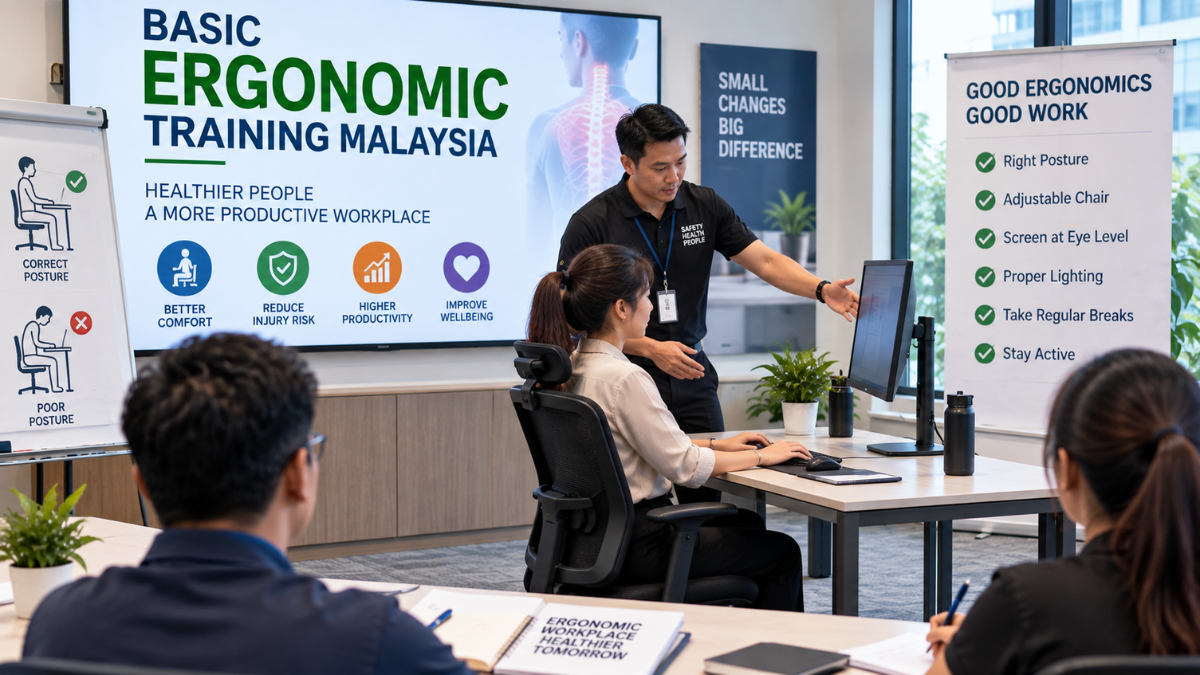
ERA for Office Workstations
Office workers may need ERA when they experience neck pain, shoulder pain, wrist pain, eye strain, back discomfort or discomfort from prolonged sitting.
Office ergonomic issues may involve:
-
Chair not adjusted properly
-
Monitor too low or too high
-
Keyboard too far
-
Mouse position causing wrist strain
-
No lumbar support
-
Poor desk height
-
Poor lighting
-
Long periods of static sitting
-
Lack of movement breaks
-
Laptop use without external keyboard or monitor
For office environments, ROSA may be useful as part of Advanced ERA.
ERA for Manual Handling
Manual handling risk is common in warehouses, production areas, logistics, healthcare, construction and maintenance work.
Manual handling risk factors include:
-
Heavy load
-
Awkward lifting posture
-
Twisting while lifting
-
Long carrying distance
-
Lifting from floor level
-
Lifting above shoulder height
-
Poor grip
-
High frequency
-
Team handling issues
-
Poor floor condition
-
Lack of mechanical aid
For manual handling tasks, assessment may include MAC Tool or other suitable manual handling assessment methods.
ERA for Repetitive Tasks
Repetitive tasks are common in assembly, packing, inspection, food processing, electronics, laboratory work and office data entry.
Risk factors include:
-
High repetition
-
Short cycle time
-
Forceful gripping
-
Awkward wrist posture
-
Static shoulder posture
-
Insufficient rest
-
High production speed
-
Poor tool design
-
Contact stress
For repetitive tasks, Advanced ERA may use ART, OCRA, RULA or QEC depending on the task.
ERA for Standing Work
Prolonged standing can cause discomfort in the legs, knees, feet and lower back.
Standing work issues may involve:
-
Hard flooring
-
Long standing duration
-
Poor workstation height
-
Limited opportunity to sit
-
Poor footwear
-
Poor reach distance
-
Static posture
-
Lack of footrest
-
No anti-fatigue mat
Practical improvements may include sit-stand options, anti-fatigue mat, job rotation, workstation height adjustment, footrests and scheduled movement breaks.
ERA for Seated Work
Seated work can also create ergonomic risks, especially when posture is static or the workstation is poorly designed.
Common seated work issues include:
-
Poor chair support
-
Seat too high or too low
-
Lack of backrest
-
Poor monitor position
-
Insufficient legroom
-
Awkward reach
-
Twisted posture
-
Static sitting for long periods
Good seated work design should support neutral posture, movement and task efficiency.
CHRA Validity and Review
A CHRA should be reviewed periodically and when there are significant changes.
Employers should review CHRA when:
- New hazardous chemicals are introduced
- Chemical quantity or concentration changes
- Work process changes
- Control measures change
- Workplace layout changes
- New exposure groups are created
- Complaints or symptoms occur
- Exposure monitoring shows concern
- Medical surveillance indicates possible occupational exposure issue
- Accident, spill or chemical incident occurs
- The existing report is outdated
As a practical compliance approach, many employers review CHRA within a five-year cycle or earlier when changes occur.
Who Should Conduct Initial and Advanced ERA?
DOSH guidance indicates that ergonomic risk assessments should be carried out by ergonomically trained persons.
For practical compliance, employers should engage or appoint a person who has the relevant Initial ERA or Advanced ERA training and experience.
Initial ERA may be suitable for screening and basic prioritisation.
Advanced ERA should be conducted by someone trained in the relevant advanced assessment methods and capable of preparing a proper assessment report with practical control recommendations.
What Should Be Included in an ERA Report?
A good Ergonomic Risk Assessment report may include:
-
Company and workplace details
-
Assessment date
-
Scope of assessment
-
Work areas assessed
-
Job tasks assessed
-
Number of workers exposed
-
Worker complaints or symptoms, where relevant
-
Workstation or task observations
-
Photos or diagrams, where suitable
-
Ergonomic risk factors identified
-
Initial ERA findings
-
Advanced ERA tool used, where applicable
-
Risk score or action level
-
Existing control measures
-
Recommended control measures
-
Action priority
-
Responsible person
-
Target completion date
-
Follow-up review recommendation
The report should be practical enough for management, supervisors and HSE personnel to act on.
What Employers Should Do After ERA
After receiving the ERA report, employers should not only keep it for filing.
Employers should:
-
Review findings with management
-
Communicate relevant findings to supervisors
-
Prepare an action plan
-
Implement practical control measures
-
Train workers on proper work methods
-
Adjust workstations where needed
-
Improve tools, layout or equipment
-
Review job rotation and rest breaks
-
Monitor worker feedback
-
Track corrective action closure
-
Reassess after changes
The value of ERA comes from implementation, not only assessment.
Common ERA Mistakes Employers Make
Common mistakes include:
-
Treating ergonomics as comfort only
-
Waiting for injury before acting
-
Assessing only office chairs but ignoring job tasks
-
Ignoring production workers and manual handling tasks
-
Not involving workers in the assessment
-
Using the wrong assessment tool
-
Conducting Initial ERA but not following up with Advanced ERA when needed
-
Providing training without changing poor workstation design
-
Relying only on PPE or reminders
-
Not assigning responsibility for corrective action
-
Not reviewing effectiveness after changes
-
Not reassessing after layout, process or workload changes
Ergonomic risk management should be practical and task-specific.
Documents Employers Should Prepare Before ERA
Before conducting ERA, employers should prepare:
-
Workplace layout
-
List of job tasks
-
List of workstations
-
Number of workers per task
-
Working hours and shift pattern
-
Production cycle or work cycle details
-
Injury or discomfort records
-
Worker complaint records
-
Existing HIRARC
-
Existing ergonomic assessment, if any
-
Workstation photos, if available
-
Manual handling information
-
Load weight information
-
Tool and equipment information
-
Existing control measures
-
Training records
Good preparation helps the assessment run smoothly and improves report quality.
ERA Checklist for Employers
Before Assessment
-
Identify work areas to assess
-
Identify job tasks and workstations
-
Prepare worker and task information
-
Prepare complaint or injury records
-
Prepare layout and process information
-
Inform supervisors and workers
-
Arrange access to work areas
During Assessment
-
Observe actual work activity
-
Interview workers and supervisors
-
Identify posture, force, repetition and duration
-
Review tools, workstation and layout
-
Record existing controls
-
Take photos or videos where permitted
-
Select suitable assessment tools
After Assessment
-
Review the ERA report
-
Prioritise high-risk findings
-
Prepare action plan
-
Assign responsible persons
-
Set deadlines
-
Implement controls
-
Train workers
-
Review effectiveness
-
Keep records for audit and inspection
Industries That Should Prioritise ERA
Employers should prioritise ERA if they operate in:
-
Manufacturing
-
Electronics and semiconductor
-
Warehousing and logistics
-
Food and beverage processing
-
Healthcare
-
Laboratories
-
Retail and cashier operations
-
Offices and call centres
-
Construction support activities
-
Engineering and fabrication
-
Automotive workshops
-
Maintenance operations
-
Cleaning services
-
Packaging and assembly work
These industries often involve repetitive tasks, manual handling, static posture, awkward movement or prolonged sitting and standing.
How Advanced HSE Solutions Can Help
Advanced HSE Solutions supports Malaysian employers with HSE consultancy, industrial hygiene assessment, ergonomic risk assessment, workplace safety audits, training and DOSH/JKKP compliance support.
For Initial and Advanced ERA DOSH / Ergonomic Risk Assessment JKKP support, our team can assist with:
-
Initial ERA planning and screening
-
Advanced ERA coordination
-
Workplace ergonomic risk review
-
Office workstation assessment
-
Manual handling task assessment
-
Repetitive task review
-
Posture and movement observation
-
Risk factor identification
-
Practical control recommendations
-
Ergonomic improvement action plan
-
Worker awareness guidance
-
HSE documentation support
-
DOSH/JKKP inspection readiness support
If your workplace has complaints of back pain, neck pain, shoulder discomfort, repetitive strain, manual handling issues, prolonged standing or poor workstation setup, Advanced HSE Solutions can help you assess the risk and plan practical improvements.
Conclusion
Initial and Advanced ERA DOSH, also known as Ergonomic Risk Assessment JKKP, helps employers identify and control ergonomic risks before they become serious health, productivity or compliance problems.
Initial ERA is useful for screening and prioritising ergonomic risks. Advanced ERA provides a more detailed assessment using recognised tools such as RULA, REBA, ROSA, QEC, MAC, ART and OCRA.
For employers, the key message is simple: ergonomic risks should not be ignored just because they develop slowly. Assess the task, understand the risk, improve the workstation or work process, train workers and review the effectiveness of controls.
A well-managed ERA process protects workers, improves productivity and strengthens workplace safety and health compliance.
FAQ
What is ERA DOSH?
ERA DOSH refers to Ergonomic Risk Assessment under the Department of Occupational Safety and Health Malaysia. It helps employers identify workplace ergonomic risks and recommend control measures.
What is ERA JKKP?
ERA JKKP means the same thing as ERA DOSH. JKKP is the Bahasa Malaysia name for DOSH.
What is Initial ERA?
Initial ERA is the first-level ergonomic screening assessment used to identify whether ergonomic risk factors are present in a job task, workstation or work area.
What is Advanced ERA?
Advanced ERA is a more detailed ergonomic risk assessment using recognised tools such as RULA, REBA, ROSA, QEC, MAC, ART or OCRA.
When is Advanced ERA needed?
Advanced ERA may be needed when Initial ERA identifies significant risk, when workers report discomfort, when injury records show ergonomic issues, or when the task requires detailed assessment.
Who can conduct Ergonomic Risk Assessment?
Ergonomic Risk Assessment should be carried out by an ergonomically trained person with suitable knowledge of Initial ERA or Advanced ERA methods.
What are common ergonomic risk factors?
Common risk factors include awkward posture, repetitive movement, forceful exertion, manual handling, prolonged sitting, prolonged standing, poor workstation design and insufficient recovery time.
Is ERA only for office workers?
No. ERA applies to office, manufacturing, warehouse, healthcare, retail, laboratory, construction-related and industrial workplaces.
What should employers do after an ERA report?
Employers should review the findings, prepare an action plan, implement control measures, train workers, monitor complaints and reassess when changes occur.
Can Advanced HSE Solutions help with Initial and Advanced ERA?
Yes. Advanced HSE Solutions can support Initial ERA screening, Advanced ERA coordination, workstation assessment, manual handling review, repetitive task assessment, ergonomic improvement planning and DOSH/JKKP inspection readiness.