Table of Contents
Quick Answer
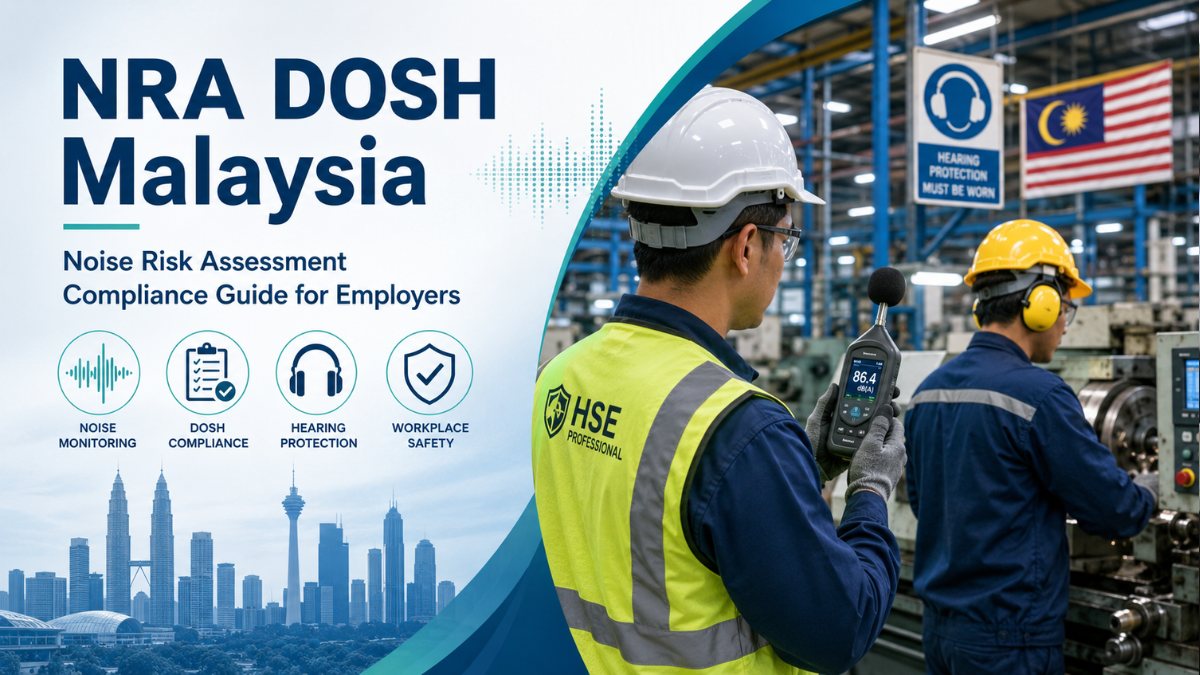
Noise Hearing Conservation Training is workplace training that helps employees understand occupational noise risks, hearing loss prevention, proper use of personal hearing protectors, audiometric testing requirements and workplace noise control measures.
In Malaysia, noise training is especially important when employees are exposed to excessive noise or when a Noise Risk Assessment shows that workers may be exposed above regulated noise levels.
For employers, Noise Hearing Conservation Training supports compliance with the Occupational Safety and Health (Noise Exposure) Regulations 2019, Hearing Conservation Programme requirements, Noise Risk Assessment follow-up actions and DOSH/JKKP inspection readiness.
Key Takeaways:
-
Noise Hearing Conservation Training helps employees understand workplace noise risks and hearing protection requirements.
-
It is closely connected to Noise Risk Assessment, audiometric testing and Hearing Conservation Programme implementation.
-
Employers should provide noise training for employees exposed to excessive noise.
-
Training should include effects of noise, high-noise areas, hearing protection, audiometric testing and worker responsibilities.
-
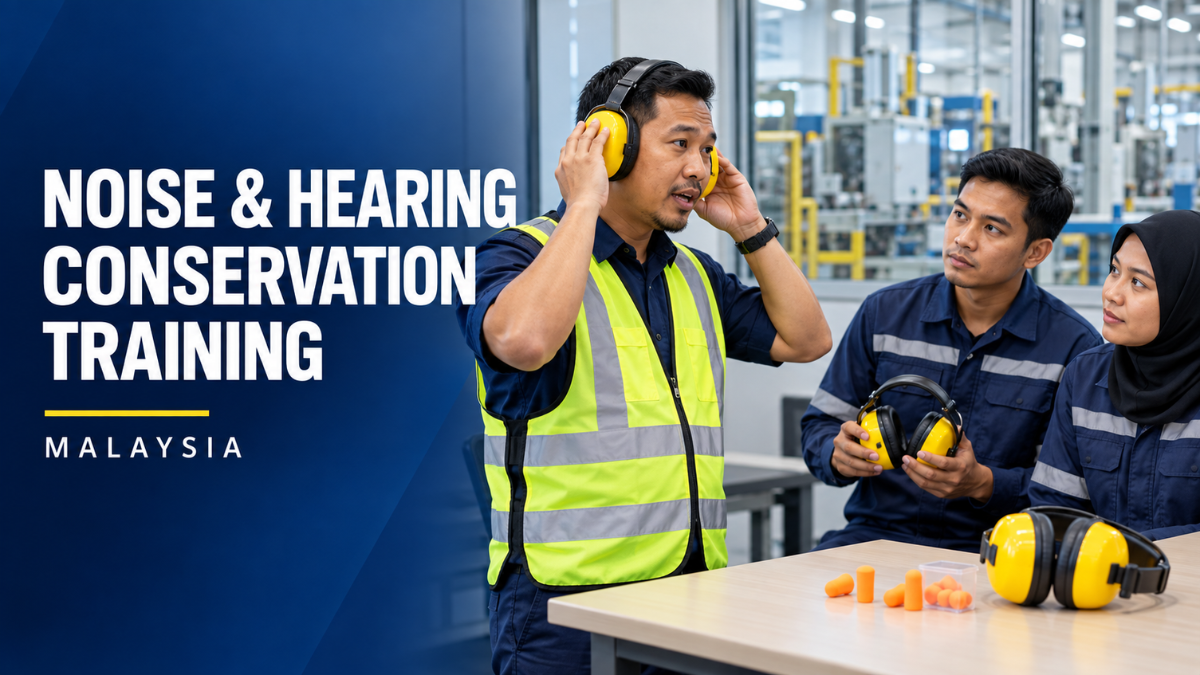
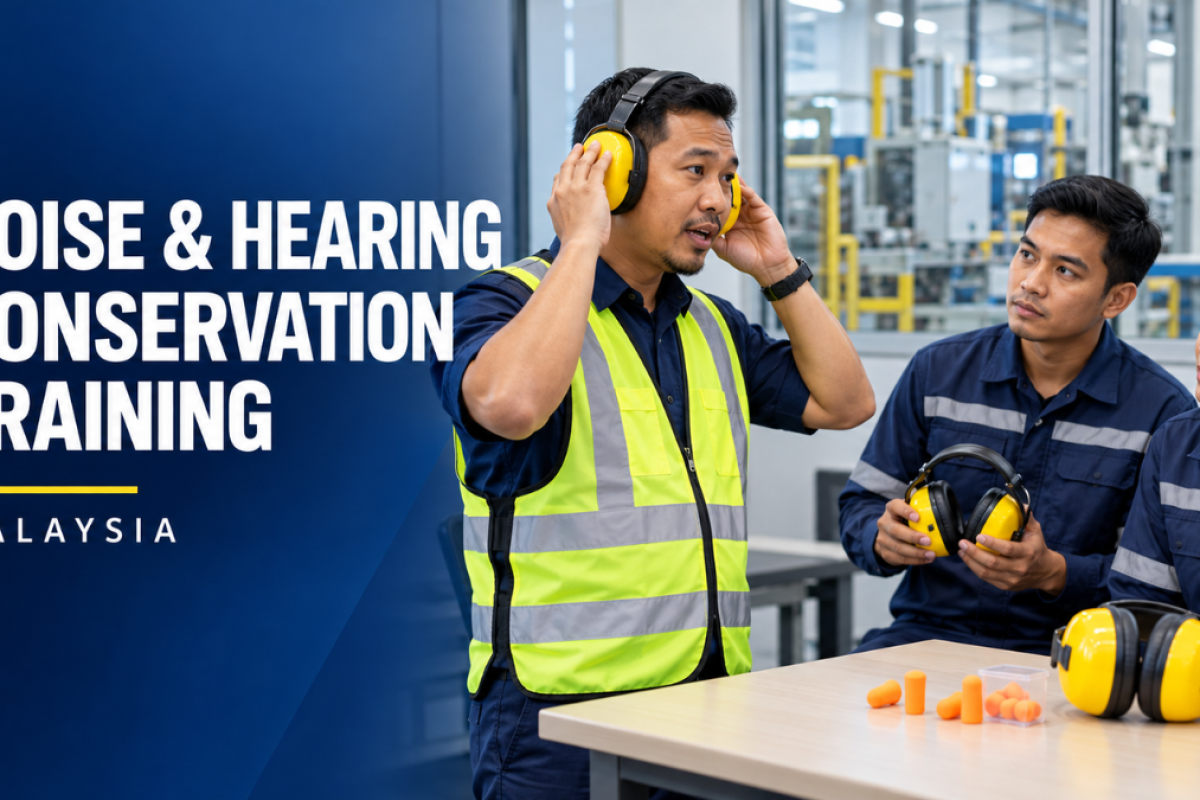
Proper use of earplugs and earmuffs should be demonstrated, not only explained.
-
Relevant employees should receive noise training at least once a year.
-
Supervisors should also be trained because they monitor daily compliance.
-
Training records should be kept for DOSH/JKKP inspection and internal audit.
-
Noise training should use actual workplace examples and NRA findings.
-
Advanced HSE Solutions can support noise awareness training, hearing conservation training, PPE use demonstration and DOSH/JKKP documentation.
What Is Noise Hearing Conservation Training?
Noise Hearing Conservation Training is a safety and health training programme for employees who work in noisy environments.
It is also commonly searched as:
-
Noise training Malaysia
-
Hearing conservation training Malaysia
-
Noise awareness training
-
Occupational noise training
-
DOSH noise training
-
JKKP noise training
-
Hearing protection training
-
Personal hearing protector training
-
Noise exposure training
-
Hearing Conservation Programme training
-
NRA follow-up training
The purpose is to ensure that employees understand the risk of workplace noise and know how to protect their hearing during daily work.
Why Noise Training Matters
Occupational noise can cause permanent hearing damage.
The problem is that noise-induced hearing loss usually happens gradually. Workers may not notice the damage immediately. By the time hearing loss becomes obvious, the damage may already be permanent.
Noise Hearing Conservation Training helps workers understand:
-
Why excessive noise is dangerous
-
How hearing loss can happen
-
Why hearing protection must be worn correctly
-
What high-noise areas are
-
What audiometric testing is for
-
What symptoms should be reported
-
How to follow noise control procedures
-
Why hearing protection cannot be removed in noisy areas
Training is important because even if the employer provides earplugs or earmuffs, hearing protection will not work if workers do not use them correctly and consistently.
Legal and Compliance Background in Malaysia
In Malaysia, occupational noise exposure is governed mainly by the Occupational Safety and Health (Noise Exposure) Regulations 2019.
When employees are exposed to excessive noise, employers are expected to provide information, instruction and training, including training on the proper use of personal hearing protectors.
Employers should also supervise the implementation of noise exposure control at the workplace.
A practical way to understand the requirement is this:
-
NRA identifies the noise exposure risk.
-
Noise controls reduce the risk.
-
Hearing protection protects workers from remaining exposure.
-
Audiometric testing monitors hearing health.
-
Noise training ensures workers understand and follow the controls.
Training is therefore not an optional extra. It is part of workplace noise risk management.
What Is JKKP?
JKKP stands for Jabatan Keselamatan dan Kesihatan Pekerjaan.
In English, JKKP is known as DOSH, the Department of Occupational Safety and Health Malaysia.
This is why employers may see both terms used:
-
DOSH noise training
-
JKKP noise training
-
DOSH hearing conservation training
-
JKKP hearing conservation training
For practical compliance purposes, DOSH and JKKP refer to the same authority.
Noise Training and Noise Risk Assessment
Noise Hearing Conservation Training is closely connected to Noise Risk Assessment, also known as NRA.
A Noise Risk Assessment identifies:
-
High-noise areas
-
Noise sources
-
Workers exposed to excessive noise
-
Similar Exposure Groups
-
Personal noise exposure levels
-
Existing control measures
-
Recommended control measures
-
Need for hearing protection
-
Need for audiometric testing
-
Need for training
After NRA is completed, employers should review the report and train affected workers based on the actual workplace findings.
Training should not be generic only. It should explain the company’s real noise sources, high-noise zones, hearing protection rules and worker responsibilities.
Who Should Attend Noise Hearing Conservation Training?
Noise training is suitable for employees who are exposed or likely to be exposed to excessive noise.
This may include:
-
Production operators
-
Machine operators
-
Maintenance workers
-
Engineering workers
-
Fabrication workers
-
Grinding and cutting workers
-
Stamping machine operators
-
Compressor room workers
-
Generator room workers
-
Construction workers
-
Warehouse workers exposed to noisy equipment
-
Forklift operators in noisy areas
-
Supervisors
-
HSE personnel
-
Contractors working in high-noise areas
-
Workers required to use earplugs or earmuffs
Supervisors should also attend because they are responsible for monitoring whether workers follow noise control rules.
Which Workplaces Need Noise Training?
Noise Hearing Conservation Training is relevant for many industries.
Common examples include:
-
Manufacturing plants
-
Metal fabrication workshops
-
Engineering workshops
-
Construction sites
-
Food and beverage processing plants
-
Packaging plants
-
Automotive workshops
-
Printing plants
-
Woodworking facilities
-
Warehouses with noisy equipment
-
Oil and gas support facilities
-
Utilities and power generation areas
-
Compressor rooms
-
Generator rooms
-
Plant rooms
-
Maintenance workshops
-
Quarrying and heavy equipment operations
Any workplace with noisy machinery, tools or processes should review whether employees need noise training.
What Is Excessive Noise?
Excessive noise generally refers to workplace noise exposure that reaches levels requiring control under the Noise Exposure Regulations 2019.
Employers should be alert when:
-
Workers need to raise their voice to communicate
-
Employees complain that the workplace is too loud
-
Workers experience ringing in the ears after work
-
Workers are exposed to machinery, compressors or generators
-
Grinding, cutting, stamping or fabrication work is carried out
-
NRA identifies high-noise areas
-
Audiometric test results show possible concern
-
Workers are required to wear hearing protection
If excessive noise is suspected, the employer should conduct proper Noise Risk Assessment and take action based on the findings.
What Should Noise Hearing Conservation Training Cover?
A good Noise Hearing Conservation Training programme should be practical and workplace-specific.
Recommended training modules include the following.
1. Introduction to Occupational Noise
Employees should understand what occupational noise is and why it matters.
Training should explain:
-
What noise exposure means
-
Difference between loudness and exposure duration
-
Why short exposure to very loud noise can still be harmful
-
Why continuous moderate noise can also damage hearing
-
Why hearing loss may develop slowly over time
Workers should understand that “getting used to noise” does not mean the noise is safe.
2. Effects of Noise on Hearing
Training should explain how noise can damage hearing.
Topics may include:
-
Noise-induced hearing loss
-
Tinnitus or ringing in the ears
-
Temporary hearing shift
-
Permanent hearing damage
-
Communication problems
-
Reduced ability to hear warning signals
-
Increased accident risk
-
Impact on quality of life
This section is important because workers are more likely to use hearing protection correctly when they understand the consequences.
3. Noise Exposure Limits and High-Noise Areas
Employees should understand the company’s high-noise areas and why controls are required.
Training should cover:
-
What excessive noise means
-
Why some areas require hearing protection
-
Why noise exposure depends on time and level
-
How high-noise zones are identified
-
What signage means
-
What workers must do before entering high-noise areas
The training should use actual workplace examples where possible.
4. Noise Risk Assessment Findings
If the company has completed NRA, training should include relevant findings.
This may include:
-
Main noise sources
-
High-noise departments
-
Exposed job groups
-
Similar Exposure Groups
-
Noise maps
-
Personal exposure findings
-
Recommended controls
-
Required hearing protection areas
Workers should understand how the NRA findings affect their daily work.
5. Hearing Conservation Programme
A Hearing Conservation Programme is a structured programme to prevent occupational hearing loss.
Training should explain the main parts of the programme, such as:
-
Noise Risk Assessment
-
Noise control measures
-
Personal hearing protection
-
Audiometric testing
-
Worker training
-
Signage and high-noise area control
-
Recordkeeping
-
Follow-up and review
This helps workers understand that hearing conservation is not only about earplugs. It is a complete system.
6. Personal Hearing Protectors
Personal hearing protectors are an important part of noise control.
Training should cover:
-
Earplugs
-
Earmuffs
-
Canal caps
-
Dual protection where needed
-
Correct selection
-
Correct fitting
-
Cleaning and maintenance
-
Storage
-
Replacement
-
Limitations of hearing protection
Workers should understand that hearing protectors only work when they are worn correctly and consistently.
7. Correct Use of Earplugs
Earplug training should be practical.
Employees should learn:
-
How to insert disposable foam earplugs
-
How to use reusable earplugs
-
How deep earplugs should be inserted
-
How to check if the seal is good
-
When to replace earplugs
-
How to keep earplugs clean
-
Common mistakes when using earplugs
Common mistakes include placing the earplug too shallow, touching earplugs with dirty hands, reusing disposable earplugs too long and removing earplugs while still in noisy areas.
8. Correct Use of Earmuffs
Earmuff training should cover:
-
Correct positioning over the ear
-
Proper seal around the ear
-
Avoiding obstruction by hair, glasses or helmet straps
-
Checking cushion condition
-
Cleaning and storage
-
Replacement of damaged earmuffs
-
When earmuffs may be more suitable than earplugs
Workers should understand that a poor seal reduces protection.
9. Noise Control Measures
Training should explain that hearing protection is not the only control.
Noise control measures may include:
-
Engineering controls
-
Administrative controls
-
Maintenance controls
-
High-noise area restriction
-
Work rotation
-
Noise barriers
-
Acoustic enclosures
-
Silencers or mufflers
-
Equipment maintenance
-
Warning signage
-
Safe work procedures
Employees should understand their role in following these controls and reporting problems.
10. Audiometric Testing
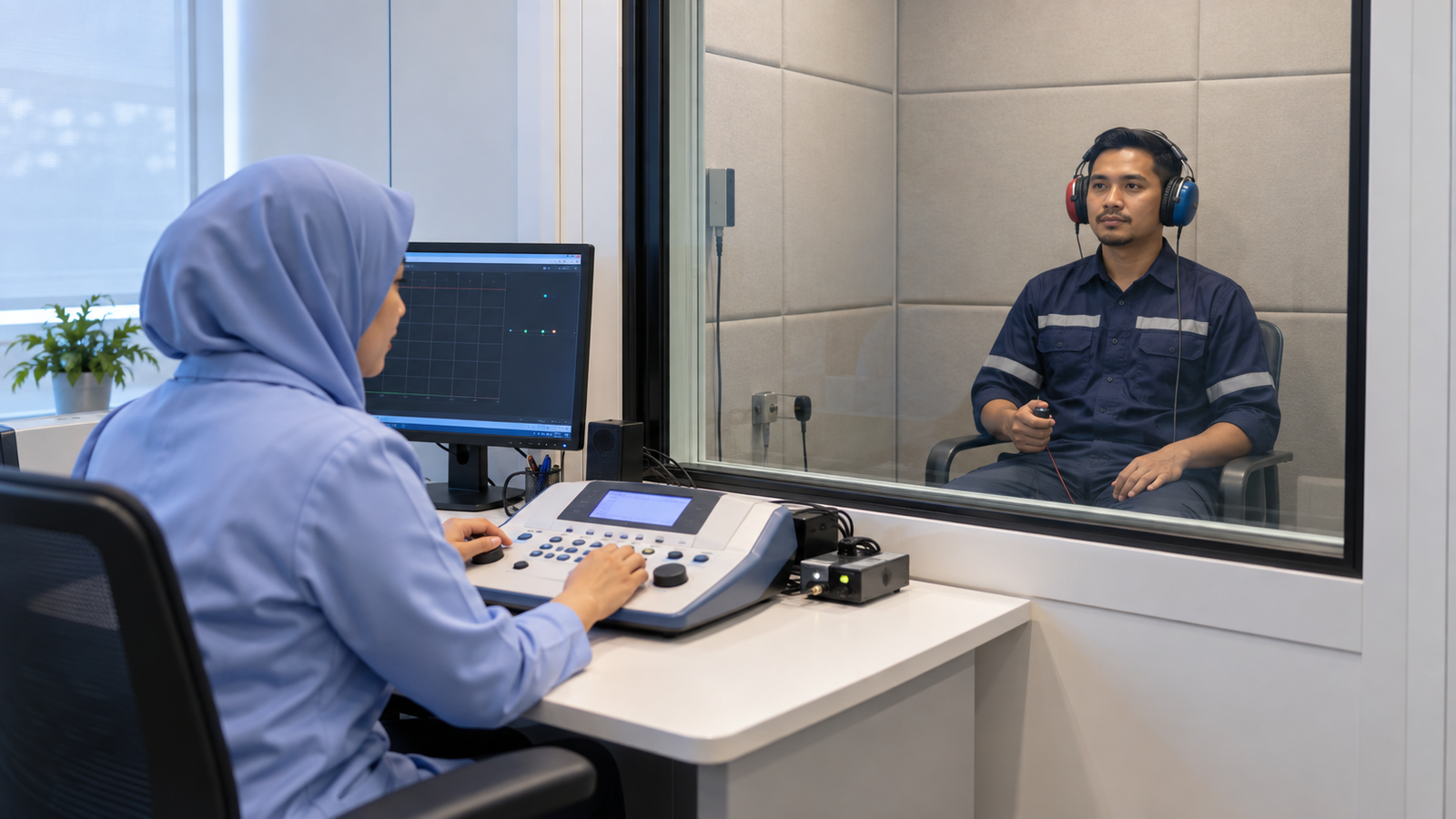
Audiometric testing is hearing testing used to monitor workers’ hearing health.
Training should explain:
-
Why audiometric testing is conducted
-
Who needs audiometric testing
-
What workers should do before the test
-
Why test results matter
-
Why early detection is important
-
What happens if abnormal results are found
-
Why workers should report hearing symptoms
Workers should not see audiometric testing as a punishment. It is part of hearing protection and early detection.
11. Worker Responsibilities
Employees have an important role in hearing conservation.
Training should explain that workers should:
-
Wear hearing protection in required areas
-
Use hearing protectors correctly
-
Keep hearing protectors clean
-
Report damaged hearing protectors
-
Follow high-noise area rules
-
Attend audiometric testing when required
-
Report ringing ears, hearing difficulty or discomfort
-
Follow safe work procedures
-
Cooperate with supervisors and HSE personnel
A Hearing Conservation Programme only works when workers cooperate consistently.
12. Supervisor Responsibilities
Supervisors should understand their role.
Supervisor responsibilities may include:
-
Ensuring workers wear hearing protection
-
Monitoring high-noise work areas
-
Reinforcing safe behaviour
-
Reporting missing or damaged signage
-
Ensuring new workers are briefed
-
Supporting audiometric testing arrangements
-
Correcting unsafe practices
-
Reporting changes in machinery or noise levels
Supervisors are the link between written procedures and actual workplace behaviour.
Suggested Course Outline
A practical Noise Hearing Conservation Training course may include:
-
Introduction to occupational noise
-
Health effects of excessive noise
-
Overview of Noise Exposure Regulations 2019
-
Understanding NRA findings
-
High-noise areas and signage
-
Hearing Conservation Programme overview
-
Personal hearing protectors: selection and limitations
-
Practical earplug and earmuff fitting
-
Audiometric testing awareness
-
Noise control measures at workplace
-
Worker and supervisor responsibilities
-
Common mistakes and case examples
-
Workplace-specific discussion
-
Knowledge check and attendance record
The course should be customised based on the company’s actual NRA findings, machinery, work areas and hearing protection requirements.
How Often Should Noise Training Be Conducted?
Noise training should be conducted at least once a year for relevant employees exposed to excessive noise.
Refresher training should also be considered when:
-
New workers are assigned to noisy areas
-
New machinery is installed
-
Noise levels change
-
New hearing protection is introduced
-
NRA findings are updated
-
Audiometric testing shows hearing concerns
-
Workers are not using hearing protection correctly
-
DOSH/JKKP inspection identifies gaps
-
A noise-related complaint or incident occurs
-
Supervisors notice poor compliance
Annual training should not be repeated as a boring formality. It should be used to reinforce correct behaviour and update workers on current workplace risks.
Training Records Employers Should Keep
Employers should keep proper training records for DOSH/JKKP inspection and internal audit.
Records may include:
-
Training date
-
Training title
-
Trainer name
-
Training content
-
Attendance list
-
Department or work group
-
Training materials
-
Practical demonstration record
-
Knowledge assessment result
-
Photos of training, where suitable
-
Refresher training schedule
-
Corrective action records after training
Training records should be linked to the NRA report and Hearing Conservation Programme.
Common Mistakes Employers Make
Common mistakes include:
-
Giving earplugs without training
-
Conducting training only once and never refreshing it
-
Not training supervisors
-
Not explaining audiometric testing
-
Not using actual NRA findings in training
-
Not demonstrating earplug insertion
-
Not checking whether earmuffs fit properly
-
Assuming signage is enough
-
Not keeping training records
-
Training only permanent staff but ignoring contractors
-
Not retraining when machinery or exposure changes
-
Treating hearing conservation as PPE only
The most common mistake is thinking that providing hearing protection alone is enough.
Noise Training Checklist for Employers
Before Training
-
Review NRA report
-
Identify exposed employees
-
Identify high-noise areas
-
Confirm personal hearing protector type
-
Prepare training material
-
Prepare earplug or earmuff samples
-
Prepare audiometric testing information
-
Invite supervisors
-
Prepare attendance sheet
-
Prepare workplace-specific examples
During Training
-
Explain noise health effects
-
Explain legal and company requirements
-
Explain high-noise areas
-
Demonstrate hearing protection use
-
Allow workers to practise fitting
-
Explain audiometric testing
-
Explain worker responsibilities
-
Answer worker questions
-
Conduct basic knowledge check
After Training
-
Keep attendance record
-
Keep training material
-
Update training matrix
-
Observe workplace behaviour
-
Correct improper hearing protector use
-
Replace unsuitable or damaged hearing protection
-
Plan refresher training
-
Link training to HCP and NRA action plan
HRD Corp Claimable Noise Training
For eligible Malaysian employers, Noise Hearing Conservation Training may be arranged as part of HRD Corp claimable HSE training, depending on provider arrangement, course approval and employer eligibility.
This is useful for companies that need to train operators, supervisors, maintenance teams, contractors and HSE personnel while managing training cost effectively.
Employers should confirm claimability before training is conducted.
Benefits of Noise Hearing Conservation Training
Noise training can help employers:
-
Reduce risk of occupational hearing loss
-
Improve hearing protection compliance
-
Improve worker understanding of noise hazards
-
Support Noise Risk Assessment recommendations
-
Support Hearing Conservation Programme implementation
-
Improve audiometric testing participation
-
Strengthen DOSH/JKKP inspection readiness
-
Reduce unsafe behaviour in high-noise areas
-
Improve supervisor monitoring
-
Improve documentation for audit
-
Build a stronger workplace safety culture
Training turns noise control requirements into daily workplace behaviour.
How Advanced HSE Solutions Can Help
Advanced HSE Solutions supports Malaysian employers with Noise Risk Assessment, industrial hygiene assessment, hearing conservation support, PPE recommendation, HRD Corp claimable training and DOSH/JKKP inspection readiness.
For Noise Hearing Conservation Training, our team can assist with:
-
Noise awareness training
-
Hearing conservation training
-
Personal hearing protector training
-
Earplug and earmuff usage demonstration
-
NRA findings briefing
-
Audiometric testing awareness
-
Supervisor noise control briefing
-
High-noise area awareness
-
Workplace-specific training materials
-
Training records and documentation support
-
Integration with Hearing Conservation Programme
If your workplace uses noisy machinery, compressors, generators, grinders, production lines, fabrication equipment or construction equipment, Advanced HSE Solutions can help train your employees to understand noise risks and protect their hearing properly.
Conclusion
Noise Hearing Conservation Training is an important part of occupational noise management in Malaysia.
It helps workers understand the dangers of excessive noise, the importance of hearing protection, the purpose of audiometric testing and the correct behaviour required in high-noise areas.
For employers, the key message is simple: do not stop at Noise Risk Assessment or providing earplugs. Workers must be trained, supervisors must monitor compliance, audiometric testing must be understood and hearing conservation must be managed as a complete programme.
A well-planned noise training programme protects employees, supports DOSH/JKKP compliance and strengthens workplace safety culture.
FAQ
What is Noise Hearing Conservation Training?
Noise Hearing Conservation Training is workplace training that teaches employees about occupational noise risks, hearing loss prevention, correct use of hearing protection, audiometric testing and noise control procedures.
Who should attend noise training?
Employees exposed or likely to be exposed to excessive noise should attend. This may include operators, maintenance workers, fabrication workers, construction workers, supervisors, contractors and HSE personnel.
Is noise training required in Malaysia?
Employers must provide information, instruction and training to employees exposed to excessive noise, including training on the proper use of personal hearing protectors.
How often should noise training be conducted?
Relevant employees exposed to excessive noise should receive training at least once a year. Refresher training should also be conducted when noise exposure, machinery, hearing protection or work conditions change.
What should Noise Hearing Conservation Training cover?
Training should cover noise health effects, noise exposure risks, NRA findings, high-noise areas, correct use of earplugs and earmuffs, audiometric testing, noise control measures and worker responsibilities.
Is hearing protection training enough?
No. Hearing protection training is important, but a complete Hearing Conservation Programme should also include Noise Risk Assessment, noise control measures, audiometric testing, supervision and recordkeeping.
What is audiometric testing?
Audiometric testing is a hearing test used to monitor workers’ hearing health when they are exposed to excessive occupational noise.
Should supervisors attend noise training?
Yes. Supervisors should attend because they are responsible for ensuring workers follow noise control procedures and use hearing protection correctly.
Can Noise Hearing Conservation Training be HRD Corp claimable?
It may be arranged as HRD Corp claimable HSE training for eligible employers, depending on provider arrangement, course approval and HRD Corp requirements.
Can Advanced HSE Solutions provide Noise Hearing Conservation Training?
Yes. Advanced HSE Solutions can support noise awareness training, hearing conservation training, personal hearing protector training, NRA findings briefing, audiometric testing awareness and DOSH/JKKP documentation support.