Table of Contents
Quick Answer
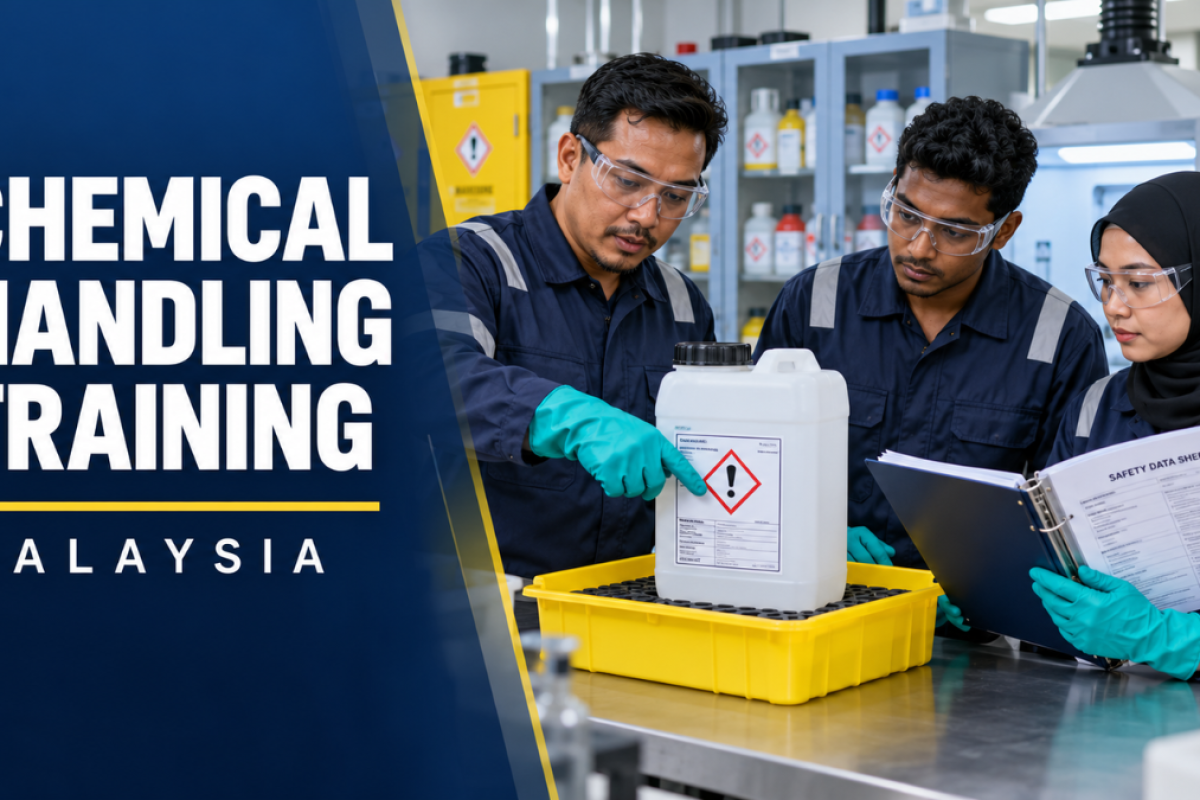
Chemical Handling Training is a workplace safety training programme that teaches employees how to handle, store, use, transfer and respond to chemicals safely.
In Malaysia, chemical handling training is important for workplaces where employees may be exposed to chemicals hazardous to health. Training should help employees understand chemical hazards, Safety Data Sheets, chemical labels, PPE, safe work procedures, spill response, emergency actions and basic exposure prevention.
For employers, Chemical Handling Training supports compliance with Malaysia’s occupational safety and health requirements, especially where chemicals are used, stored, transported, mixed, sprayed, transferred or disposed of at the workplace.
Key Takeaways:
Chemical Handling Training teaches employees how to use, store, transfer and respond to chemicals safely.
It is especially important when employees may be exposed to chemicals hazardous to health.
Training should cover chemical hazards, exposure routes, labels, Safety Data Sheets, PPE, storage, spill response and emergency action.
USECHH Regulations 2000 require employers to manage exposure to chemicals hazardous to health.
CLASS Regulations 2013 support chemical hazard communication through classification, labelling and SDS.
CHRA findings should be communicated to workers through training and safe work procedures.
Chemical training should use real workplace chemicals, real SDS and actual SOPs.
Employers should keep proper training records for DOSH/JKKP inspection and audit readiness.
Refresher training should be conducted when chemicals, processes, SDS, CHRA findings or workplace practices change.
Advanced HSE Solutions can support Chemical Handling Training, CHRA follow-up, SDS awareness, spill response awareness and chemical safety documentation.
What Is Chemical Handling Training?
Chemical Handling Training is practical training for employees who work with or around chemicals.
It is also commonly searched as:
Chemical safety training
Hazardous chemical handling training
Chemical Handling Training Malaysia
DOSH chemical handling training
JKKP chemical safety training
USECHH training
CLASS Regulation training
SDS training
Chemical spill response training
Chemical PPE training
CHRA awareness training
The goal is simple: workers must know what chemicals they are dealing with, what the hazards are, how exposure can happen, what precautions to take and what to do during an emergency.
Why Chemical Handling Training Matters
Chemical hazards can harm workers through inhalation, skin contact, eye contact, ingestion or accidental injection.
Some chemical effects are immediate, such as burns, irritation, dizziness, breathing difficulty or eye damage. Other effects may develop slowly over time, such as occupational asthma, dermatitis, organ damage, reproductive harm or cancer.
Chemical Handling Training helps reduce these risks by ensuring employees understand:
What chemicals are hazardous
What health effects may occur
How to read chemical labels
How to read Safety Data Sheets
What PPE is required
How to store chemicals properly
How to transfer chemicals safely
How to prevent spills and exposure
How to respond during chemical emergencies
When to report unsafe conditions or symptoms
Training is not only useful for workers. It also helps supervisors and management show that chemical risks are being controlled systematically.
Legal and Compliance Background in Malaysia
Chemical safety in Malaysia is closely connected to the Occupational Safety and Health Act 1994, USECHH Regulations 2000 and CLASS Regulations 2013.
Under the USECHH framework, employers are required to manage chemicals hazardous to health at the workplace. This includes identifying hazardous chemicals, conducting Chemical Health Risk Assessment, controlling exposure, labelling chemicals, providing information and training, monitoring exposure where required and carrying out health surveillance where necessary.
The CLASS Regulations 2013 support chemical hazard communication by requiring hazardous chemicals to be properly classified, labelled and supported with Safety Data Sheets.
In practical terms, chemical handling training helps employees understand the controls that are already required under chemical safety management.
Chemical Handling Training and USECHH
USECHH stands for Occupational Safety and Health (Use and Standards of Exposure of Chemicals Hazardous to Health) Regulations 2000.
For employers, USECHH is one of the most important regulations when employees may be exposed to chemicals hazardous to health.
Chemical Handling Training supports USECHH by helping employees understand:
Health risks from chemical exposure
Precautions required during chemical work
Chemical labels and SDS
Safe work procedures
Control measures
PPE requirements
Spill response
Emergency procedures
Exposure reporting
Health surveillance requirements, where applicable
If a CHRA report recommends training or retraining, employers should treat chemical handling training as part of the corrective action plan.
Chemical Handling Training and CLASS Regulations
CLASS stands for Classification, Labelling and Safety Data Sheet of Hazardous Chemicals.
Chemical handling training should include basic CLASS awareness because workers must understand chemical hazard communication.
Employees should learn how to identify:
Product identifier
Supplier information
Signal word
Hazard pictogram
Hazard statement
Precautionary statement
Safety Data Sheet sections
First aid information
PPE requirements
Storage and handling precautions
Spill and emergency response information
Without this knowledge, workers may see a chemical label but not understand what action is required.
Chemical Handling Training and CHRA
CHRA stands for Chemical Health Risk Assessment.
CHRA identifies chemical health risks at the workplace and recommends control measures. Chemical Handling Training is often one of the key actions after CHRA.
For example, CHRA may identify that workers are exposed to solvent vapour during cleaning, mixing or transfer work. The report may recommend:
Better ventilation
Safer work procedure
Suitable gloves and respirators
Chemical exposure monitoring
Medical surveillance
Worker training
Chemical Handling Training helps workers understand and follow those recommendations.
In simple terms:
CHRA identifies the risk.
Chemical Handling Training helps workers control the risk.
Who Should Attend Chemical Handling Training?
Chemical Handling Training is suitable for employees who use, handle, store, transfer, transport, clean up or supervise chemical work.
This may include:
Production operators
Maintenance workers
Store and warehouse personnel
Laboratory staff
Cleaning workers
Waste handling workers
Spray painting workers
Mixing and blending workers
Chemical transfer workers
Forklift operators handling chemical containers
Supervisors
HSE personnel
Emergency response team members
Contractors working around chemicals
Training should also be considered for workers who may not handle chemicals directly but may still be exposed during normal work, maintenance work, emergency response or accidental release.
Which Workplaces Need Chemical Handling Training?
Chemical Handling Training is relevant to many industries in Malaysia.
Examples include:
Manufacturing
Electronics and semiconductor
Food and beverage processing
Chemical storage
Warehousing and logistics
Laboratories
Healthcare facilities
Cleaning services
Pest control
Printing
Painting and coating
Automotive workshops
Engineering workshops
Metal fabrication
Oil and gas support services
Water treatment
Waste management
Construction
Pharmaceutical and cosmetic manufacturing
Any workplace that uses hazardous chemicals should review whether workers have received suitable chemical safety training.
Common Chemicals Covered in Training
The training can be customised based on actual chemicals used at the workplace.
Common examples include:
Solvents
Acids
Alkalis
Cleaning chemicals
Degreasers
Disinfectants
Paints and coatings
Adhesives
Resins
Fuels
Lubricants
Laboratory reagents
Pesticides
Welding fumes
Dusts
Metal fumes
Industrial gases
Process chemicals
Water treatment chemicals
Scheduled waste-related chemicals
Training should focus on the real chemicals used at the workplace, not only generic examples.
What Should Chemical Handling Training Cover?
A good chemical handling training programme should be practical and relevant to the workplace.
Recommended training modules include the following.
1. Introduction to Chemical Hazards
Employees should understand the different types of chemical hazards.
This includes:
Health hazards
Physical hazards
Environmental hazards
Corrosive chemicals
Toxic chemicals
Flammable chemicals
Irritants
Sensitisers
Carcinogens
Oxidisers
Reactive chemicals
Compressed gases
Workers should understand that not all dangerous chemicals look, smell or feel dangerous.
2. Routes of Chemical Exposure
Workers should understand how chemicals can enter the body.
Common exposure routes include:
Inhalation
Skin contact
Eye contact
Ingestion
Injection through cuts or punctures
This is important because different exposure routes require different controls.
For example, gloves may help reduce skin exposure, but they do not protect workers from inhaling vapour. Respirators may reduce inhalation exposure, but they do not protect the eyes from splashes.
3. Reading Chemical Labels
Employees should be trained to read and understand chemical labels before using a chemical.
The training should cover:
Chemical name
Supplier information
Signal word
Hazard pictogram
Hazard statement
Precautionary statement
Basic emergency information
Workers should be reminded not to use chemicals from unlabelled bottles, reused drinking containers or unclear containers.
4. Understanding Safety Data Sheets
Safety Data Sheets, or SDS, provide important information about chemical hazards and safe handling.
Training should teach employees how to find key SDS information such as:
Chemical identification
Hazards identification
Composition information
First aid measures
Firefighting measures
Accidental release measures
Handling and storage
Exposure controls and PPE
Physical and chemical properties
Stability and reactivity
Toxicological information
Disposal considerations
Employees do not need to memorise every SDS section, but they must know where to find critical information and how to use it.
5. Safe Chemical Handling Procedures
Workers should understand the correct way to handle chemicals during daily work.
This may include:
Checking labels before use
Reading SDS before handling unfamiliar chemicals
Using the correct container
Avoiding unnecessary mixing
Preventing splashes and spills
Using suitable tools and pumps
Avoiding direct skin contact
Keeping containers closed
Working under ventilation where required
Following safe transfer procedures
Reporting damaged containers
Avoiding eating, drinking or smoking near chemicals
Training should be linked to the company’s actual SOP.
6. Chemical Storage and Segregation
Poor storage can create serious chemical risk.
Training should cover:
Keeping chemicals in approved containers
Segregating incompatible chemicals
Storing flammable chemicals properly
Avoiding heat, ignition sources or sunlight where required
Keeping acids and alkalis separate where needed
Keeping oxidisers away from combustible materials
Maintaining secondary containment
Ensuring chemical cabinets are used correctly
Preventing overstocking
Keeping storage areas clean and labelled
Workers should understand that chemical storage is not only about neat arrangement. It is about preventing exposure, fire, reaction, spill and emergency risk.
7. PPE for Chemical Handling
Employees should know how to select, use and maintain PPE.
Chemical PPE may include:
Chemical-resistant gloves
Safety goggles
Face shield
Respirator
Chemical apron
Protective clothing
Safety shoes
Full body protection where needed
Training should explain that PPE must match the chemical and exposure risk.
For example, not all gloves are suitable for all solvents. A glove that protects against one chemical may fail quickly against another chemical.
8. Ventilation and Exposure Control
Workers should understand why ventilation and engineering controls matter.
Training may cover:
Local exhaust ventilation
Fume hood
Extraction system
Enclosed process
General ventilation
Avoiding work outside designated ventilated areas
Reporting ventilation failure
Keeping exhaust points clear
Not disabling control systems
This helps employees understand that chemical safety is not only about PPE.
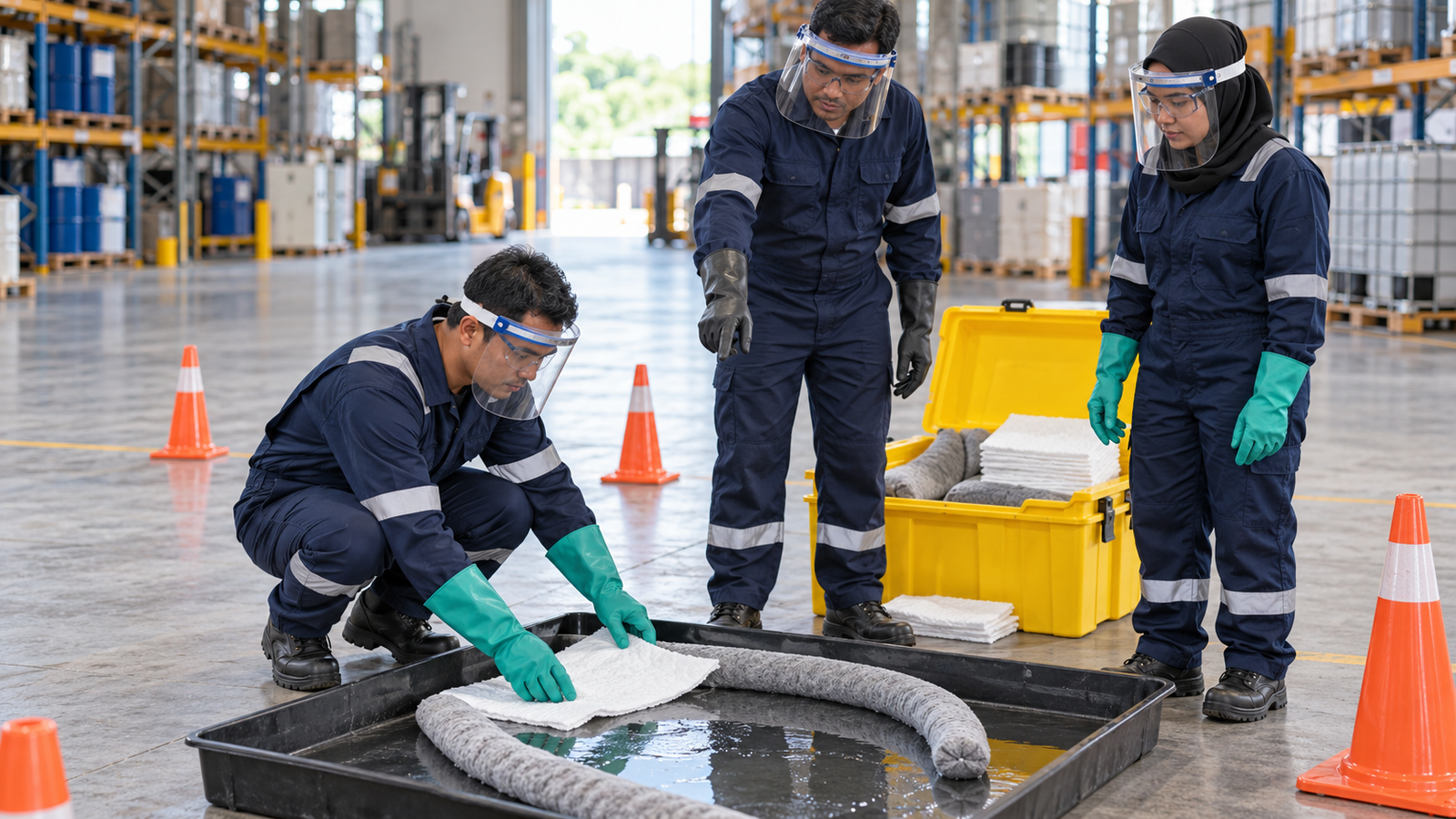
9. Chemical Spill Response
Chemical spill response should be part of training because spills are one of the most common chemical incidents.
Employees should learn:
How to recognise a spill
When to evacuate
When not to clean up a spill
How to alert supervisors
How to use spill kits
How to prevent spread
How to protect themselves
How to dispose of spill waste
How to report the incident
Only trained personnel should handle spills beyond their competency or safe response level.
10. Emergency Response and First Aid
Chemical training should include basic emergency actions.
This may include:
Eye splash response
Skin contact response
Inhalation exposure response
Ingestion response
Fire response
Chemical burn response
Emergency shower use
Eyewash station use
Evacuation procedure
Emergency contact reporting
Incident escalation
Workers should know where emergency equipment is located and how to use it.
11. Chemical Waste and Disposal
Improper chemical waste handling can expose workers and create environmental issues.
Training should cover:
Do not pour chemicals into drains unless authorised
Keep waste containers labelled
Do not mix incompatible waste
Use proper waste containers
Close waste containers after use
Report leaks and damaged containers
Follow scheduled waste procedures where applicable
Chemical waste training should be aligned with company procedures and environmental requirements.
12. Worker Responsibilities
Employees should understand their role in chemical safety.
Worker responsibilities include:
Follow safe work procedures
Wear required PPE correctly
Read labels and SDS
Do not use unknown chemicals
Report leaks, spills or damaged containers
Report symptoms or exposure concerns
Do not mix chemicals unless authorised
Keep containers closed
Maintain good hygiene
Attend training and refresher training
A safe chemical workplace depends on both employer controls and worker behaviour.
Chemical Handling Training Course Outline
A practical course outline may include:
Introduction to chemical hazards
Legal overview: USECHH, CLASS and employer duties
Chemical hazard classification
Chemical labels and pictograms
Safety Data Sheet awareness
Routes of exposure and health effects
Safe chemical handling procedures
Chemical storage and segregation
PPE selection and limitations
Ventilation and exposure control
Spill prevention and spill response
Emergency response and first aid
Chemical waste handling
Case examples and workplace discussion
Practical checklist and assessment
The course should be customised according to the company’s actual chemicals and work activities.
Chemical Handling Training and SOP
Chemical Handling Training should be linked to safe work procedures.
A good chemical handling SOP should cover:
Approved chemical list
SDS reference
Required PPE
Handling steps
Mixing or dilution process
Transfer method
Storage requirements
Spill response
Emergency response
Waste disposal
Reporting requirements
Prohibited actions
Training is more effective when employees are taught using real workplace SOPs, real labels and real SDS examples.
Chemical Handling Training and DOSH/JKKP Inspection
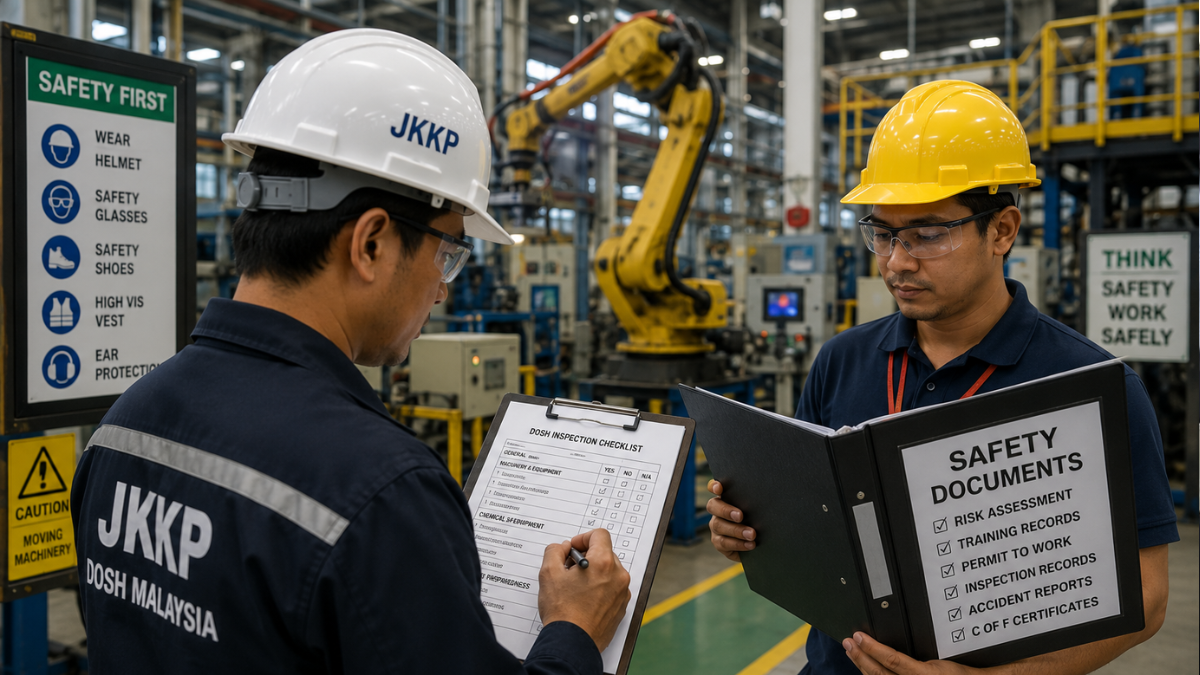
During a DOSH or JKKP inspection, officers may check whether workers understand chemical risks and whether chemical safety records are properly maintained.
Employers should be prepared to show:
Chemical register
SDS file
CHRA report
Chemical Handling Training records
PPE issuance records
Safe work procedures
Chemical storage inspection records
Spill response records
Exposure monitoring records, where applicable
Medical surveillance records, where applicable
Corrective action records
Training records should include the training date, topic, trainer, attendee list, assessment record and refresher plan where applicable.
Common Chemical Handling Mistakes
Many chemical incidents happen because basic controls are missing or not followed.
Common mistakes include:
Chemicals stored in unlabelled bottles
SDS not available to workers
Employees do not understand pictograms
Incompatible chemicals stored together
Workers use the wrong gloves
Respirators used without proper selection
Spill kit available but workers do not know how to use it
Chemical containers left open
Chemical transfer done without ventilation
No emergency shower or eyewash awareness
Workers mix chemicals without authorisation
Chemical waste containers not labelled
Training done once but never refreshed
CHRA recommendations not communicated to workers
Chemical safety training should focus on these practical workplace behaviours.
How Often Should Chemical Handling Training Be Conducted?
Chemical Handling Training should be provided before employees start work involving hazardous chemicals and refreshed when needed.
Refresher training should be considered when:
New chemicals are introduced
Chemical classification changes
SDS changes significantly
Work process changes
New equipment or ventilation system is installed
CHRA recommends retraining
Chemical exposure incident occurs
Spill or near miss occurs
Workers show unsafe practices
DOSH/JKKP inspection identifies gaps
Contractors start chemical-related work
Employees return after long absence from chemical tasks
A practical approach is to conduct periodic refresher training and update employees whenever chemical risks or procedures change.
Chemical Handling Training Checklist for Employers
Before Training
Prepare chemical inventory
Prepare SDS file
Identify chemicals hazardous to health
Review CHRA findings
Review workplace chemical SOP
Identify target employees
Prepare PPE examples
Prepare spill response materials
Prepare photos of actual workplace issues
Confirm training language and worker understanding
During Training
Explain chemical hazards clearly
Show real labels and SDS examples
Demonstrate PPE use
Explain storage segregation
Discuss actual work tasks
Explain spill response steps
Explain emergency actions
Allow worker questions
Conduct basic knowledge check
After Training
Keep attendance records
Keep training materials
Record assessment results
Update SOP where needed
Close CHRA training recommendations
Conduct workplace follow-up
Observe chemical handling behaviour
Plan refresher training
Keep records for audit and inspection
HRD Corp Claimable Chemical Handling Training
For eligible Malaysian employers, Chemical Handling Training may be arranged as part of HRD Corp claimable HSE training, depending on the company’s eligibility, training provider arrangement and course approval status.
This is useful for companies that want to train production workers, chemical handlers, warehouse staff, supervisors, maintenance teams and HSE personnel while managing training cost more effectively.
Employers should confirm claimability, course scope and documentation requirements before training is conducted.
Benefits of Chemical Handling Training for Employers
Chemical Handling Training can help employers:
Reduce chemical exposure risk
Improve worker awareness
Improve compliance with chemical safety requirements
Support CHRA recommendations
Improve SDS and label understanding
Reduce chemical spills and unsafe handling
Improve PPE selection and usage
Improve emergency response readiness
Strengthen DOSH/JKKP inspection readiness
Improve workplace safety culture
Reduce incident and compensation risk
Support internal audit and customer audit requirements
Training is one of the most practical ways to convert chemical safety documents into real workplace behaviour.
How Advanced HSE Solutions Can Help
Advanced HSE Solutions supports Malaysian employers with HSE consultancy, HRD Corp claimable training, CHRA, chemical exposure monitoring, industrial hygiene assessment, SOP review and DOSH/JKKP inspection readiness.
For Chemical Handling Training, our team can assist with:
Chemical safety awareness training
Hazardous chemical handling training
SDS and chemical label training
USECHH and CLASS awareness
Chemical storage and segregation training
PPE awareness for chemical handling
Chemical spill response awareness
CHRA recommendation follow-up training
Supervisor chemical safety briefing
Workplace-specific chemical SOP training
Training records and documentation support
If your workplace uses solvents, acids, alkalis, cleaning chemicals, paints, coatings, laboratory chemicals, process chemicals or other hazardous substances, Advanced HSE Solutions can help your employees understand the risks and handle chemicals safely.
Conclusion
Chemical Handling Training is an essential part of workplace chemical safety in Malaysia.
It helps workers understand hazardous chemical risks, labels, Safety Data Sheets, PPE, safe handling, storage, spill response and emergency action. It also supports CHRA implementation, USECHH compliance, CLASS awareness and DOSH/JKKP inspection readiness.
For employers, the key message is simple: chemical safety does not end with SDS files, labels or CHRA reports. Workers must be trained to understand and apply the controls in daily work.
A well-planned Chemical Handling Training programme helps protect employees, reduce incidents and build a safer, more compliant workplace.
FAQ
What is Chemical Handling Training?
Chemical Handling Training is workplace safety training that teaches employees how to handle, store, use, transfer and respond to chemicals safely.
Who should attend Chemical Handling Training?
Employees who use, handle, store, transfer, transport, clean up or supervise chemical work should attend. This may include operators, supervisors, warehouse workers, maintenance staff, cleaners, laboratory personnel and emergency response team members.
Is Chemical Handling Training required in Malaysia?
Employers must provide suitable information, instruction and training to employees who may be exposed or are likely to be exposed to chemicals hazardous to health. Chemical Handling Training helps employers meet this duty.
What should Chemical Handling Training cover?
The training should cover chemical hazards, exposure routes, chemical labels, Safety Data Sheets, safe handling, storage, PPE, spill response, emergency action and worker responsibilities.
Is SDS training part of Chemical Handling Training?
Yes. Employees should understand how to read and use Safety Data Sheets, especially sections on hazards, first aid, firefighting, accidental release, handling, storage, exposure controls and PPE.
Is Chemical Handling Training related to CHRA?
Yes. CHRA identifies chemical health risks and may recommend training or retraining. Chemical Handling Training helps employees understand and follow CHRA control recommendations.
Is Chemical Handling Training HRD Corp claimable?
It may be arranged as HRD Corp claimable HSE training for eligible employers, depending on course arrangement, provider status and HRD Corp requirements.
How often should chemical safety training be repeated?
Training should be refreshed when new chemicals are introduced, processes change, SDS changes, CHRA recommends retraining, incidents occur, unsafe practices are observed or DOSH/JKKP inspection identifies gaps.
Can Advanced HSE Solutions provide Chemical Handling Training?
Yes. Advanced HSE Solutions can support Chemical Handling Training, SDS and label awareness, USECHH and CLASS awareness, PPE training, spill response awareness, CHRA follow-up training and chemical safety documentation support.