Table of Contents
Updated: 7 November 2026 | Malaysia Workplace Safety & Health Compliance
Quick Answer: What Documents Do You Need for a DOSH Inspection in Malaysia?
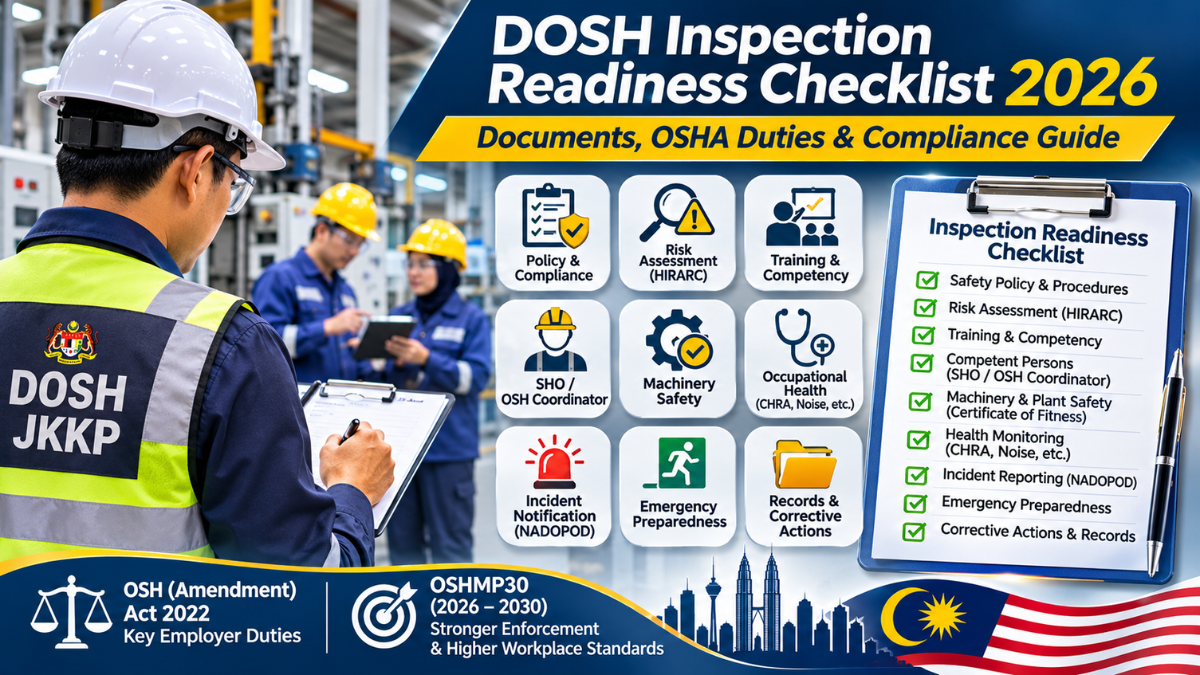
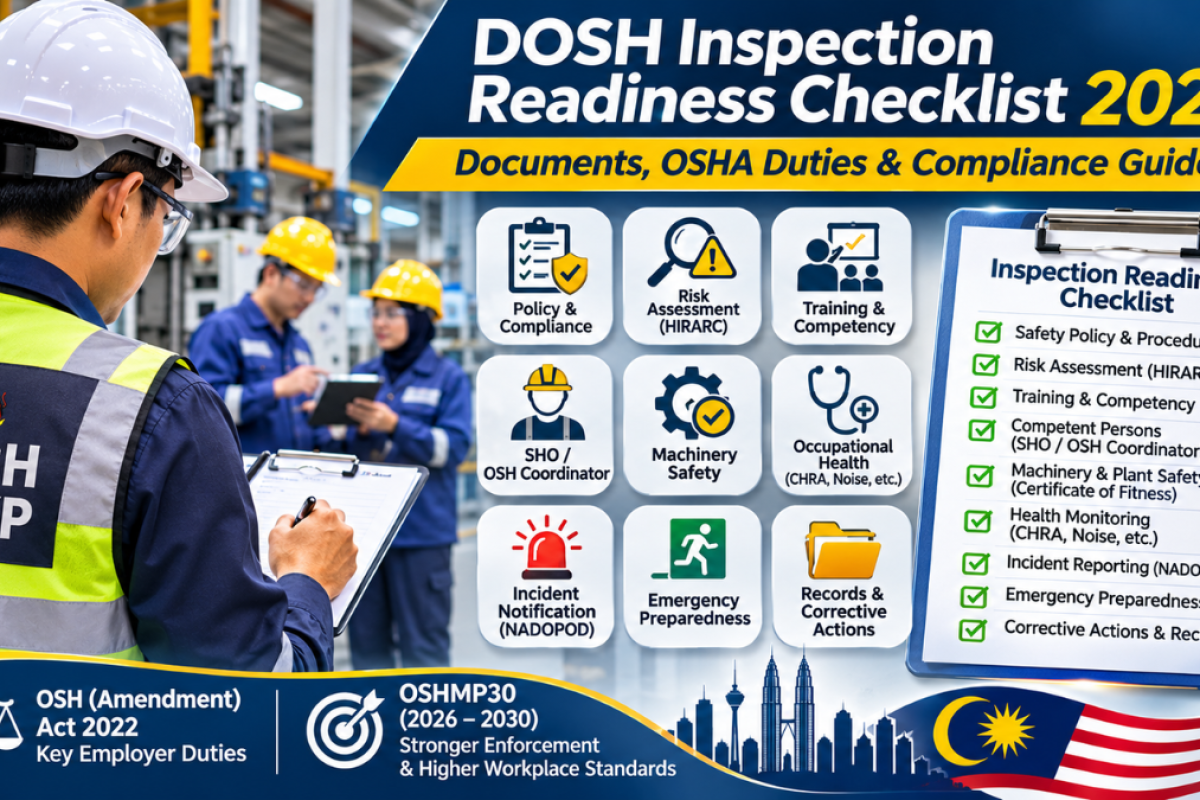
A DOSH Inspection Readiness Checklist helps Malaysian employers verify that their workplace complies with applicable occupational safety and health requirements before an inspection by the Department of Occupational Safety and Health (DOSH), also known as JKKP.
The checklist should cover company safety responsibilities, workplace risk assessments, employee training, competent-person appointments, machinery safety, occupational health monitoring, incident reporting, emergency preparedness and corrective action records.
Under the Occupational Safety and Health Act 1994, as amended by the OSH (Amendment) Act 2022, employers have important duties to provide safe working conditions, conduct and implement risk assessments, and maintain suitable safety and health arrangements.
However, not every workplace requires the same documents. Requirements for CHRA, Noise Risk Assessment, machinery Certificates of Fitness, Safety and Health Officers and other technical assessments depend on the workplace’s hazards, activities, workforce and applicable regulations.
This guide explains what employers should prepare, which requirements are conditional and how to organise a practical inspection-readiness system.
Key Takeaways:
OSHA 1994, as amended, is the primary legal framework for occupational safety and health in Malaysia.
The OSH (Amendment) Act 2022 took effect on 1 June 2024.
Section 18B requires risk assessments and implementation of necessary controls.
Section 29A sets OSH Coordinator requirements for relevant workplaces employing five or more employees.
Section 30 requires a Safety and Health Committee at workplaces with 40 or more employed persons or where directed by the Director General.
OSHMP30 is a strategic master plan for 2026–2030, not a replacement for legislation.
Core inspection records should include relevant OSH governance, risk assessments, training, incidents, emergency arrangements and corrective action evidence.
CHRA, NRA, ERA, CEM and CF records apply according to specific workplace hazards and legal requirements.
Physical workplace conditions are as important as documentation.
Quarterly compliance reviews can help maintain inspection readiness throughout the year.
What Is a DOSH or JKKP Inspection?
A DOSH inspection is a workplace inspection conducted by authorised occupational safety and health officers to examine compliance with applicable safety and health legislation.
DOSH stands for the Department of Occupational Safety and Health Malaysia.
JKKP is the Bahasa Malaysia name, Jabatan Keselamatan dan Kesihatan Pekerjaan.
A DOSH inspection may involve examination of workplace conditions, machinery, safety systems, documentation, employee training and implemented risk controls.
Inspections may be associated with routine enforcement, workplace complaints, accidents, dangerous occurrences, plant certification, specific hazards or follow-up actions.
Employers should therefore maintain inspection readiness as an ongoing management process rather than prepare documents only after receiving an inspection notice.
For more information about the inspection process, read our DOSH Inspection Malaysia guide.
What Changed Under the OSH Amendment Act 2022?
Malaysia’s Occupational Safety and Health (Amendment) Act 2022 came into force on 1 June 2024.
The amended framework expands and strengthens occupational safety and health responsibilities across workplaces.
Several important provisions should be considered when preparing for inspection.
Section 15: General Duties of Employers
Employers must ensure, so far as is practicable, the safety, health and welfare of employees at work.
This includes safe work systems, safe plant, suitable information and training, necessary supervision, safe working environments and emergency arrangements.
Section 16: Occupational Safety and Health Policy
Employers must prepare and appropriately revise a written safety and health policy, subject to the prescribed exceptions.
The policy should identify the organisation’s safety commitment and arrangements for implementation and be communicated to employees.
Section 18A: Duties of Principals
Principals have additional responsibilities concerning contractors, subcontractors and affected persons in circumstances covered by the section.
Where applicable, employers should maintain suitable contractor coordination, induction, supervision and risk-control arrangements.
Section 18B: Risk Assessment and Control
Employers, self-employed persons and principals must conduct risk assessments for safety and health risks arising from their undertakings.
Where controls are required to eliminate or reduce risks, those controls must be implemented.
HIRARC is a commonly used approach to documenting workplace hazard identification, risk assessment and risk control.
Section 29: Safety and Health Officer
Certain gazetted classes or descriptions of workplaces require a registered Safety and Health Officer.
Whether the requirement applies depends on the relevant gazetted provisions and workplace circumstances.
Section 29A: OSH Coordinator
An employer whose workplace is not within a gazetted SHO-required class must appoint an employee as an OSH Coordinator if five or more employees are employed at that workplace.
Where such an employer has appointed a Safety and Health Officer, the Act provides for deemed compliance with the OSH Coordinator appointment requirement.
Section 30: Safety and Health Committee
A Safety and Health Committee must be established where 40 or more persons are employed at the workplace, or where the Director General directs its establishment.
The committee’s operations are also subject to applicable subsidiary regulations.
Section 32: Incident Notification
Employers must comply with the notification requirements for reportable accidents, dangerous occurrences, occupational poisonings and occupational diseases.
The detailed reporting rules are provided under NADOPOD 2004.
These provisions mean that inspection readiness should demonstrate actual safety management—not merely the existence of a safety policy or certificate.
What Is OSHMP30, and Does It Change DOSH Inspections in 2026?
OSHMP30 is Malaysia’s National Occupational Safety and Health Master Plan for 2026–2030.
It provides the country’s strategic direction for strengthening occupational safety, health and worker well-being.
The official master plan identifies priorities such as:
Strengthening OSH governance
Improving occupational health and well-being
Increasing the use of technology and innovation
Supporting SMEs and higher-risk sectors
Preparing for changes in the future world of work
Strengthening OSH education, training and competency
OSHMP30 also emphasises performance-based inspections, improved compliance monitoring and workplace self-regulation.
For employers, the practical lesson is that inspection readiness should focus on evidence of effective risk management.
OSHMP30 is a strategic master plan, not a replacement for OSHA 1994 or a new set of universal statutory inspection requirements.
Employers should continue to identify their obligations from the Act, applicable regulations, orders and other relevant legal instruments.
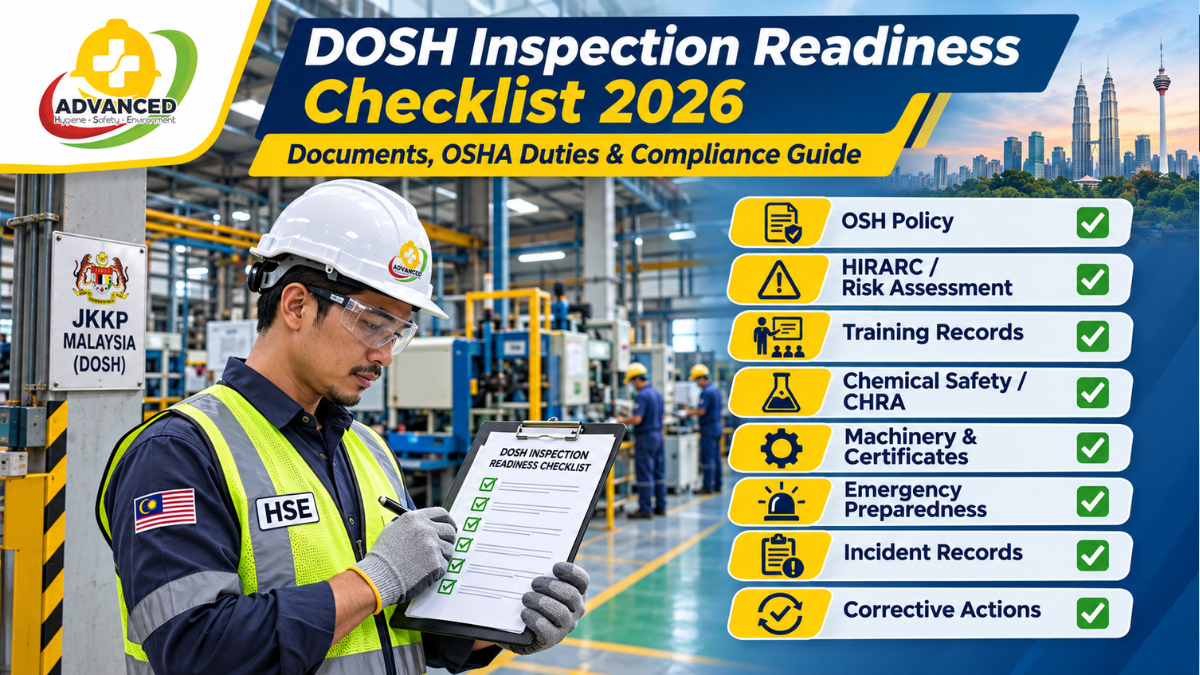
DOSH Inspection Readiness Checklist 2026
The following checklist is designed as an internal self-assessment tool.
Mark each item as:
- Ready: The required item is available, current and implemented.
- Action Required: A gap exists or evidence is incomplete.
- Not Applicable: The requirement does not apply, with the reason documented.
Some items are general employer obligations; others apply only when the relevant threshold, activity or occupational exposure exists.
Checklist 1: Legal, Workplace and OSH Management Documents
Employers should review the following records:
- Company and workplace identification records
- Applicable workplace notification or MyKKP records
- Written OSH policy, where required
- Evidence that the policy was communicated to employees
- Organisation chart identifying OSH responsibilities
- Safety and Health Officer appointment and current registration, where required
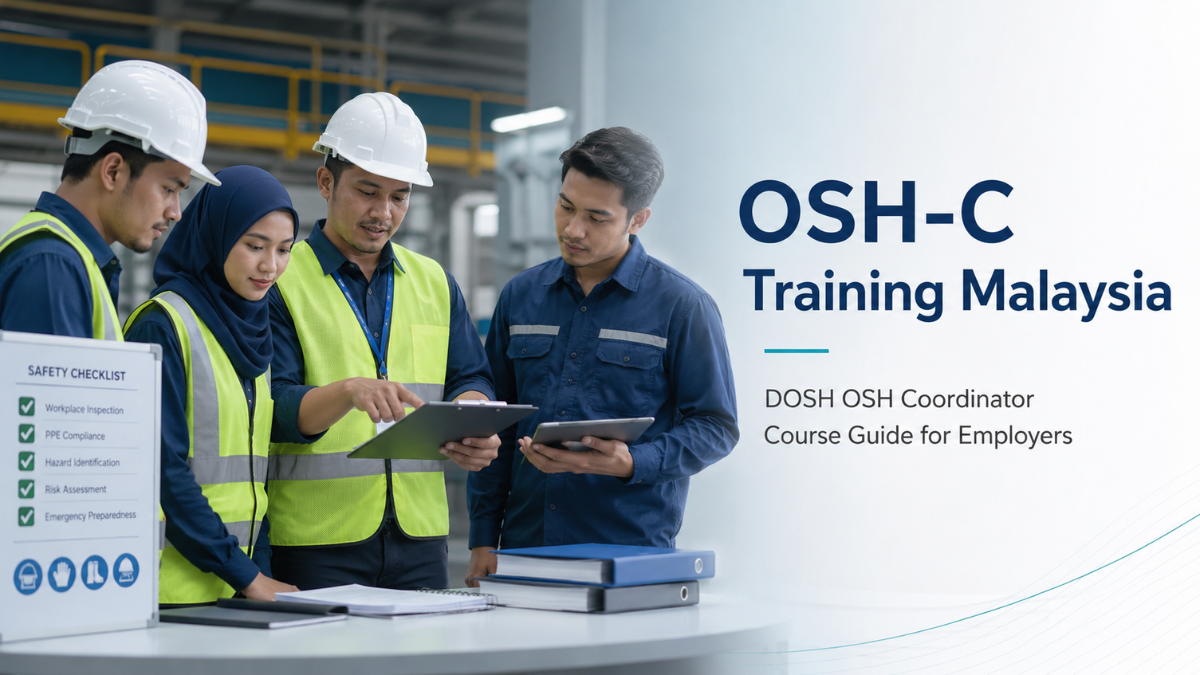
- OSH Coordinator appointment and relevant training records, where required
- Safety and Health Committee appointment and records, where required
- Applicable legal register or legal compliance review
- Records of previous DOSH inspections
- Improvement or prohibition notices, where issued
- Evidence of corrective action and closure of previous findings
- Management review and safety action records
A company should be able to explain who is responsible for safety decisions, how workplace risks are assessed and how non-compliance is corrected.
OSH Coordinator Documentation
Where the OSH Coordinator requirement applies, keep the appointment records and training evidence available.
For more information, read our OSH-C Training Malaysia guide.
Workplace Notification
Workplace notification requirements should be reviewed under Section 27A and the applicable DOSH administrative requirements.
See our Pendaftaran Tempat Kerja JKKP / PEMTK guide.
Checklist 2: HIRARC and Workplace Risk Assessment
Risk assessment is one of the most important foundations of workplace compliance.
Employers should prepare:
- Risk assessments covering relevant work activities
- Hazard identification and risk evaluation records
- Existing and additional control measures
- Risk assessment review dates
- Records of changes to processes, machinery or work methods
- Corrective action plans for high-risk findings
- Evidence that controls have been implemented
- Safe Operating Procedures for relevant activities
- Permit-to-Work arrangements for high-risk tasks, where appropriate
- Communication of relevant risk controls to workers
- Contractor risk assessment and coordination records, where applicable
- Follow-up assessment after significant incidents or changes
HIRARC stands for Hazard Identification, Risk Assessment and Risk Control.
A HIRARC document should reflect the actual workplace. A copied template that does not represent the activities being performed is not an adequate substitute for a proper assessment.
Employees and supervisors should understand the controls specified in the report.
Companies that need to improve their internal capability may consider HIRARC Training Malaysia.
Checklist 3: Chemical Safety, CHRA and Chemical Exposure Monitoring
This section is particularly relevant where employees may be exposed to chemicals hazardous to health.
Employers should review:
- Register of Chemicals Hazardous to Health
- Current Safety Data Sheets
- Proper chemical labels and storage arrangements
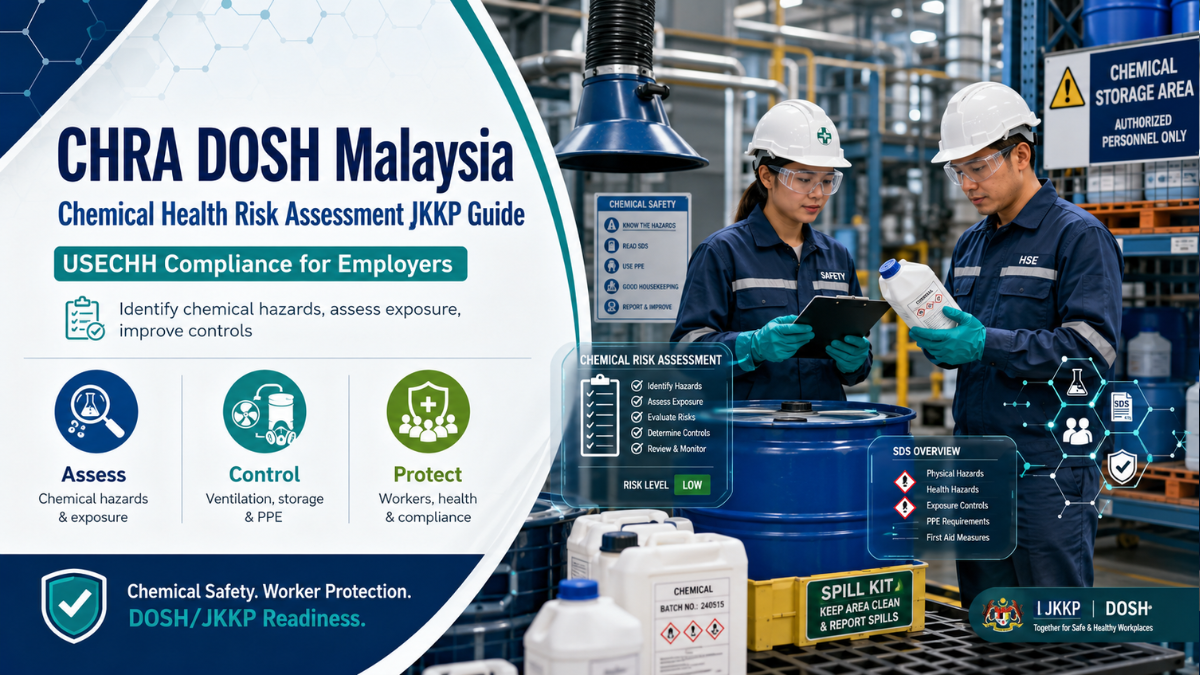
- Chemical Health Risk Assessment report, where required
- CHRA recommendations and action plan
- Evidence that recommended controls were implemented
- Chemical Exposure Monitoring reports, where required
- Local Exhaust Ventilation inspection and testing records, where applicable
- Employee chemical handling training records
- PPE and respiratory protection arrangements
- Chemical spill and emergency response procedures
- Medical surveillance records, where required, maintained with appropriate confidentiality
- Follow-up monitoring and reassessment records
Is CHRA Required for Every Workplace?
No.
CHRA requirements arise where work may expose, or is likely to expose, employees to chemicals hazardous to health under the USECHH Regulations 2000.
The employer should determine the assessment requirement from the chemicals, processes and actual exposure circumstances.
Learn more from our CHRA DOSH Malaysia guide.
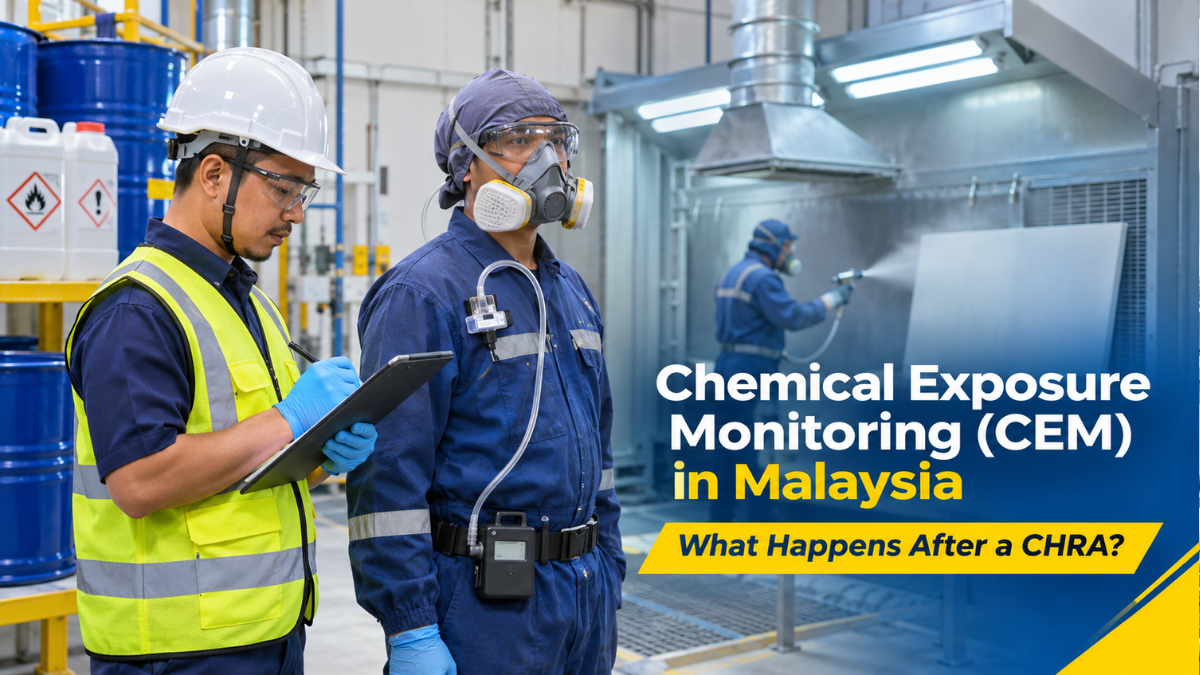
When Is Chemical Exposure Monitoring Required?
CEM may be required after CHRA identifies a need for airborne exposure monitoring or where it is necessary to verify the adequacy of controls.
A completed CHRA does not automatically replace exposure monitoring.
Where monitoring is required, the employer should retain the competent hygiene technician's report and evidence of any corrective actions.
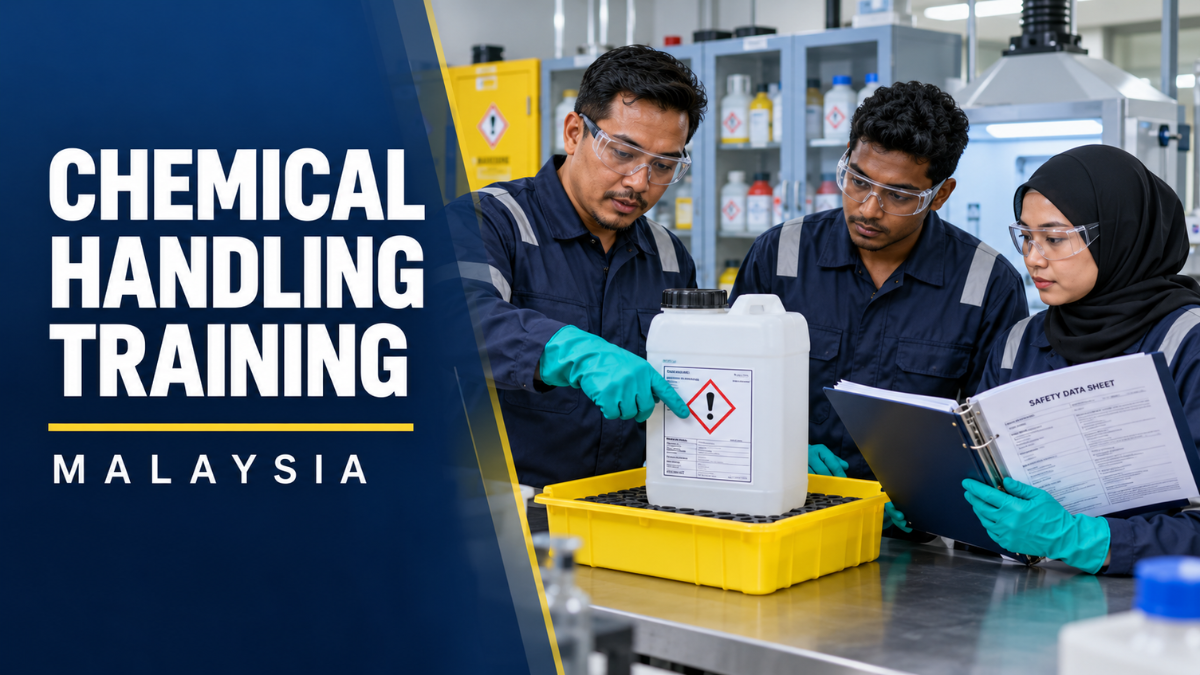
Chemical Safety Training
Workers should understand chemical labels, Safety Data Sheets, exposure hazards, safe handling, PPE and emergency procedures.
See our Chemical Handling Training Malaysia guide.
Checklist 4: Noise Exposure and Hearing Conservation
For workplaces where excessive occupational noise may occur, review:
- Workplace noise identification records
- Noise Risk Assessment by an appropriately registered assessor, where required
- Noise exposure results and affected employee groups
- Engineering and administrative noise controls
- Noise control practicability assessment, where applicable
- Hearing protection selection and use
- High-noise area signage and access arrangements
- Annual audiometric testing records for employees meeting the applicable exposure criteria
- Required worker noise information and training
- Follow-up actions for relevant audiometric findings
- Reassessment following significant changes to noise exposure
Noise exposure management is governed by the Occupational Safety and Health (Noise Exposure) Regulations 2019.
A Noise Risk Assessment is not automatically required at every workplace. The requirement depends on the applicable noise exposure conditions.
Read our NRA DOSH Malaysia guide and Noise Hearing Conservation Training guide.
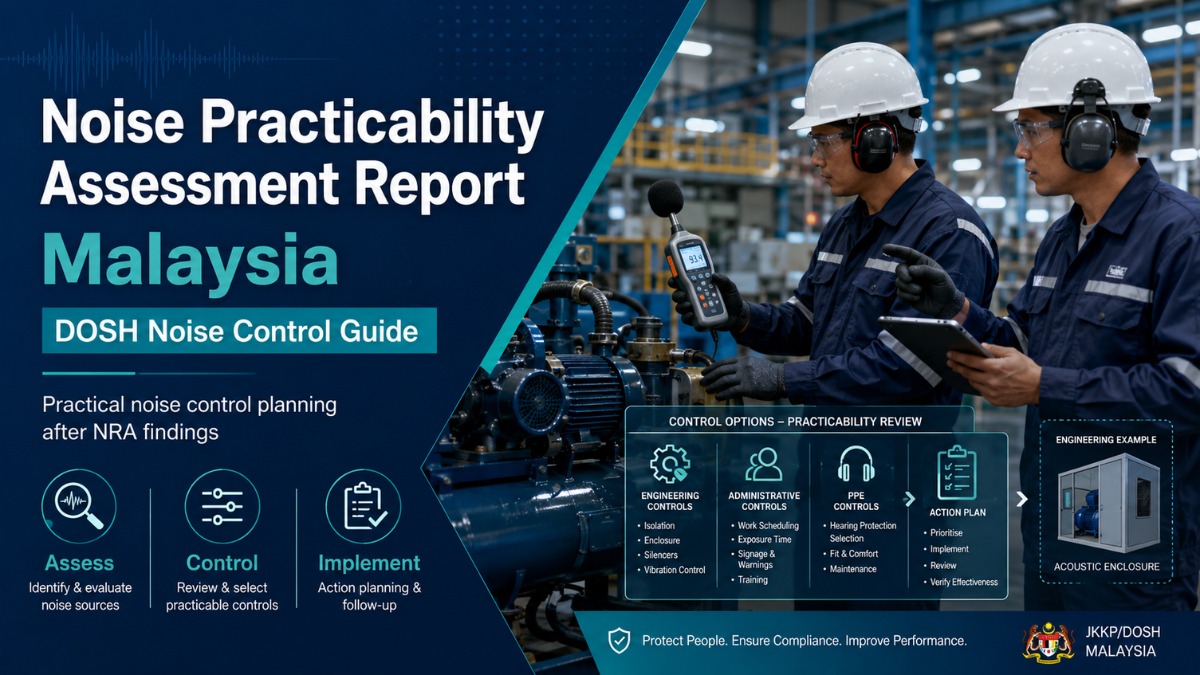
Where a detailed evaluation of noise control practicability is needed, see our Noise Practicability Assessment Report guide.
Checklist 5: Ergonomic, Psychosocial and Heat Stress Risks
Occupational health hazards are not limited to chemicals and noise.
Employers should consider physical workload, posture, repetitive movement, work organisation, heat exposure and other health risks.
Ergonomic Risk
- Ergonomic risk factors identified
- Initial Ergonomic Risk Assessment findings, where applicable
- Advanced ERA reports, where indicated
- Manual handling and repetitive task controls
- Workstation improvement records
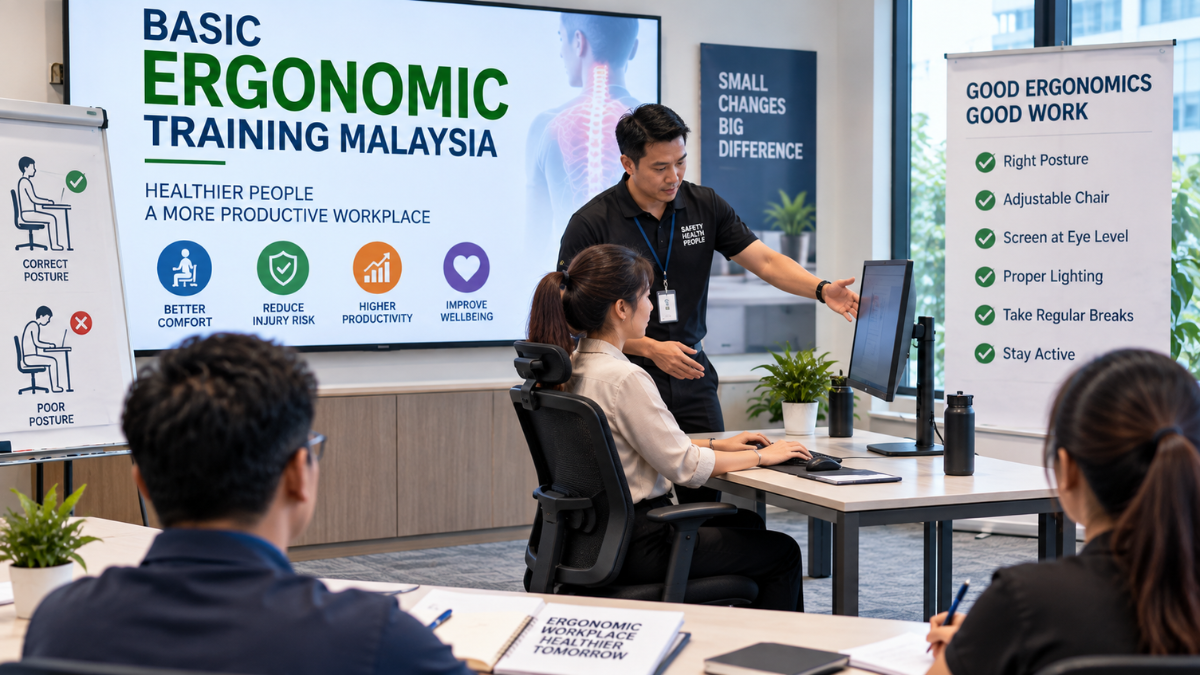
- Ergonomic awareness training records
- Follow-up actions for reported discomfort
Learn more from our Initial and Advanced ERA DOSH guide.
Psychosocial Risk
- Workplace psychosocial risks considered
- Relevant workload, job control and support concerns reviewed
- PRisMA assessment records, where implemented or indicated
- Risk management actions assigned
- Confidentiality and employee consultation arrangements
- Evidence of management follow-up
Read our Psychosocial Risk Assessment PRisMA Malaysia guide.
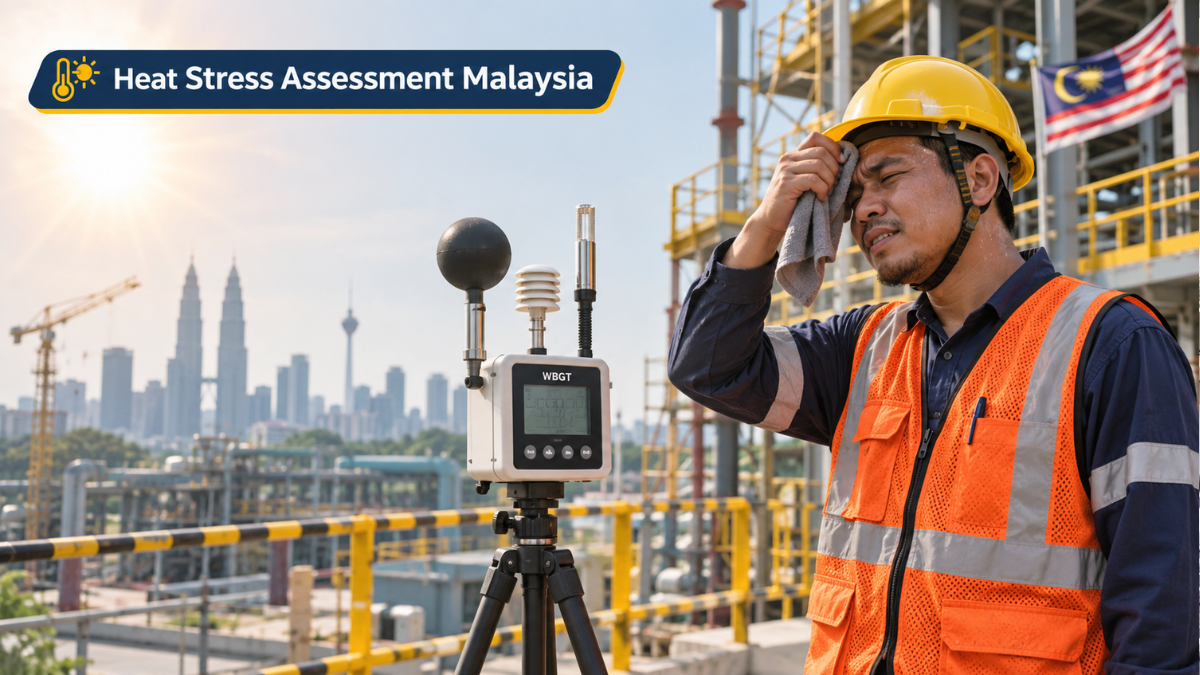
Heat Stress
- Heat hazards identified in relevant work areas
- Workload, clothing and environmental heat conditions reviewed
- WBGT measurements, where indicated by assessment
- Heat stress controls and work-rest arrangements
- Hydration and recovery facilities
- Heat acclimatisation and worker awareness arrangements
- Heat-related emergency response procedures
DOSH's Heat Stress Management Guidelines 2016 provide a technical framework for assessing occupational heat exposure.
The need for monitoring depends on actual workplace conditions rather than outdoor temperature alone.
Checklist 6: Machinery, Pressure Vessels and Certificate of Fitness
This section is especially relevant to employers operating prescribed plant.
Under the Occupational Safety and Health (Plant Requiring Certificate of Fitness) Regulations 2024, the prescribed categories are steam boilers, pressure vessels and lifting machinery, subject to the applicable requirements and exclusions.
Employers should review:
- Inventory of prescribed plant
- Applicable design verification and installation records
- Valid Certificates of Fitness
- Plant identification and nameplate details
- Inspection schedules and previous reports
- Applicable operator competency records
- Preventive maintenance records
- Inspection, testing and examination reports
- Safety valve and pressure gauge calibration records, where applicable
- Records of repairs and modifications
- Records of relevant non-destructive testing
- Safety device and guarding inspection
- Lockout-tagout or hazardous energy control procedures
- Corrective action and reinspection records
Does Every Machine Need a DOSH Certificate of Fitness?
No.
A CF is required only where the plant falls within the applicable prescribed categories and requirements.
General machinery still requires suitable safety arrangements, even where it does not require a CF.
For more information, visit our DOSH Registration & Inspection service and PMT Certificate of Fitness Registration guide.
For existing pressure vessels, read the PMT Renewal and CF Renewal guide.
Checklist 7: Employee Training, Competency and Supervision
Training records are important, but employers must also be able to show that workers understand and follow safe working procedures.
Review:
- New employee safety induction
- Job-specific training
- HIRARC awareness and competency
- Machinery operation training
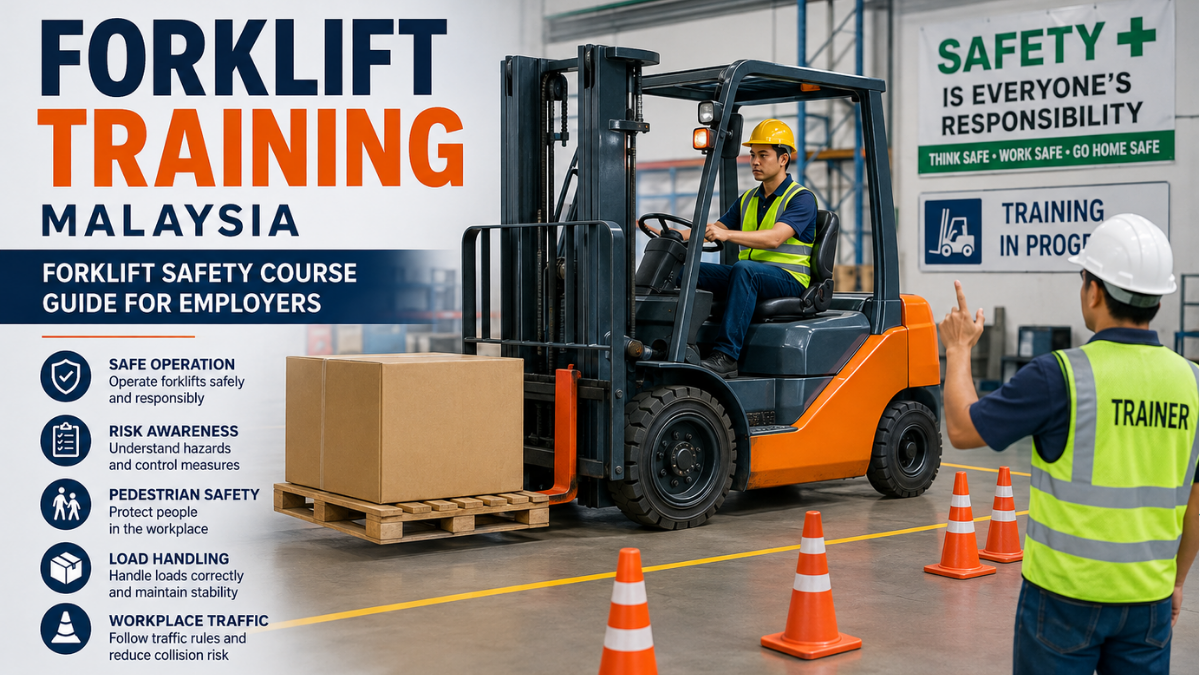
- Forklift operator competency and authorisation, where relevant
- Chemical Handling Training, where relevant
- Noise Hearing Conservation Training, where relevant
- Basic Ergonomic Training, where relevant
- Emergency response and first-aid training, as applicable
- Toolbox talk and safety briefing records
- Contractor and visitor induction
- Training attendance and assessment records
- Refresher training needs review
- Training matrix showing required competencies for each role
- Appropriate supervision of hazardous work
Training should be relevant to actual job risks.
For example, a forklift operator should receive suitable training and assessment for the equipment and workplace involved rather than only a general safety briefing.
See our Forklift Training Malaysia guide and HRD Corp Claimable HSE Training services.
Checklist 8: Accident Reporting, Investigation and Records
Employers should establish arrangements for reporting and investigating incidents.
Review:
- Workplace accident reporting procedures
- Accident and near-miss records
- Relevant JKKP 6 notifications
- Relevant JKKP 7 notifications
- JKKP 8 register and annual submission records
- Accident investigation reports
- Evidence and witness statements, where applicable
- Root-cause analysis
- Corrective and preventive action records
- Follow-up HIRARC reviews
- Records of action closure and verification
- Emergency or incident communication records
The NADOPOD Regulations 2004 govern notification of specified occupational accidents, dangerous occurrences, occupational poisonings and occupational diseases.
Not all injuries have the same reporting threshold or notification deadline.
Where immediate notification is required, employers must not delay reporting until an internal investigation has been completed.
Checklist 9: Emergency Preparedness and Physical Workplace Conditions
Documentation should be supported by safe physical workplace conditions.
Review:
- Emergency response procedures
- Safe evacuation routes
- Emergency contact arrangements
- First-aid arrangements and supplies
- Fire safety arrangements and records
- Relevant emergency drills
- Machine guarding and emergency stop systems
- Electrical hazards and control arrangements
- Housekeeping and clear access routes
- Safe storage and material stacking
- Suitable lighting and ventilation
- PPE selection and use
- Safety signage and restricted areas
- Hazardous work permit arrangements, where needed
- Contractor and vehicle movement controls
Workplace inspections should verify that controls are physically present and functioning.
For example, a machine guarding SOP is not enough if the actual guard is missing.
Similarly, a forklift training certificate does not replace effective pedestrian segregation where the work activity requires it.
Must a Dangerous Occurrence Be Reported if Nobody Was Injured?
Yes, if the event meets the Second Schedule definition.
The absence of injury does not remove the notification duty for a specified dangerous occurrence.
An uncontrolled chemical release or a relevant pressure vessel failure may be notifiable because of the nature and seriousness of the event itself.
Additional Industry-Specific Documents
Different industries may require additional documentation.
Construction
Depending on the project and applicable legal provisions, requirements may include construction risk assessments, design and management arrangements, competent personnel, lifting plans, work-at-height controls and contractor coordination.
Manufacturing
Relevant documentation may include machinery safety records, hazardous chemical assessments, occupational noise monitoring, ergonomic assessments and maintenance records.
Warehousing and Logistics
Employers should consider forklift safety, pedestrian routes, racking condition, loading bay arrangements, manual handling and heat exposure.
Healthcare and Laboratories
Relevant topics may include biological hazards, chemical exposure, sharps safety, ergonomics, emergency arrangements and other task-specific controls.
Major Hazard Installations
Premises subject to specific major accident hazard regulations may have additional notification, safety reporting and emergency planning obligations.
Not every requirement in this section applies to every business.
How to Prepare for a DOSH Inspection: A Practical Plan
Step 1: Establish an Inspection Readiness Team
Assign responsibility to a suitable management representative, with support from the SHO, OSH Coordinator, supervisors and relevant technical personnel.
Step 2: Create a Workplace Legal Applicability Register
List applicable requirements and identify which documents, assessments, competencies and permits are needed.
Avoid treating all requirements as universally applicable.
Step 3: Review Existing Documents
Check whether each document is current, complete and reflects the actual workplace.
Step 4: Conduct a Physical Workplace Inspection
Walk through the workplace and compare actual conditions against risk assessments, SOPs and inspection records.
Step 5: Identify Gaps
Classify findings based on risk and urgency.
Serious hazards must be controlled promptly; do not delay action merely to complete the documentation.
Step 6: Assign Corrective Actions
Each finding should have a responsible person, due date and evidence requirement.
Step 7: Verify Action Closure
Check that the action has actually reduced risk and that workers understand the revised arrangements.
Step 8: Organise Inspection Records
Make relevant records readily retrievable.
A structured digital folder system can help, especially for companies with several departments or sites.
What Should Employers Do During a DOSH Inspection?
Employers should cooperate with authorised DOSH officers and provide relevant information and assistance as legally required.
A practical inspection response may include:
Verify the officer’s identification and identify the inspection scope.
Arrange access to appropriate management and OSH personnel.
Provide relevant documents and records.
Escort the officer where appropriate without obstructing the inspection.
Answer questions accurately and avoid speculation.
Record findings, directions, document requests and deadlines.
Arrange prompt corrective action for unsafe conditions.
Maintain records of any formal notices received.
The company should not fabricate, backdate, conceal or alter records to create an appearance of compliance.
Where a serious hazard is identified, appropriate protective action should take priority.
What Happens if DOSH Issues an Improvement or Prohibition Notice?
Under Section 48 of OSHA 1994, an authorised officer may issue an improvement notice where the relevant statutory conditions are met.
A prohibition notice may be issued where a defect creates an immediate danger to life or property.
Employers should review the notice carefully, control the hazard and comply with its requirements.
Under Section 49, a notice must be complied with even where an appeal has been lodged.
Failure to comply without reasonable excuse can result in serious penalties.
The employer should record:
Notice reference and date
Hazard or defect identified
Immediate protective action
Required corrective measures
Responsible person
Deadline
Evidence of completion
Verification and follow-up communication
Suggested Digital DOSH Compliance Folder Structure
Employers can organise inspection records using the following folder structure.
01 — Company & OSH Governance
OSH policy, appointments, legal requirements and previous inspection records.
02 — HIRARC & Risk Assessments
General risk assessments, SOPs, permits and corrective action registers.
03 — Occupational Hygiene
CHRA, CEM, noise, ergonomic, psychosocial and heat stress records, where relevant.
04 — Plant & Machinery
Certificates of Fitness, inspection records, maintenance and calibration.
05 — Training & Competency
Employee training matrix, certificates, induction and training records.
06 — Emergency Preparedness
Emergency procedures, drills, first aid and relevant response documents.
07 — Accident & Incident Records
JKKP notifications, investigations, incident registers and corrective actions.
08 — Contractors & Visitors
Induction, contractor risk control, competency and work coordination.
09 — Inspection Findings & Corrective Actions
Internal audits, DOSH notices, action registers and closure evidence.
A central document register should show the owner, location, review date, applicable requirement and current status of each document.
Quarterly DOSH Inspection Readiness Review
This hub should support an ongoing compliance programme rather than a one-off annual audit.
A useful quarterly review should include:
Checking whether legal requirements have changed
Reviewing workplace incidents and near misses
Checking new machinery and process changes
Reviewing overdue risk assessments
Verifying expiring certificates and registrations
Reviewing training and competency gaps
Checking outstanding corrective actions
Updating the document register
Reviewing worker complaints and occupational health concerns
Confirming that emergency arrangements remain effective
Employers should also review compliance immediately after significant workplace changes, serious incidents or regulatory notices.
How Advanced HSE Solutions Can Help
Advanced HSE Solutions provides HSE consultancy, inspection preparation, occupational hygiene assessment support, DOSH registration and machinery compliance services across Malaysia.
Our support may include:
Pre-inspection compliance gap review
Workplace safety assessment
HIRARC and risk control review
CHRA coordination and follow-up
Noise Risk Assessment and related occupational hygiene support
Ergonomic risk assessment
Workplace heat stress monitoring support
Machinery and Certificate of Fitness documentation
Testing and calibration coordination
Accident investigation and root-cause analysis
HRD Corp claimable HSE training
Corrective action planning
DOSH/JKKP inspection readiness
Whether your organisation operates a manufacturing plant, warehouse, engineering workshop, construction-related facility or commercial workplace, our team can help identify documentation and risk-control gaps.
Contact Advanced HSE Solutions to discuss the applicable requirements for your site and the steps needed to improve inspection readiness.
Conclusion
A reliable DOSH Inspection Readiness Checklist is more than a list of documents.
It helps employers demonstrate that workplace hazards have been assessed, legal duties understood, necessary controls implemented, competent people appointed and safety performance reviewed.
In 2026, the amended OSHA framework and the national direction under OSHMP30 reinforce the importance of effective workplace safety management.
For employers, the most important principle is straightforward:
Inspection readiness means being able to demonstrate that employees are protected by functioning safety and health controls—not merely showing that paperwork exists.
Maintain your records, review your workplace risks, train employees and close corrective actions before problems develop into accidents or enforcement issues.
FAQ
What is a DOSH Inspection Readiness Checklist?
It is an internal checklist used to verify applicable workplace safety and health documents, controls, training, competencies, machinery records and corrective actions before a DOSH/JKKP inspection.
What documents are required for a DOSH inspection in Malaysia?
The requirements depend on the workplace. Common documents include applicable OSH policy, risk assessments, training records, appointment records, incident records, emergency procedures and evidence of implemented controls. Additional CHRA, NRA or machinery documents may be required according to the hazards and activities involved.
Is HIRARC mandatory in Malaysia?
Employers have a legal duty to conduct and implement risk assessment under OSHA Section 18B. HIRARC is a commonly used method for documenting and managing workplace risks.
Does every company need an OSH Coordinator?
No. Under Section 29A, the appointment requirement applies to relevant workplaces outside the gazetted SHO-required classes where five or more employees are employed, subject to the statutory provisions.
When is a Safety and Health Committee required?
Under Section 30, a committee is required when 40 or more persons are employed at the workplace or when the Director General directs the employer to establish one.
Does every factory need a CHRA?
CHRA requirements depend on whether work may expose employees to chemicals hazardous to health under the USECHH Regulations 2000. The presence of an ordinary factory or office does not, by itself, establish the requirement.
Does every machine need a Certificate of Fitness?
No. The 2024 Plant Requiring Certificate of Fitness Regulations prescribe specific categories including steam boilers, pressure vessels and lifting machinery, subject to applicable provisions and exclusions.
What is OSHMP30?
OSHMP30 is Malaysia’s National Occupational Safety and Health Master Plan 2026–2030. It establishes strategic priorities for occupational safety, health, compliance, worker well-being and future workplace challenges.
Can DOSH conduct an inspection without advance notice?
Authorised DOSH officers have statutory inspection powers under OSHA 1994. Employers should maintain inspection readiness because inspections may arise from routine enforcement, complaints, accidents and other regulatory activities.
What happens after an improvement or prohibition notice?
The employer must comply with the applicable notice, address the unsafe condition and maintain evidence of corrective action. Section 49 requires compliance with the notice even if an appeal has been lodged.
How often should a DOSH compliance checklist be reviewed?
A quarterly internal review is a useful management practice. However, applicable laws, certificates, risk assessments and workplace changes may require more frequent attention. Quarterly review is not a universal statutory inspection interval.
Can Advanced HSE Solutions help with DOSH inspection preparation?
Advanced HSE Solutions supports inspection readiness through compliance reviews, occupational hygiene assessment, machinery registration and inspection preparation, training, accident investigation and corrective action planning.
Official References
This checklist is a general compliance planning aid. The specific legal requirements depend on the workplace, relevant regulations, equipment, activities and occupational exposures. The checklist does not replace an inspection by DOSH or professional assessment of the employer’s statutory obligations.